Are you cleaning the area around the bathroom door properly?
Even if you wash the bathtub and shower area frequently, you tend to ignore the rail under the door and rubber gasket. When you notice it, you tend to think, "What's that black thing?" or "I can't get the white crispy part off..."
As of March 2026, there are many comments on social media such as ``Cleaning the bathroom door rail is difficult'' and ``Black mold on the gasket can't be helped.'' In fact, the detergent used here is completely different depending on the type of dirt.
In this article, we will categorize the dirt that sticks to bathroom door rails and gaskets by type and explain in an easy-to-understand manner the cleaning methods that are effective for each type. In addition, we will introduce preventive measures to prevent mold from growing again, so please read to the end.
There are three types of dirt on door rail packing
Start with "knowing the enemy". There are roughly three types of stains around the bathroom door.
① Black mold (black spots/blackheads)
It's that black thing that occurs in the grooves of rubber gaskets and rails. They breed by feeding on moisture, sebum, and soap scum. If you leave it alone, the roots will grow deep into the rubber, so you won't be able to remove it just by rubbing the surface.
② White crunchy dirt (water stains/scale)
White, gritty dirt around the rails and vents. The actual substance is calcium and magnesium contained in tap water that have solidified (so-called scale). Since it is an alkaline stain, it is difficult to remove it with ordinary detergents.
③ Pink stain (Rhodotorula)
A faint pink slime may appear around the rail. This is not a mold, but a yeast called "Rhodotorula." It reproduces quickly, but the good news is that it is easier to remove than black mold.
[Black mold] Thoroughly removed with chlorine bleach + plastic wrap
For black mold, chlorine bleach (Kabi Killer, Kabi Hitter, etc.) is the strongest. LIXIL's official guide also recommends a gel-type mold remover for black mold on rubber gaskets.
What to prepare:
- Chlorine-based mold removal spray (or gel type)
- Kitchen paper
- Wrap
- Old toothbrush
- Rubber gloves/mask
Steps:
- Turn on the ventilation fan. Open thewindow if there is one. Chlorine-based detergents are dangerous if you breathe in their vapors, so be sure to ventilate the area
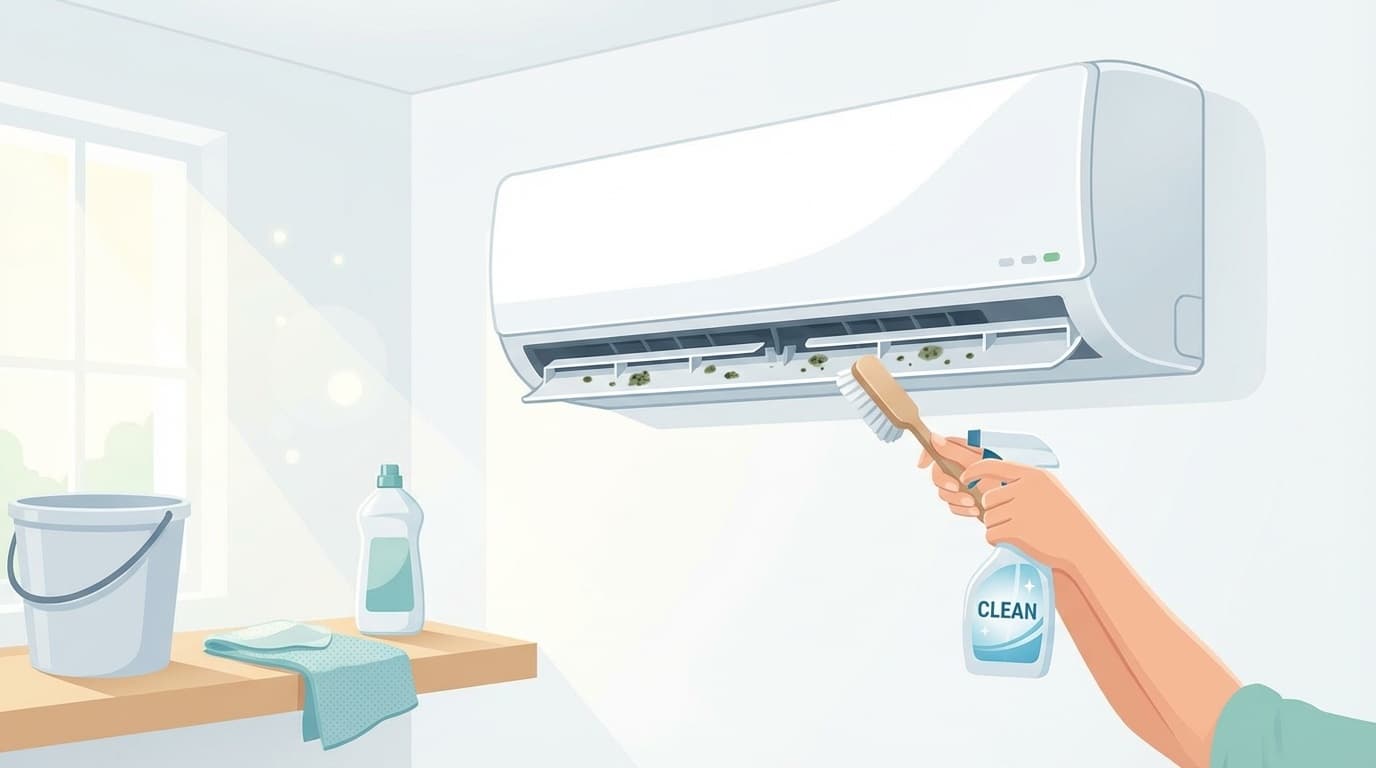
- Remove hair and debris from the rail and packing. Remove rough debris with wet tissues or an old toothbrush
- Apply plenty of mold remover. If you are using the spray type, apply a kitchen towel on top of the spray, and then cover with plastic wrap (a method called the ``poultice method''). If it's a gel type, just apply it thickly
- Leave for 15-30 minutes. Sealing with plastic wrap prevents chlorine from evaporating and allows it to reach the mold roots
- Remove the plastic wrap, scrub gently with a toothbrush, and rinse in the shower. If it doesn't fall the first time, repeat
⚠️ Caution:Never mix chlorine-based detergents and acidic detergents (citric acid, Sanpol, vinegar, etc.). This is extremely dangerous as toxic chlorine gas is generated. If you are using both on the same day, wash one completely before using.
If you cannot remove the blackheads no matter how many times you try, mold may have invaded the inside of the rubber. In that case, consider replacing the rubber gasket. In some cases, if you look up the model number from the manufacturer's official website, you can purchase just the gasket and replace it yourself.
[White crunchy version] Dissolve and remove with citric acid pack
The correct solution for white crunchy stains is to dissolve them with acidic detergent. According to Saniclean Housework Tips, citric acid water packs are effective.
What to prepare:
- Citric acid (100 yen is OK)
- Spray bottle
- Kitchen paper
- Wrap
- Plastic spatula (carbon spatula, etc.)
Steps:
- Make citric acid water. Dissolve 1-2 teaspoons of citric acid in 200ml of water and add to a spray bottle
- Spray on the white crunchy part and apply a compress with kitchen paper and plastic wrap. Leave for 15-30 minutes
- Scrape it off with a spatula. Scrape off the softened dirt with a plastic spatula. Do not use metal spatulas as they will damage the rails
- Scrub the small grooves with a toothbrush and rinse with water
For stubborn water stains that still do not come off, it is effective to use an acid bathroom detergent (such as Kazuya Mogi). However, acidic detergents cannot be used in bathrooms made of marble or artificial marble, so check the material before using.
[Pink stains] Quickly wipe with ethanol or neutral detergent
Pink stains (rhodotorula) are not as persistent as black mold, so they can be removed relatively easily.
Steps:
- Spray disinfectant ethanol (alcohol) and leave for 5 minutes
- Wipe with a sponge or cloth and rinse with water
If you don't have ethanol, you can just scrub it with a neutral bathroom detergent. However, pink stains recurrence is extremely fast, so they will return quickly if preventive measures are not taken.
Never grow mold again! 5 preventative measures you can take starting today
After cleaning, the next step is to prevent this from happening again. Mitsubishi Electric Kuratoku and Osouji Honpo.
① After bathing, pour hot water over 50℃ then cold water
Mold will be killed in hot water above 50℃. After bathing, pour hot water in the shower around the door and rail, and then pour cold water to lower the temperature. Lowering the temperature also prevents condensation.
② Leave the ventilation fan on 24 hours a day
Many people only use it for 2 hours after taking a bath, but the ideal is 24-hour operation. Electricity costs are around 100 to 300 yen a month, so it's cheaper than buying mold removal detergent.
③ Protect the rail groove with masking tape
If you apply anti-mold masking tape sold at 100 yen shops to the grooves of the rails, cleaning will become dramatically easier as dirt will only stick to the tape. Just replace it every 1-2 weeks.
④ Use anti-mold smoke agent once every two months
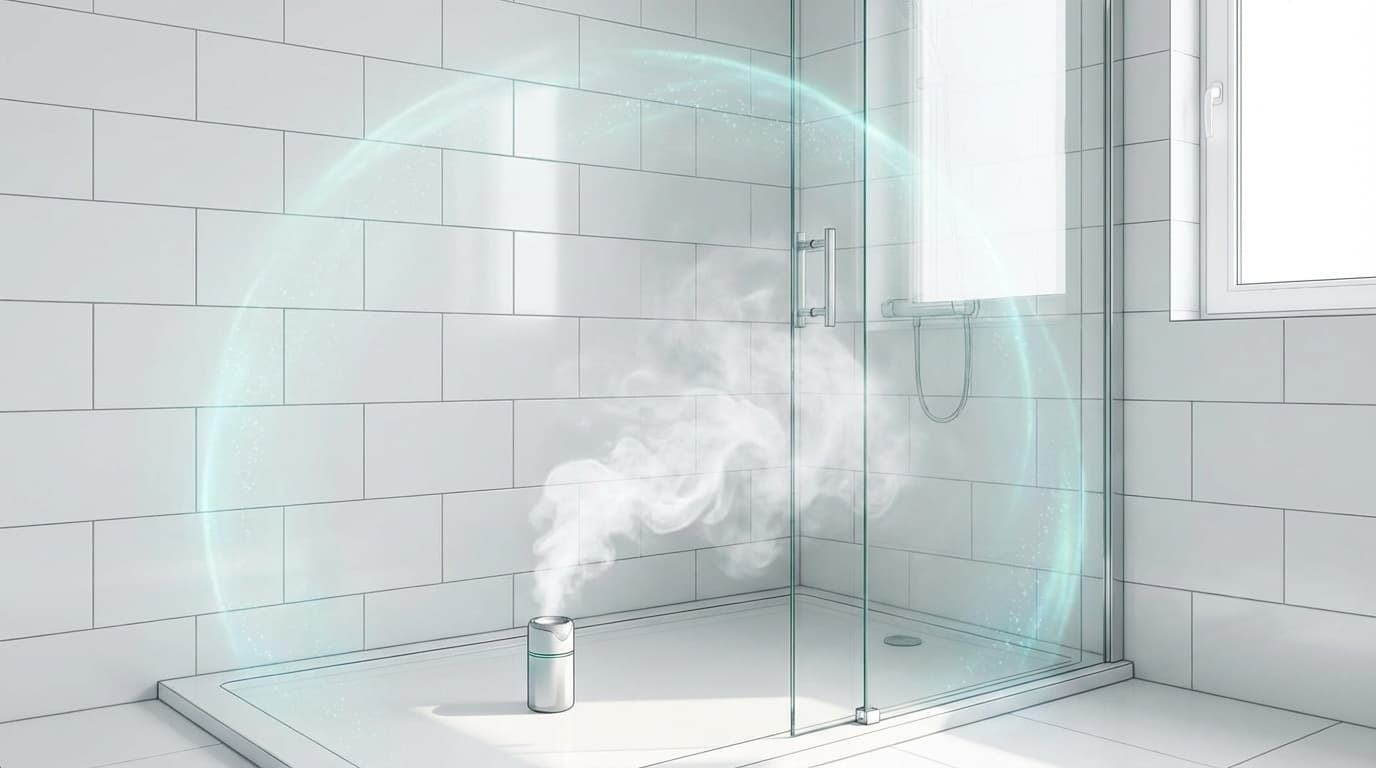
Anti-mold smoke agent that prevents mold throughout the bathroom with silver ion smoke. Effective even in hard-to-reach areas such as ceilings and behind doors. However, in order to maintain its effectiveness, it is important toremove existing moldbefore use.
⑤ Make monthly rail cleaning a routine
If you clean it before the stain completely hardens, all you need is a mild detergent and a toothbrush. Setting a date, such as the 1st of every month, will make it harder to forget.
FAQ
Why doesn't the black mold on the bathroom door rail come off even if I use a mold killer?
Are you spraying it and then rinsing it off immediately? Chlorine-based detergents take time to reach the roots of mold. Try the "compress method" by covering it with kitchen paper and plastic wrap and leaving it for 15 to 30 minutes or more. If it still doesn't come off, mold has invaded the inside of the rubber, so consider replacing the gasket.
Is it okay to use citric acid and mold killer on the same day?
You can use them, but be sure to rinse one completely before using the other. When chlorine (mold killer) and acid (citric acid) mix, toxic chlorine gas is generated, which is extremely dangerous. If you're worried, it's safe to separate the tasks into separate days.
Can I replace the rubber gasket on the door myself?
Depending on the manufacturer and model number, in many cases you can purchase just the rubber gasket for the bottom door frame and replace it yourself. Check the model number at the official parts shop of the manufacturer such as LIXIL or TOTO. Replacement work is often just a matter of pulling it out and putting it back on, which takes about 10 minutes.
Where can I buy anti-mold masking tape?
It is sold as "mold-proof masking tape" and "bathroom masking tape" at 100-yen stores such as Daiso and Seria and home centers. It can also be purchased on Amazon and Rakuten. Choose the width according to the rail groove.
References
- Complete manual for bathroom mold removal | Explains everything from cleaning black mold on rubber gaskets and ceilings to prevention methods! — LIXIL Store
- A thorough explanation of how to clean the door rail, gasket, and vent in the bathroom — Mitsubishi Electric Kuratoku
- Explaining how to clean the bathroom door! Clean effectively by approaching each type of dirt — Osouji Honpo
- Cleaning the bathroom door rail "Remove limescale and mold with citric acid" — Sani Clean housework story
- If you leave it alone, you will be in trouble later... How to clean the bathroom door — Tokyo Gas Uchikoto