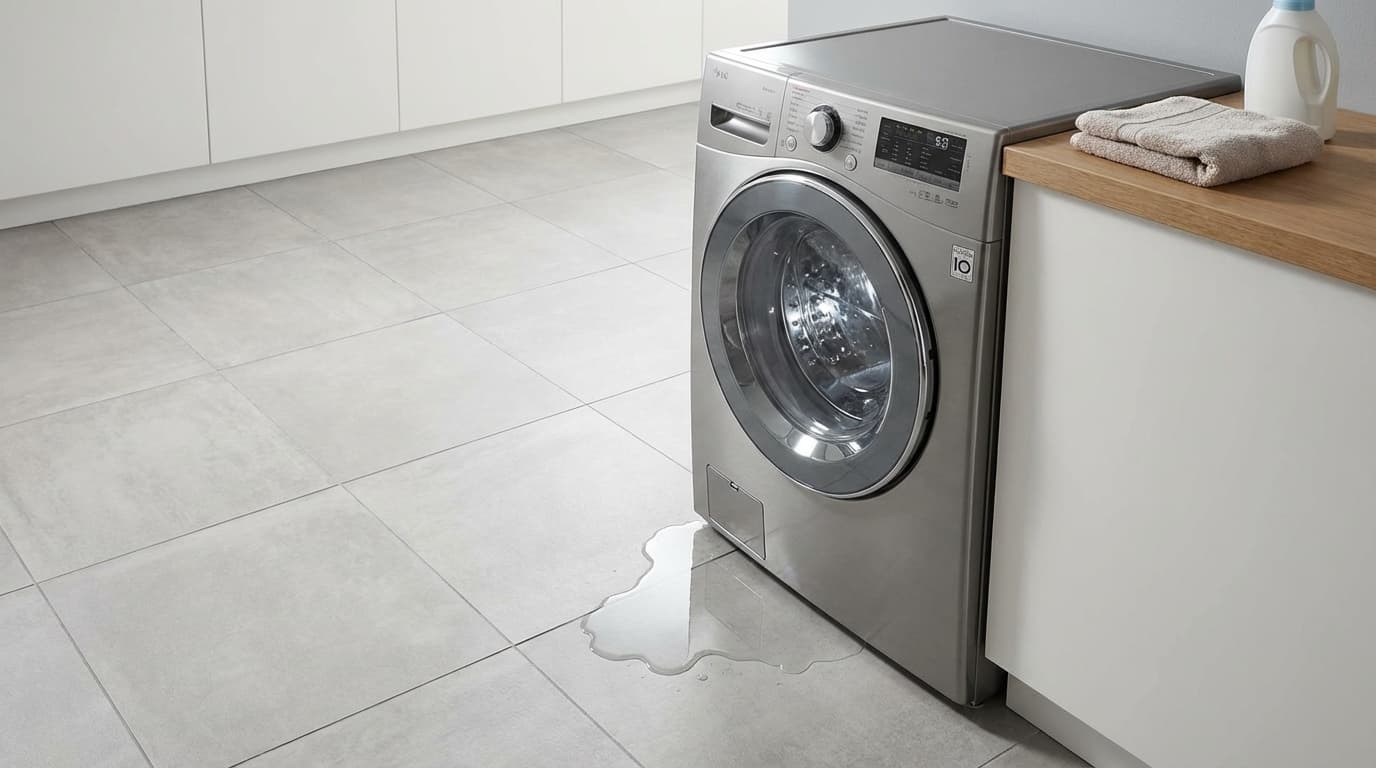
Have you ever experienced something like, "Even though I wash my clothes with detergent, my clothes still smell like something?" In fact, the cause may be the washing machine's "one rinse" setting.
As of March 2026, washing machines that claim to be water-saving and time-saving have become mainstream, but there are many cases where the default setting of ``Omakase'' is essentially just one rinse, or as a result of continuing to use ``Water-saving'', detergent and dirt remain on clothes and cause odors.
In this article, we will explain in an easy-to-understand manner what happens if you do not rinse your clothes enough, the difference between a "pre-rinse" and a "water rinse", and how to change the settings of your washing machine right away.
Why does my laundry smell after ``one rinse''?
Rinsing is the process of washing away dirt and detergent that have been dissolved during washing with water. This meansif you don't rinse enough, dirt and detergent will remain on your clothes.
When leftover detergent and sebum stains are combined, they become food for bacteria (such as Moraxella bacteria). This is the real cause of the dry, dry smell and odor that smells like snails. Lion's official information (Lidea) also warns that detergent residue due to insufficient rinsing can cause odor.
Especially in the following cases, one rinse is not enough.
- Using powdered detergent ─ It is less soluble than liquid detergent, so rinsing twice is the norm
- A fabric softener is also used ─ The fabric softener coats the fibers, so it is necessary to thoroughly remove dirt first
- Putting in too much detergent ─ If there is too much detergent compared to the amount of water, it won't be flushed out in one go
- Packed with too much laundry ─ The water flow is not evenly distributed, significantly reducing rinsing efficiency
Have you ever checked the number of rinses for the "Omakase Course"?
I think many people just use the "Auto" or "Standard" settings on their washing machines. However, recent washing machines have advanced water-saving designs, and many wash cycles are set to one rinse cycle.
For example, according to Panasonic's vertical washing machine FAQ, the "Quick Course" and "One Rinse Course" are set to have fewer rinses to save time. In addition, there are cases where the ECONAVI function works even with "Automatic" and automatically reduces the number of rinses.
Hitachi's official FAQ also explains that there are three types: "Niagara rinse," "water rinse," and "preparation rinse," and that the initial settings differ depending on the course.
The first thing you should do is to carefully look at the control panel of the course you usually use and check the number of "rinse" times displayed. With many models, you can change the number of rinses by simply pressing the "Rinse" button after selecting the course.
What is the difference between "water rinse" and "water rinse"?
There are two main methods for rinsing. Knowing this will make odor control much more effective.
Rinse
This method collects water in a washing tub and stirs the clothes in it to rinse them. You save water because you use less water, but you are rinsing in dirty water, so the rinsing effect is somewhat low.
Water rinse
This method stores water in the washing tank and continues to supply new water at the same time. Excess water will be drained away, so it is advantageous to always rinse with clean water. According to Haier's explanation, water rinsing is more effective than rinsing, but it uses more water.
How to use it properly?
| Scene | Recommended method | Reason |
|---|---|---|
| Light dirt/underwear | Rinse twice | Rinse thoroughly while saving water |
| Sweaty clothes/sweat clothes | Rinse with water once + rinse once with water | Rinse thoroughly to remove dirt first |
| When using fabric softener | Rinse at least twice | Remove dirt before applying fabric softener |
| Baby's clothing/sensitive skin | Rinse with water twice | Minimize detergent residue |
You can do it now! How to review rinse settings (by manufacturer)
For those who want to change the settings but don't know how, we have summarized how to change settings from major manufacturers.
Panasonic (vertical type/drum type common)
- Turn on the power and select the course you want to use
- Press the "Rinse" button to change the number of times (1 time → 2 times → 3 times →...)
- Depending on the model, it is also possible to switch between "water rinsing" and "water pouring rinsing"
- Models with memory function can save changed settings
For details, please check Panasonic official FAQ "Rinse types and how to change them".
Hitachi
- After selecting the course, change the number of rinses with the "Rinse" button
- Models equipped with "Niagara Rinse" allow you to choose a mode that thoroughly rinses deep into the fibers with a large amount of water
- After changes, press “Start” to confirm
Sharp
- After selecting the course, change the number of rinses with the "Rinse" button
- Models equipped with a "holeless tank" have a structure that prevents dirty water from entering the outside of the tank, so rinsing efficiency is relatively high
Toshiba
- After selecting the course, set the number of rinses with the "Rinse" button
- According to Toshiba official FAQ, there are models that allow you to choose from three types: "water injection," "pre-rinse," and "shower rinse."
The basic operation for any manufacturer is Press the ``Rinse'' button after selecting the course. If you cannot find the instruction manual, you can download the PDF from the official website by searching for the manufacturer name + model number.
Is it really okay to use a detergent that only requires one rinse?
Nowadays, an increasing number of liquid detergents are labeled as ``OK to be rinsed once.'' According to Kao's official Q&A (Attack Zero), "one rinse" means one rinse.
However, this only applies if you measure the amount of detergent correctly and the amount of laundry is appropriate. If the following apply to you, it is safer to rinse twice, even with detergent that can be rinsed once.
- Putting in detergent at ``approximately this amount'' without looking at the scale on the cap
- Filling the washing machine to its capacity with clothes
- I also use the leftover hot water from the bath for rinsing (tap water is basically used for rinsing)
- Using fabric softener together
- Mostly dry indoors (the longer it takes to dry, the more likely bacteria will grow)
Yahoo! News article by laundry expert Rie Hirashima also explains that ``rinsing at least twice is recommended.'' Rather than saving hundreds of yen a year by conserving water, it would be a far greater waste to shorten the lifespan of your clothes due to smells and dark stains.
Check out more than just rinsing! 5 ways to prevent laundry odor
If the odor still remains even after changing the number of rinses, check the following points.
- Cleaning the washing tub ── Remove black mold with a washing tub cleaner once a month. It is effective to use chlorine and oxygen systems alternately
- Hang it to dry immediately after washing ── If you leave the laundry after washing, the bacteria will increase explosively. Ideally, dry within 30 minutes
- Keep the lid of the washing machine open ── Opening the lid and drying the washing machine after use will prevent mold from forming
- Measure the amount of detergent accurately --- Don't use too much or too little. Let's check the display on the back of the detergent again
- Use leftover water from the bath only for washing ─ Using leftover hot water for rinsing makes it easier for germs to remain on clothes
FAQ
How much will my water bill increase if I rinse twice?
If you change from 1 rinse to 2 rinses, approximately 30 to 50 liters of additional water is required for each wash. When converted to water bill, it is an increase of about 5 to 10 yen per use. It costs about 150 to 300 yen to wash clothes 30 times a month, so it's a good value for money as a countermeasure against odors.
Which is cleaner: "2 rinses" or "1 rinse with water"?
Generally, one rinse with water is considered to be more effective. However, it also uses a lot of water, so rinsing twice is sufficient for everyday wear. If you have a lot of sweat or dirt, choose water rinsing.
Is it okay to rinse the drum type washing machine once?
The drum type uses less water than the vertical type, so rinsing tends to be insufficient. We recommend rinsing the drum type twice. Depending on the model, you can change the number of rinses with the "Rinse" button, so please check the instruction manual.
How much will washing time increase if you increase the number of rinses?
An additional rinse will add approximately 10 to 15 minutes. If you're worried about busy mornings, we recommend setting a timer to set up a 2-rinse course in the evening.
References
- Is it okay to rinse once? Can I use fabric softener? Introducing detergent selection and setting methods ── LION Lidea
- [Vertical washing machine] What are the rinse types and how to change them ── Panasonic official FAQ
- Difference between Niagara rinse/water rinse/reservoir rinse ── Hitachi official FAQ
- [How to use] Is "1 rinse" of "Attack Zero" equal to "1 rinse"? ── Kao official Q&A
- Which is better, rinsing once or twice? Why laundry experts recommend "definitely at least twice" ── Yahoo! News (Rie Hirashima)
- Do you rinse your laundry once? Or twice? Explanation about the rinse function ── Haier LIFE STYLE