``Hmm, the refrigerator is lukewarm...?'' If one day the contents of the refrigerator suddenly became lukewarm, you would be nervous, right? The milk is lukewarm, the ice cream is melting, and it's the worst. But wait a minute. Just because your refrigerator isn't cooling down, you may be quick to judge that it's broken! You need to buy a new one.
Actually, most of the problems that cause your refrigerator to stop cooling are things that you can fix yourself, such as incorrect settings or overloading with food. In this article, based on the latest information as of February 2026, we will explain 7 reasons why your refrigerator won't cool down, what you can do right away, and even the criteria for deciding which is better: repair or replacement.
Check first! 3 things to do when the refrigerator won't cool down
If you notice something unusual in your refrigerator, check these three things first before looking for the cause.
1. Minimize the opening and closing of the door
If you open the door many times when the refrigerator is not cold, the temperature inside the refrigerator will rise even more. According to EPARK Lifestyle Rescue Explanation, even if the door is not opened, the refrigerator will remain cold for 2 to 3 hours even if the door is not open. First of all, calm down and stop opening and closing doors unnecessarily.
2. Check if the power is on
A surprisingly common pattern is that the power was turned off in the first place. The breaker was tripped because the plug was unplugged when cleaning. You can easily check whether the lights inside the refrigerator are on or not.
3. Measure the temperature inside the refrigerator with a thermometer
``It feels lukewarm somehow'' and ``the temperature is actually rising'' are two different things. You can use a thermometer from a 100 yen store, so put it in the refrigerator and check it after 30 minutes. The optimum temperature for the refrigerator is2-6℃.
7 reasons why the refrigerator won't cool down and what to do
From here, we will look at the specific causes one by one. We recommend checking them in order from the top.
Cause 1: Temperature setting remains at "low"
If you leave the temperature setting on "low" during the winter and enter the summer, the cooling will not be able to keep up. Panasonic official explanation also recommends reviewing temperature settings according to the season. The solution is easy, just change the setting to "medium" or "strong". Please wait about half a day to check on the situation after making the change.
Cause 2: Packing too much food
A refrigerator cools itself by circulating cold air inside. If food is packed tightly together, the passage of cold air will be blocked and the entire interior of the refrigerator will not be cool. The guideline is less than 70% of the storage space. In particular, check to see if the cold air outlet (often located on the back wall of the refrigerator) is blocked.
Cause 3: Door gasket is deteriorated or dirty
If the rubber gasket on the door (the part that comes into contact with the refrigerator when it is closed) becomes dirty or deformed, cold air will leak from the gap. According to AQUA official website, checking the gasket is easy. If you put a business card or postcard in the door and it slides out when you pull it shut, it's a bad adhesion. If it's dirty, wipe it off with a cloth dampened with a neutral detergent, and if it's badly deformed, consider replacing the gasket (you can order it from the manufacturer).
Cause 4: Not enough heat radiation space
A refrigerator cools itself by releasing the heat inside the refrigerator to the outside. If you install the refrigerator tightly against the wall or place something on top of the refrigerator, heat dissipation will not be effective and it will be difficult to cool down. In general, there should be at least 2 cm of space between the sides of the refrigerator and the wall, and at least 5 cm of space above the top. In many cases, the problem can be improved simply by reconsidering the installation location.
Cause 5: Dust has accumulated on the back/bottom surface
If dust accumulates on the radiator (condenser) on the back or bottom of the refrigerator, the heat dissipation efficiency will drop dramatically. Once or twice a year, pull the refrigerator out slightly and use a vacuum cleaner or brush to remove dust. It is not uncommon for the cold to improve with just this.
Cause 6: Frost is blocking the air outlet
If the back of the freezer compartment or the air vents are covered with frost, cold air will not be able to escape into the compartment. Modern refrigerators have an automatic defrost function, but the defrost may not be able to keep up if the door is left ajar or left open for a long time. According to Tatsufut's explanation, the basic idea is to turn off the power (or open the door), wait for the frost to melt, and then gently wipe it off with a soft cloth. Do not forcefully remove it with a hairdryer or hard tools (this may damage the inside).
Cause 7: Compressor or cooling system failure
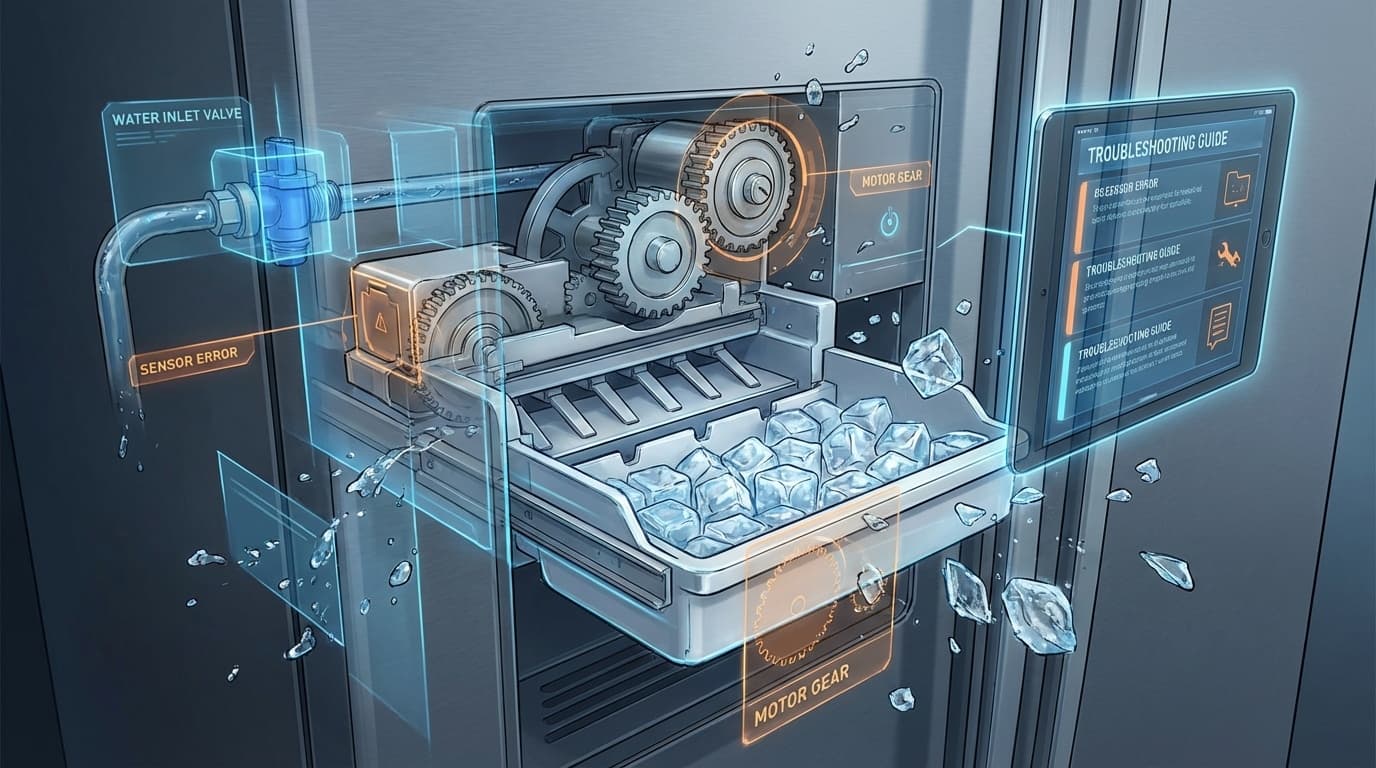
If the problem does not improve even after trying steps 1 to 6 above, there is a high possibility that there is an internal malfunction that cannot be repaired by yourself, such as the compressor (a device that compresses refrigerant), the temperature sensor, or a refrigerant leak. If there is no "buzzing" sound coming from the back or sides of the refrigerator, the compressor may be malfunctioning.If the refrigerator makes a sound but does not cool, there may be a refrigerant leak or an abnormality in the temperature sensor. In this case, contact the manufacturer's repair center.
First aid measures to protect food while the refrigerator does not cool down
It may take several days for repair or replacement. In the meantime, we will introduce first aid measures to prevent food from spoiling.
Use a cooler box + ice packs
If you have ice packs or bottled ice in the freezer compartment of your refrigerator, move them to the cooler box and use it as a simple refrigerator. Prioritize items that are easily perishable, such as meat, fish, and dairy products.
Buy ice or dry ice from a convenience store
If you don't have an ice pack, it's easy to buy rock ice at a convenience store and put it in a cooler box. If you need to keep it cold for a long time (more than a day), you can buy it at stores that sell dry ice (ice cream specialty stores and some supermarkets). However, dry ice can cause frostbite if touched with bare hands, so be sure to wrap it in work gloves or cloth when handling it.
In winter, use the balcony or entrance.
In winter, when the outside temperature is below 5 degrees Celsius, placing food in cardboard boxes and placing it on the balcony is a good emergency measure. However, choose a location that is out of direct sunlight, in the shade, and where it will not be disturbed by animals.
Repair? Should I buy a new one? These are the three criteria
"Should I fix my refrigerator or buy a new one?" This really bothers me. We have summarized the criteria into three criteria.
Judgment criterion 1: How many years has passed since purchase
The average lifespan of a refrigerator is 10 to 14 years (according to the 2022 Cabinet Office "Consumption Trend Survey", the average lifespan is 12.8 years). The manufacturer's retention period for repair parts is set at 9 years after the end of production. In other words, if it has beeneight years or more since purchase, parts may no longer be available, increasing the number of cases in which repair is not possible. Roughly speaking:
- Less than 8 years since purchase → Consider repair first
- 8 to 12 years after purchase → Compare repair cost and new price to make a decision
- 12 years or more after purchase → Replacement recommended
Judgment criterion 2: How much will the repair cost
According to Haier official explanation, refrigerator repair costs are approximately as follows (estimate as of February 2026).
- Door gasket replacement: 5,000 to 15,000 yen
- Temperature sensor replacement: 10,000 to 20,000 yen
- Compressor replacement: 30,000 to 90,000 yen
If the repair cost is more than half the new price, it is better to replace it. Replacing a compressor is especially expensive, so in many cases it is not cost-effective to repair the compressor on a refrigerator that has been used for more than 10 years.
Judgment criterion 3: Energy saving performance of recent refrigerators
Compared to refrigerators from 10 years ago, the annual power consumption of the latest models is typically about 30 to 40% lower. It is calculated that the electricity bill will be reduced by about 3,000 to 5,000 yen per year. In some cases, it may be cheaper in total to ``replace your appliance and save 10 years' worth of electricity bills'' than to ``repair it and use it for another 2-3 years.''
Summary of repair counters by manufacturer
If the malfunction cannot be fixed by yourself, please contact the manufacturer for repair. Repair reception desks for major manufacturers are as follows (as of February 2026).
- Panasonic: Repair consultation (Panasonic official)
- Hitachi: Customer support (Hitachi official)
- Mitsubishi Electric: Repair request (Mitsubishi Electric official)
- Sharp: Repair consultation (Sharp official)
- Toshiba Lifestyle: Repair request (Toshiba Lifestyle official)
When requesting repairs, it will be easier to make a note of the refrigerator model number (there is a sticker on the inside of the refrigerator near the door).
FAQ
If the refrigerator does not cool down, how many minutes should I wait after unplugging the power plug?
Unplug the power plug and wait 10 to 15 minutes before plugging it back in. The compressor's protection circuit may be reset and the temporary malfunction may be resolved.
Why does the refrigerator room get cold but the freezer room doesn't?
The freezer vent may be blocked by frost, or the freezer fan motor may be malfunctioning. First, check for frost, and if there is no frost, consult the manufacturer as the fan may be malfunctioning.
What happens if you leave the refrigerator uncooled?
If the internal temperature exceeds 10℃, bacteria will rapidly proliferate, increasing the risk of food poisoning. In particular, move meat, fish, and dairy products to a cooler box or consume them as soon as possible.
Is it a malfunction if the refrigerator does not cool down after moving?
Immediately after moving, it will take some time for the refrigerator to stabilize. If you turn on the power immediately after installation, the refrigerant may not be stable and it may not cool down easily. Please do not turn on the power for 1 to 2 hours after installation, then start operation, and wait for an additional 4 to 24 hours until the inside of the refrigerator has cooled down sufficiently.
When is the best time to replace your refrigerator?
New models of refrigerators are often released in the fall (October to November), so August to September, right before the model change, is the time to aim for lower prices for older models. Also, look for sales during the year-end and New Year holidays and bonus periods.
References
- Causes and countermeasures for the refrigerator not cooling down! 8 points that are often overlooked — Panasonic UP LIFE
- What is the reason why the refrigerator does not cool down and what can be done immediately? Also explains the criteria for determining whether to repair or replace — AQUA official
- The average lifespan of a refrigerator is 8 to 12 years! Explanation of failure signs and criteria for determining repair/replacement — Haier LIFE STYLE
- How long does a refrigerator last? Explanation of signs and disposal methods when replacing a product — Nojima Home Appliances Tips Book
- 8 reasons why the refrigerator does not cool down | Immediate solutions and repair/replacement guide also explained — Iris Ohyama PLUS ONE DAY