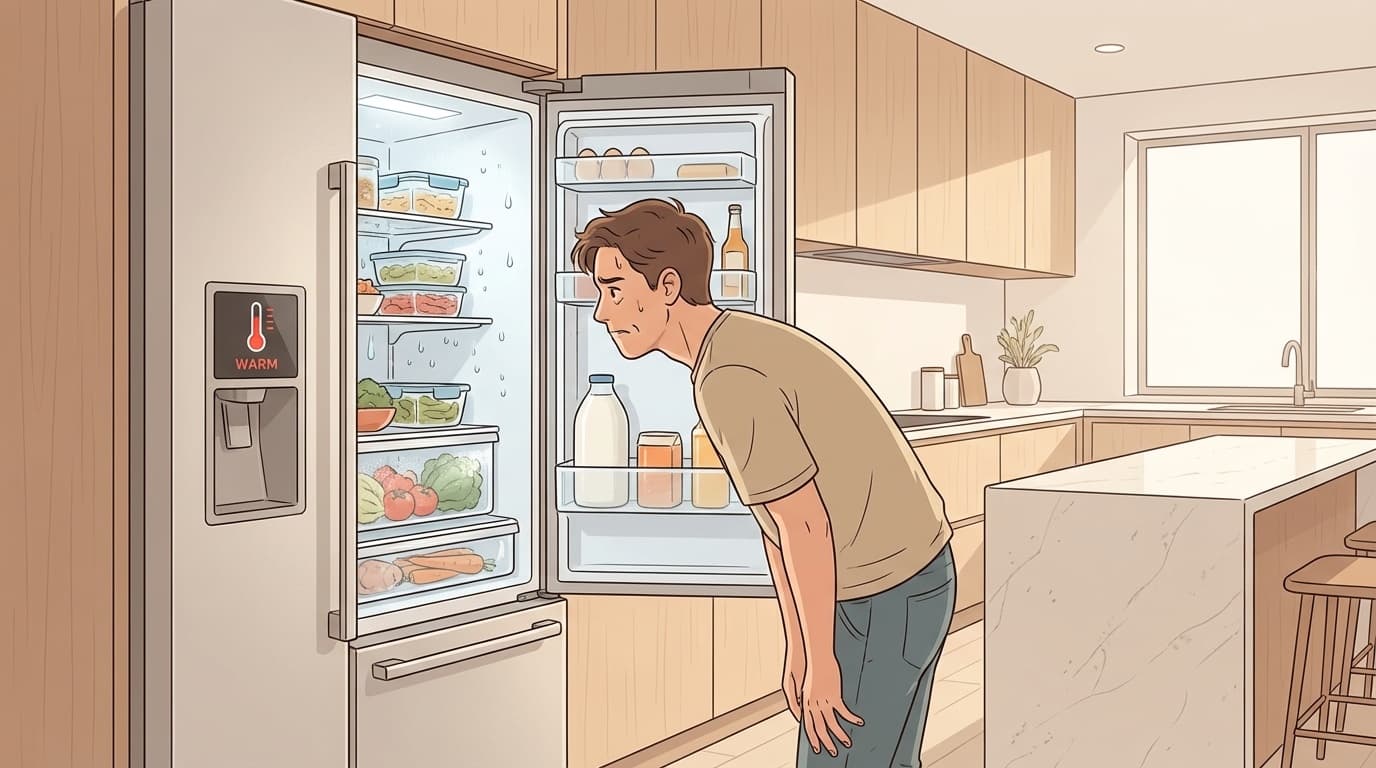
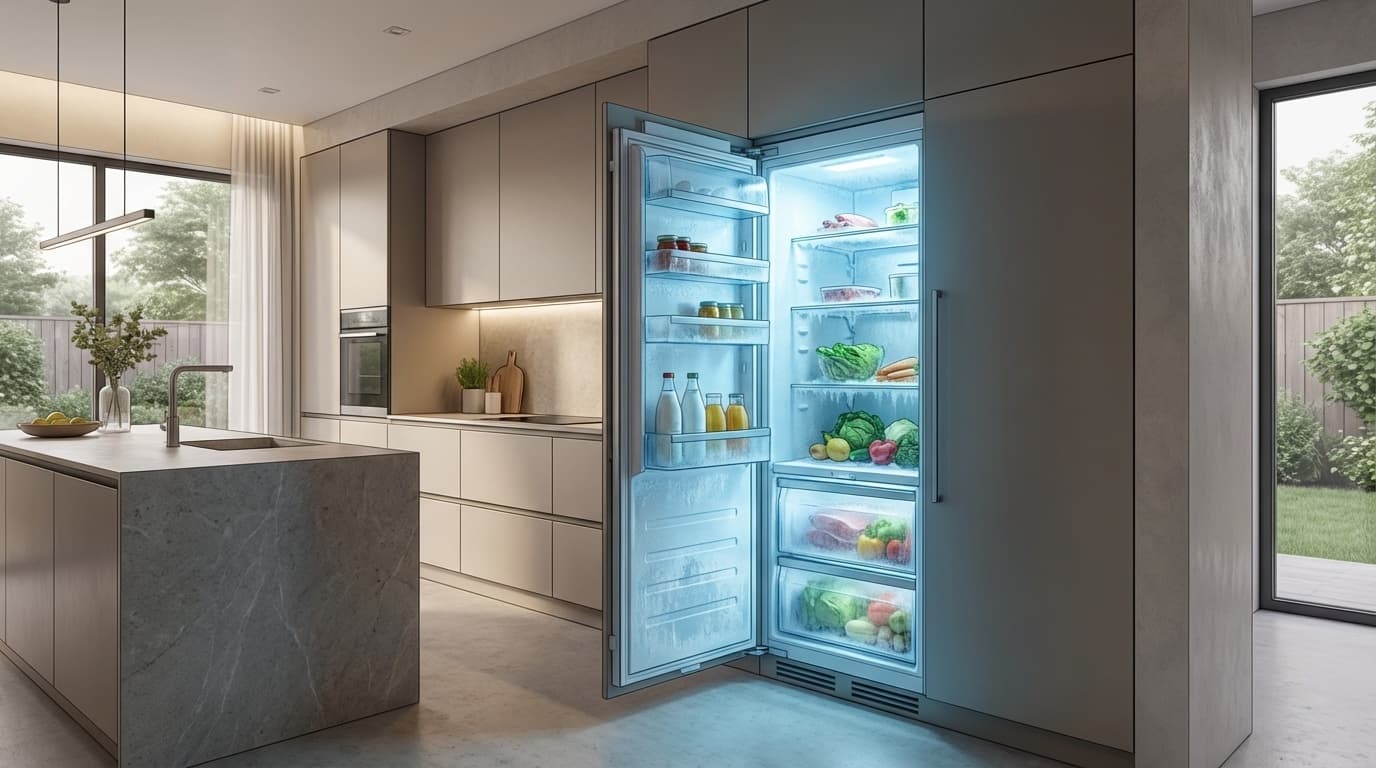
"Wait, why does the fridge feel kind of warm...?" "The power light is on, but it's not cooling at all!" Have you ever run into that?
Your refrigerator runs 24/7, 365 days a year, so it's stressful when it suddenly stops cooling. But in many cases, it isn't actually broken. You may be able to fix it yourself.
In this guide, based on information available as of March 2026, we'll walk through six common reasons a refrigerator won't cool and what you can try right away. We'll also cover how to decide whether it's worth repairing or whether it's time to replace it, so stick with us to the end.
Check These 3 Things First When Your Fridge Isn't Cooling
Before you assume it's broken, check these three basics. The cause is often simpler than you think.
1. Is the power plug fully inserted?
You may be thinking, "There's no way that's it," but plugs can get loosened during cleaning more often than you'd expect. Panasonic's official support page also lists this as one of the first things to check.
2. Does the interior light turn on?
If the light comes on when you open the door, the fridge is getting power. If the light doesn't turn on either, check whether a circuit breaker has tripped.
3. Is the temperature setting on "Low"?
Someone may have bumped the temperature dial and set it to "Low" or "Off" by accident. During summer or when the room is warm, "Medium" to "High" is usually the right range.
6 Reasons Your Fridge Isn't Cooling and What to Do
If those basic checks don't solve it, one of these six issues may be the problem.
Cause 1: The Fridge Is Overpacked
When you stuff the refrigerator full, cold air can't circulate properly, which leads to uneven cooling.
What to do: Aim to keep the fridge about 70% full, and reorganize the food inside. The most important thing is to make sure you aren't blocking the cold-air vents. These vents are often on the back wall of the fridge, so if containers or food are pressed against them, move them away.
By the way, the freezer is the opposite. A fuller freezer holds cold better. The fridge compartment and freezer compartment work differently, so keep that distinction in mind.
Cause 2: The Door Gasket Is Dirty or Worn Out
The rubber seal around the edge of the refrigerator door is called the gasket. If it's dirty, damaged, or worn out, the door won't seal tightly and cold air can leak out.
What to do: Place a business card or a sheet of copy paper in the door and close it. If the paper slips out easily, the gasket isn't sealing well. First, wipe dirt out of the gasket grooves with a cloth dampened with mild detergent. If that doesn't help, the gasket may need to be replaced. If you ask the manufacturer or an appliance store, a gasket-only replacement often costs around a few thousand yen to about 10,000 yen in Japan.
Cause 3: There Isn't Enough Ventilation Space
Refrigerators release heat from the back and sides in order to cool the inside. If the fridge is pressed tightly against a wall or furniture, it can't release heat efficiently, and cooling performance drops a lot.
What to do: According to AQUA's official guide, it's best to leave at least a few centimeters of clearance behind, beside, and above the refrigerator. Dust buildup behind or under the fridge can also block heat release, so vacuum those areas once or twice a year.
Cause 4: There's Heavy Frost Buildup
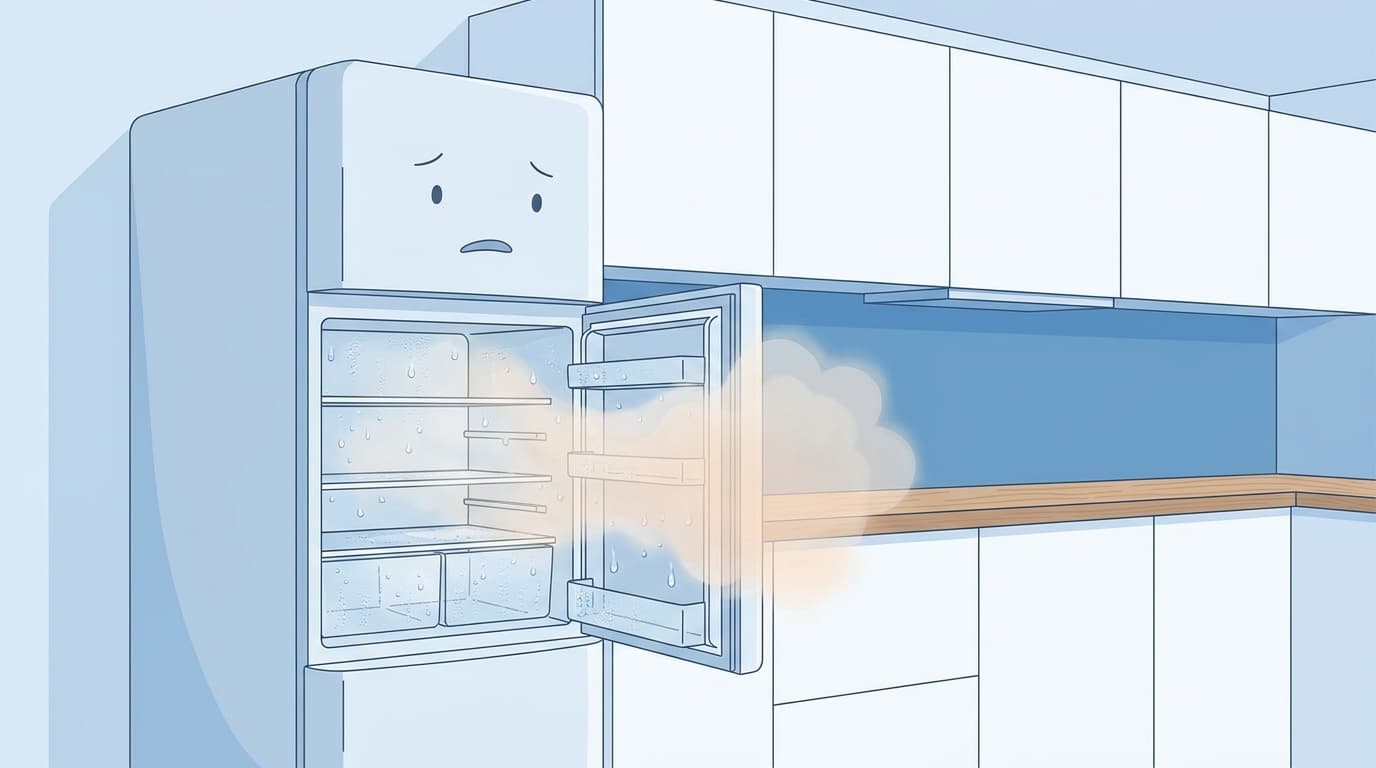
Most newer refrigerators have automatic defrosting, but frequent door opening or a worn gasket can make it hard for the system to keep up. If frost covers the air vent, cold air won't be able to flow.
What to do: Turn off the refrigerator, leave the door open, and let the frost melt naturally over several hours to half a day. Put towels inside and around the fridge because water will drip as the frost melts. Once it's defrosted, turn the power back on and see whether it cools normally.
Cause 5: It's Near Direct Sunlight or a Stove
If your fridge sits in direct sunlight or right next to a gas stove or oven, surrounding heat forces the refrigerator to work harder, making it harder to cool. This is especially noticeable in summer.
What to do: If possible, move the fridge to a better spot. If moving it isn't realistic, blocking direct sunlight with curtains or blinds can still help.
Cause 6: The Compressor or Fan Has Failed
If you've tried everything above and the fridge still won't cool, the problem may be a failed compressor or fan. The compressor circulates refrigerant gas to cool the inside of the fridge. If that part breaks, it isn't something you can repair yourself.
How to judge it: Put your ear near the back or bottom of the refrigerator. If you don't hear any low humming motor sound at all, the compressor may have stopped. On the other hand, unusually loud noises are also a warning sign.
Repair or Replace? How to Decide Which Is Cheaper
"How much does fridge repair cost? Should I just replace it?" That's a tough call. As a rough guide, use the criteria below.
Repair is usually better when:
- You bought it within the last 5 years, and the manufacturer's warranty or extended warranty is still active
- The repair is something like a gasket or thermostat replacement and will cost about 10,000 to 30,000 yen
- The issue is minor and likely fixable with a simple parts replacement
Replacement is usually better when:
- It's been 10 years or more since you bought it. According to Japan's Cabinet Office Consumer Confidence Survey, refrigerators are used for about 14 years on average
- You're told the compressor is broken and the repair will cost 50,000 yen or more
- The manufacturer's replacement parts retention period, usually 9 years after production ends, has passed and parts are no longer available
According to Sharp's official website, estimated on-site refrigerator repair costs vary widely by part. Circuit board repairs run about 18,000 to 43,000 yen, while refrigerant system repairs are roughly 62,000 to 105,000 yen. If the repair cost is more than one-third of the price of a new fridge, it's usually smarter long term to consider replacing it.
Emergency Steps When Your Fridge Stops Cooling
Until you can get a repair or replacement, here's how to keep food from spoiling.
Use ice packs or ice
Put food in a cooler or Styrofoam box with ice packs, and you can usually keep it cold for several hours to half a day.
Use the most perishable food first
Prioritize raw meat, fish, dairy products, and other foods that absolutely need refrigeration. Condiments and unopened bottled drinks can usually sit at room temperature for a while.
Open the door as little as possible
If the refrigerator is still cooling a little, reducing how often you open the door will slow the temperature rise inside. Make a quick list of what you need before opening it.
5 Habits That Help Your Refrigerator Last Longer
While we're here, let's cover a few habits that can help extend your fridge's life. A little routine care can reduce the risk of sudden breakdowns.
- Don't overpack it: Keep the fridge about 70% full and leave room for cold air to move
- Don't put hot food inside: Let hot dishes cool first. Otherwise, the inside temperature spikes and puts extra strain on the compressor
- Keep door openings short: Leaving the door open lets cold air escape and can also lead to frost
- Leave enough ventilation space: Keep a few centimeters of clearance behind, beside, and above the fridge
- Clean around the condenser once or twice a year: Vacuum dust from the back and bottom areas
FAQ
My fridge isn't cooling, but the freezer works. Is it broken?
If only the refrigerator compartment isn't cooling, the fridge-side fan may have failed, or the air vent to the refrigerator compartment may be blocked by frost. First, check for frost around the vent. If that doesn't seem to be the issue, contact the manufacturer and ask about a possible fan problem.
Are clicking or humming noises from the fridge a sign of failure?
A low humming sound while the compressor runs is normal. But if the noise is clearly louder than before, you hear repeated clicking sounds from the relay, or the strange noise won't stop, the compressor may be wearing out. Contact the manufacturer or a repair technician sooner rather than later.
Can unplugging and restarting the refrigerator fix it?
Yes, sometimes. If the control board has a temporary error, unplugging the fridge, waiting about 10 to 15 minutes, and plugging it back in may reset it. If the issue keeps happening, though, the control board may be deteriorating and repair may be needed.
When is the cheapest time to replace a refrigerator?
When new refrigerator models come out around August to October in Japan, older models often get discounted. Year-end/New Year sales and fiscal-period sales in March and September can also be good times to buy. If you aren't in a rush, waiting for one of these periods may save you tens of thousands of yen.
References
- Why Your Refrigerator Isn't Cooling and What to Do: 8 Easy-to-Miss Points — Panasonic UP LIFE
- Why Your Refrigerator Isn't Cooling and Quick Fixes You Can Try — AQUA Official
- Estimated On-Site Refrigerator Repair Costs — Sharp Official Support
- What to Check First When Your Refrigerator Isn't Cooling: Symptom-Based Fixes and Signs of Aging — Haier LIFE STYLE
- How Long Does a Refrigerator Last? Signs It's Time to Replace It and Tips to Extend Its Life — Iris Ohyama