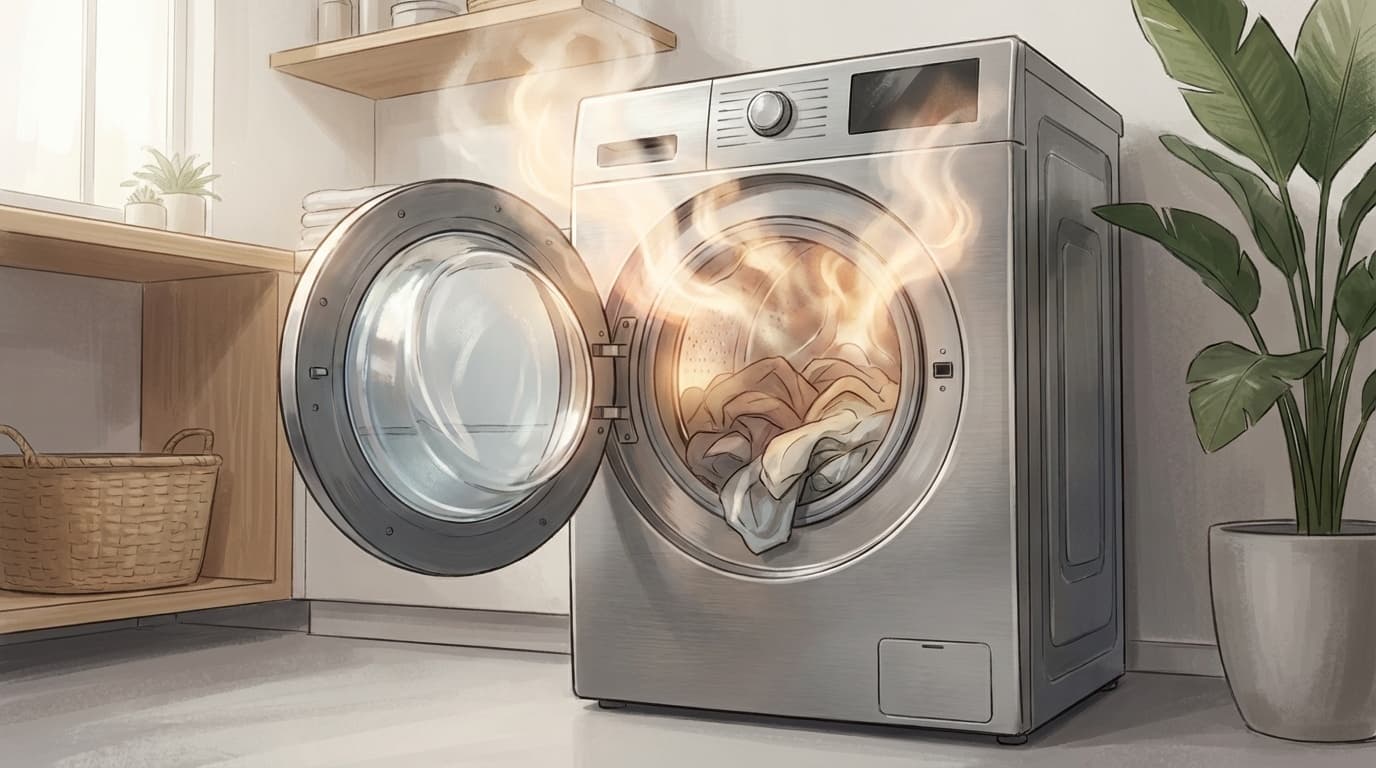
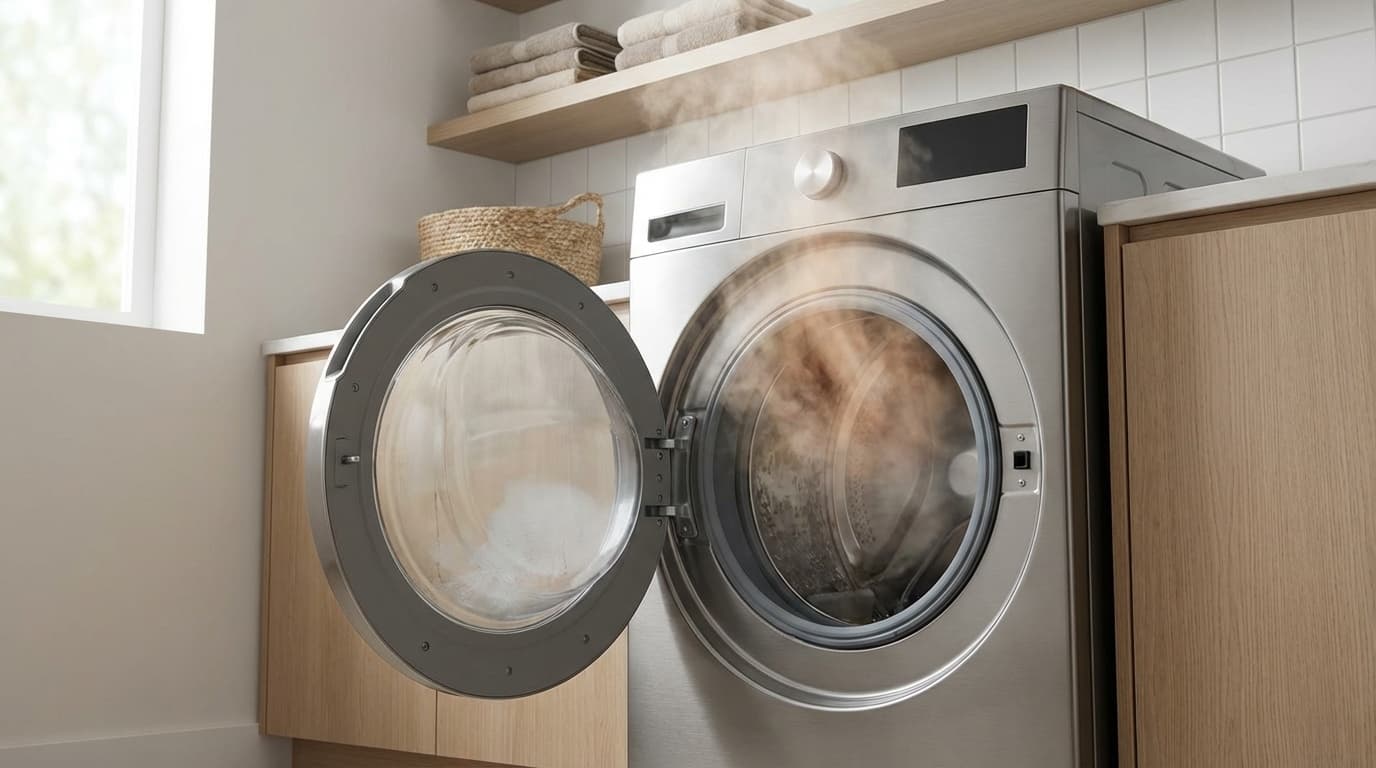
“The wash is done, so why do my dried clothes still smell weird?” If you use a front-load washer-dryer, you've probably run into this at least once.
People often start noticing it a year or two after buying their machine: “It smells warm and musty after drying,” or “That damp laundry smell won't go away.” As of March 2026, front-load washer-dryers are becoming more common every year, and so are odor problems tied to the drying function.
In this article, we'll break down five reasons your front-load washer-dryer may smell during drying, plus practical cleaning tips you can do yourself, including notes for Hitachi, Panasonic, and Sharp models.
5 reasons your front-load washer-dryer smells during drying
If your laundry smells even after drying, the problem usually isn't your washing method. In most cases, it's buildup somewhere in the drying airflow path. There are five common patterns.
Cause 1: Lint and dust have built up in the dryer filter
The dryer filter catches lint, fibers, and dust that come off your clothes. When it gets clogged, warm air can't circulate properly, drying performance drops, and your laundry can stay slightly damp. Damp lint is an easy place for bacteria to grow, which can lead to that heavy, unpleasant musty smell.
According to Panasonic's official support page, the basic rule is to clean the dryer filter every time you use the drying cycle. That may sound annoying, but it usually takes less than 30 seconds: remove the screen and clear away the lint.
Cause 2: Mold or bacteria are growing behind the wash tub
Front-load washers use less water than top-load machines, which means detergent residue, body oils, and grime can remain behind the drum more easily. That residue becomes food for mold and bacteria. When warm drying air passes through, the odor can transfer to your clothes.
In other words, a bad smell during drying often isn't a “dryer problem” at all. It's residue inside the tub getting warmed up and pushed back through the machine.
Cause 3: Water in the drain trap has evaporated, letting sewer odors back up
This one is easy to miss. Your drain has a “drain trap,” a section that holds water to block smells from coming up out of the sewer line.
However, hot exhaust from a front-load washer-dryer can sometimes evaporate that water. Once the trap dries out, sewer odors can flow straight back into the washer and even cling to your laundry.
This is often mentioned with Hitachi Big Drum models in particular. Hitachi's official support page also explains options such as changing the dehumidifying method or using a dedicated cover.
Cause 4: Dust has built up inside the heat pump unit
Many Panasonic and Sharp front-load washer-dryers use a heat pump drying system. It's energy efficient and gentler on clothes, but over time, fine dust can collect on the aluminum fins inside the heat pump unit.
If you've cleaned the dryer filter again and again but the smell still won't go away, buildup inside this unit may be the cause. Unfortunately, this area is hard to take apart and clean yourself, so you'll usually need a manufacturer inspection or cleaning service.
Cause 5: You're using too much detergent or fabric softener
This is more common than you might think. If you add extra detergent because you want a stronger wash, or extra fabric softener because you want a better scent, the rinse cycle may not remove everything.
That leftover residue can stay on clothes and inside the tub, feeding bacteria and turning into an unpleasant smell when heated during drying. Panasonic's official FAQ also recommends using only the specified amount of detergent.
5 cleaning steps you can do yourself
Now that you know the common causes, let's look at what you can do at home. You don't need special tools, and you can check most of these in about 30 minutes on a weekend.
Fix 1: Clean the dryer filter every time
This is the most basic step, but it's also one of the most effective. Every time a drying cycle finishes, take out the filter and remove the lint.
If your filter can be rinsed with water, wash it about once a week and let it dry completely before putting it back. If the mesh is badly clogged, gently scrub it with an old toothbrush to remove fine fibers.
Fix 2: Make monthly tub cleaning a habit
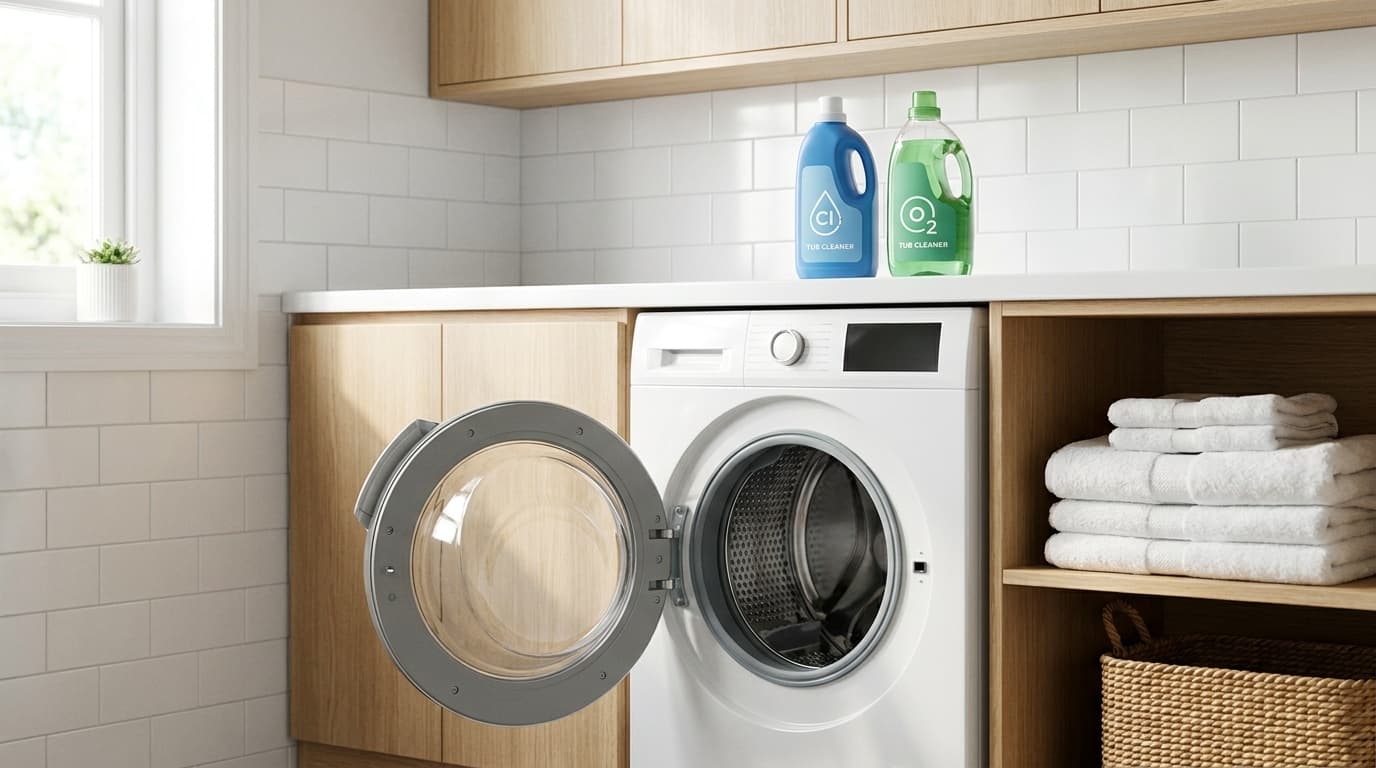
To prevent mold and bacteria behind the drum, run a tub-cleaning cycle about once a month.
Use a chlorine-based washing machine tub cleaner; chlorine bleach for laundry may also be allowed, depending on your machine's manual. There are oxygen-based and chlorine-based cleaners, but for front-load machines, chlorine-based cleaners are generally recommended because they foam less. If your model has a dedicated tub-cleaning cycle, use that.
The process is simple: add the cleaner, select the tub-cleaning cycle, and start. When it's done, leave the door open so the inside can dry.
Fix 3: Clean the drain filter, also called the lint filter, once a week
Don't forget the drain filter, or lint filter, usually located near the lower front of the machine. It can collect debris, lint, and sometimes even coins or hairpins.
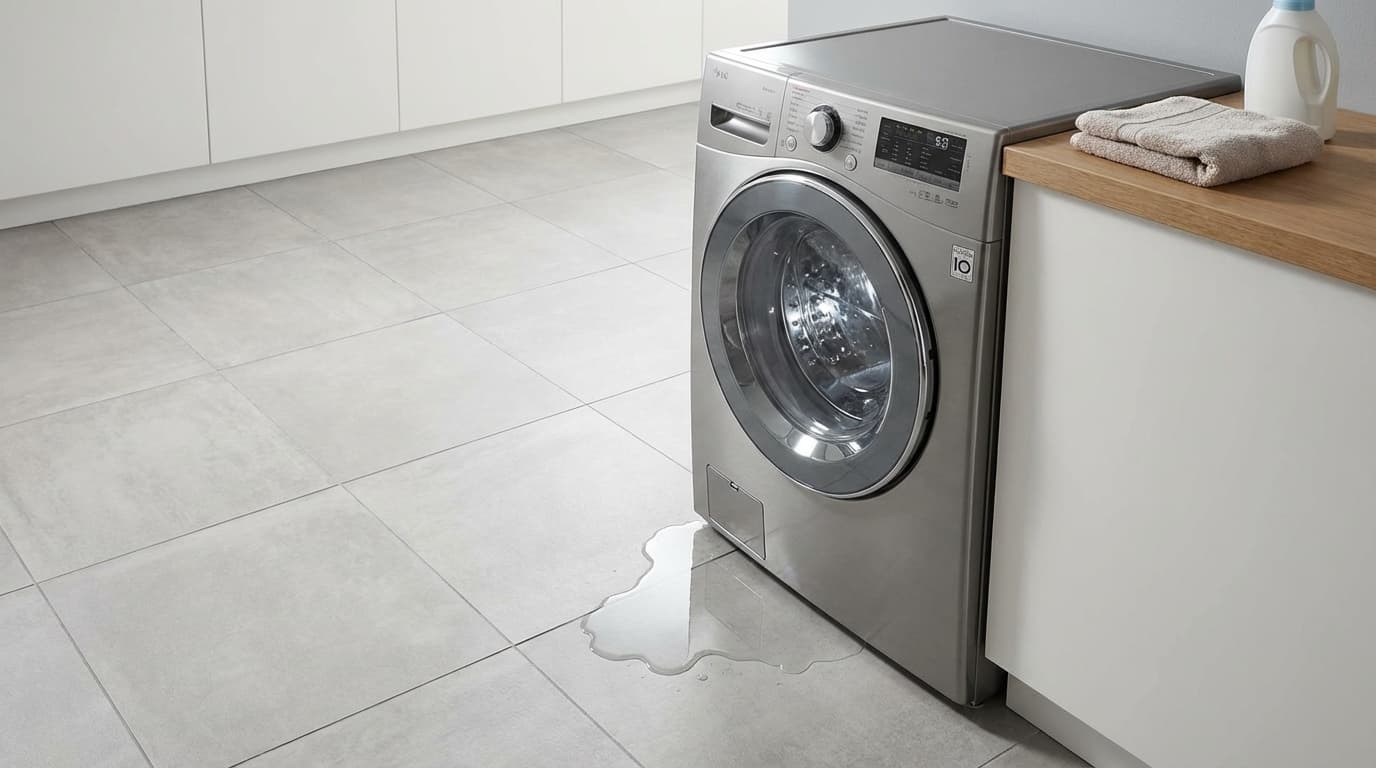
Water may spill out when you remove it, so place a towel underneath first. Pull out the filter, remove the debris, rinse it with water, and put it back securely.
Fix 4: Add water to the drain trap
If the smell is more like sewer gas, the drain trap may have dried out. The fix is simple: pour about one basin of water into the drain before running the drying cycle.
For Hitachi front-load washers, you may also be able to change the dehumidifying method in the settings from “air-cooled dehumidifying” to “water-cooled dehumidifying.” This uses water during drying to release heat, making it harder for the drain trap water to evaporate. Just keep in mind that your water bill may go up slightly.
Fix 5: Leave the door open after drying
If you close the door right after drying, moisture can stay trapped inside, creating a perfect environment for mold and bacteria.
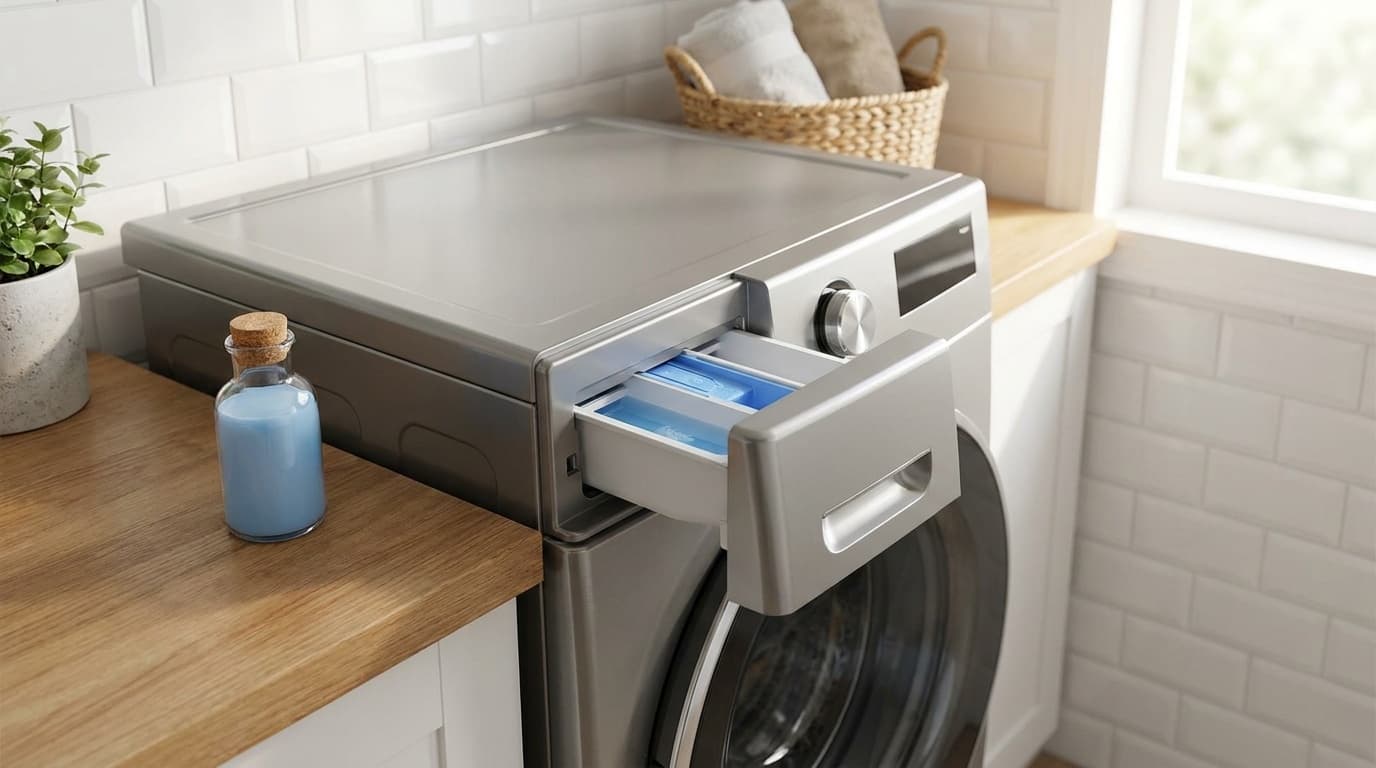
After the drying cycle ends and you remove the clothes, leave the door slightly open so moisture can escape. It's even better to leave the detergent drawer open too.
Brand-specific care tips to know
Hitachi Big Drum
Hitachi Big Drum models released in 2022 or later don't have a dryer filter. Instead, they use a feature called “Raku Mente,” which catches lint from drying in the lint filter, also known as the drain filter. That makes cleaning the lint filter even more important.
As mentioned above, these models are also known for drain-trap water loss that can lead to sewer-like odors. If the smell is less like a musty towel and more like sewage, check the dehumidifying setting first.
Panasonic
Panasonic front-load washer-dryers commonly use heat pump drying, which is excellent for energy efficiency. Many models have a two-layer dryer filter, and it's easy to forget the inner filter, so be sure to clean both parts.
Panasonic's official support page explains how to clean not only the dryer filter but also the drying airflow path. If your model has an automatic cleaning feature, use it regularly.
Sharp
Sharp's official troubleshooting guide lets you check possible causes and fixes by odor type. Some Sharp front-load models include unique features such as micro high-pressure washing and Plasmacluster, so it's worth checking your manual for the care method that matches your exact model.
What if the smell still won't go away?
If you've tried the steps above and the odor still isn't improving, consider these options.
Book a professional washer cleaning
A professional can disassemble and clean areas you can't reach yourself, including the back of the drum and deeper parts of the drying path. As of March 2026, the typical cost is about 15,000 to 30,000 yen. Having it done once every two to three years can greatly reduce odor problems.
Use the manufacturer's inspection service
For areas even cleaning companies may struggle with, such as the heat pump unit, the manufacturer's service team is the safer choice. If your washer is still under warranty, the service may be free, so check your warranty documents.
Know when it's time to replace the machine
The standard design life of a front-load washer-dryer is about seven years. If you've been using yours longer than that, age-related wear may be part of the odor problem. Compare the repair cost with the cost of replacing the machine before deciding.
FAQ
How often should I clean the dryer filter in a front-load washer-dryer?
The basic rule is to clean it every time you use the drying cycle. Official support pages from brands such as Panasonic and Hitachi recommend cleaning it each time. At minimum, rinse it with water once a week.
Should I use an oxygen-based or chlorine-based tub cleaner?
For front-load washer-dryers, a low-foaming chlorine-based cleaner is generally recommended. Oxygen-based cleaners can create a lot of foam, which may trigger errors in front-load machines. Always check the type specified in your manufacturer's manual.
Why do my dried clothes smell like sewage?
The water in the drain trap may have evaporated from the heat of the drying cycle, allowing sewer odors to back up from the drain pipe. Pouring water into the drain before drying or changing the dehumidifying method to “water-cooled dehumidifying” may help.
How much does professional washer cleaning cost?
As of March 2026, disassembly cleaning for a front-load washer-dryer typically costs around 15,000 to 30,000 yen. It's more expensive than cleaning a top-load washer because the structure is more complex, but doing it once every two to three years can greatly reduce odor problems.
My newer Hitachi model doesn't have a dryer filter. Does that mean I don't need to clean anything?
Hitachi Big Drum models released in 2022 or later removed the dryer filter and use the “Raku Mente” system, which collects lint in the lint filter, also called the drain filter. You don't need to clean a separate dryer filter, but cleaning the lint filter regularly becomes even more important.
References
- What to do when your washing machine smells — Panasonic Official Support
- Front-load washer: dryer filter and drying path care — Panasonic Official Support
- How to clean the dryer filter on a front-load washer — Hitachi Official Support
- Odor concerns: front-load washer-dryer troubleshooting guide — Sharp Official Support
- Why washer-dryers smell and what to do when dried laundry has an odor — Osoji Honpo