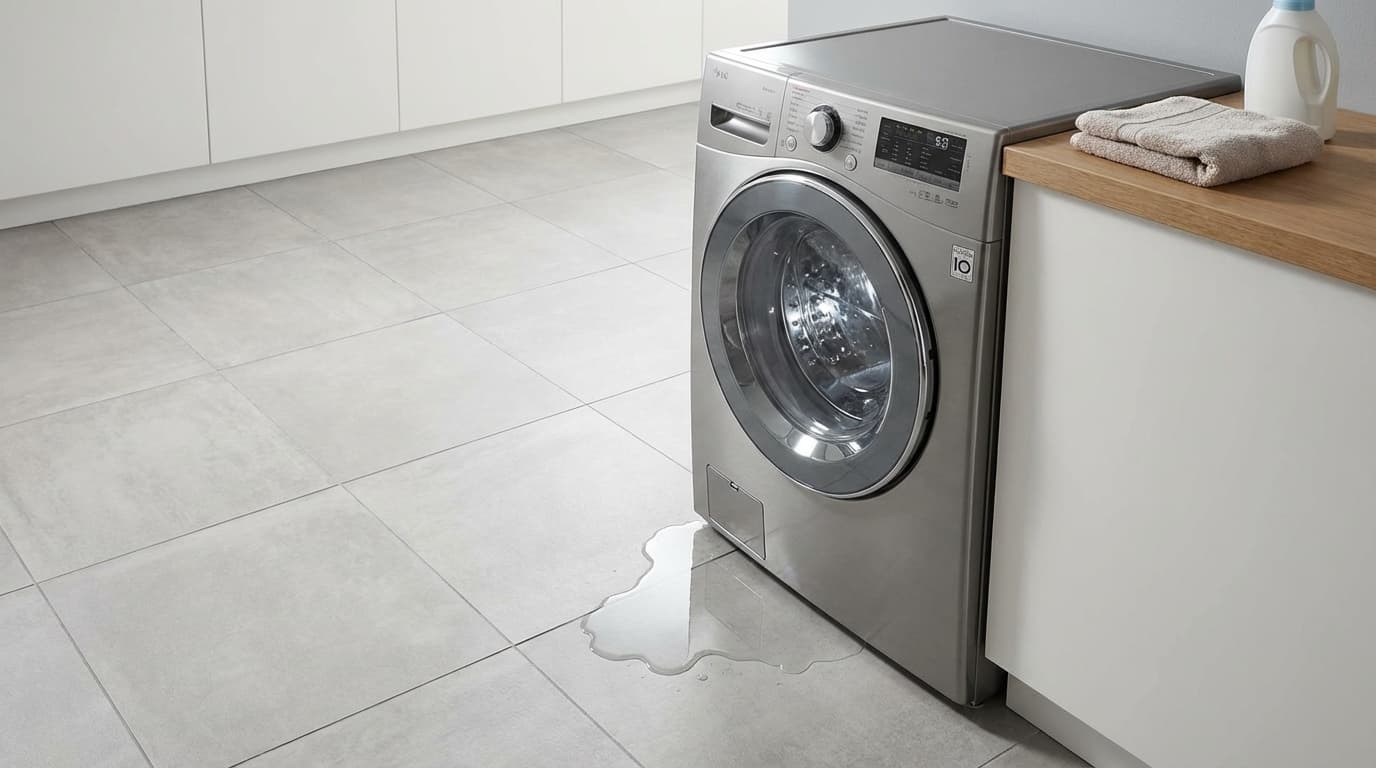
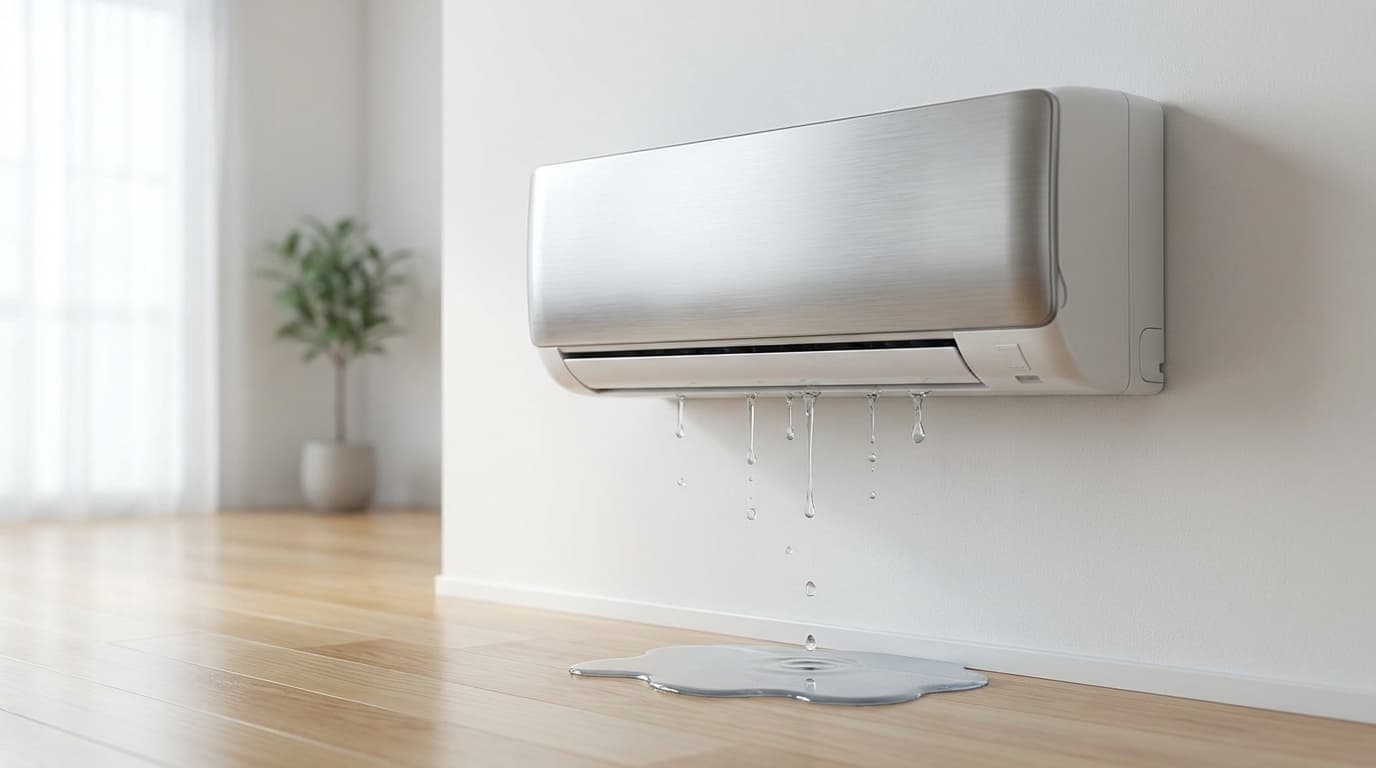
``When I turned on the air conditioner, water dripped from the indoor unit...'' ``The area around the air outlet was wet'' - Be careful as this can cause mold and electrical leakage if left unattended.
It is said that approximately 80% of water leaks from air conditioners are due to problems with the drain hose. This means that in most cases, you can probably fix it yourself.
In this article, based on information as of March 2026, we will provide an easy-to-understand explanation of six reasons why water leaks from an air conditioner, as well as first aid measures that you can take yourself and how to clean the drain hose. We will also introduce criteria for determining whether you should hire a contractor, so please use this as a reference.
Check first! First aid measures to take if you find a water leak in your air conditioner
If you notice a water leak, first take emergency measures using the following three steps.
Step 1: Stop the air conditioner
Turn off the power using the remote control. If you continue to operate the product with water leaking, water may splash onto the electronic board and cause a malfunction.
Step 2: Unplug the power outlet (or turn off the breaker)
Unplug the power plug to prevent electrical leakage. Be careful not to touch it with wet hands.
Step 3: Place a bucket or towel to catch water droplets
Water may continue to drip for a while even after the machine is stopped. To protect the floor and wallpaper, catch it with a bucket or towel.
6 reasons why water leaks from your air conditioner
There are six main causes of water leakage from air conditioners. From top to bottom, these are the most common causes.
Cause 1: Drain hose is clogged (most common)
While the air conditioner is operating, it condenses moisture in the air and collects it in the drain pan (saucer). This water is discharged outside through a drain hose.
If dust, mold, insects, etc. accumulate in the hose and it becomes clogged, there will be no place for water to escape, causing water to flow backwards from the indoor unit and cause a leak. According to Kurashi no Market, most of the causes of air conditioner water leaks are said to be clogged drain hoses.
Cause 2: The tip of the drain hose is blocked
This is a case where the tip of the drain hose that extends outside is blocked with fallen leaves, mud, snow, etc. Even if the hose itself is not clogged, if the outlet is blocked, water will not drain out.
Also, if the end of the hose is submerged in water in a puddle or drain, water may flow back up.
Cause 3: Sagging drain hose/reverse slope
Drain hoses are designed to flow water using gravity, so if there are any parts that are sagging or pointing upwards, the water will not flow.
If water leaks immediately after moving or installing an air conditioner, there is often a problem with the hose routing during installation.
Cause 4: Dirty drain pan/overflow
If mold or sludge-like dirt accumulates in the drain pan inside the indoor unit, the drain will become blocked and water will overflow. In this case, it is often difficult to deal with the problem yourself as it is necessary to disassemble and clean the inside of the air conditioner.
Cause 5: Filter clogging
Dirty filters are surprisingly often overlooked. If the filter is clogged with dust, the air flow inside the air conditioner will be poor, and condensation may accumulate abnormally on the heat exchanger (fins), exceeding the drain pan's processing capacity.
Panasonic's official support page also recommends cleaning the filter first when there is a water leak.
Cause 6: Failure/deterioration of internal parts
The cause may be a crack in the drain pan, a disconnection of the drain hose, or deterioration of the insulation material. Air conditioners that have been used for more than 10 years tend to have more water leakage due to aging.
You can do it yourself! 3 ways to unclog the drain hose
Drain hose clogs, which account for most of the causes, can often be resolved by yourself. Try the following three methods.
Method 1: Using a drain hose cleaner (suction pump) [Recommended]
This is the most reliable method. You can purchase it at home centers or Amazon for about 500 to 1,500 yen.
Steps:
- Find the tip of the drain hose coming out outdoors (the thin hose near the outdoor unit)
- Insert the cleaner nozzle into the end of the hose
- Push the handle and then pull it (the mechanism sucks out the blockage when you pull it)
- Repeat several times until no dirty water comes out
The point is The order of "push → pull". If you push it in, you'll push the clog deeper, so be sure to pull it out to suck it out.
Method 2: Vacuum it out
This is an alternative if you don't have a drain hose cleaner on hand.
Steps:
- Cover the end of the drain hose with a thin cloth (such as gauze) and secure it with a rubber band
- Place the nozzle of the vacuum cleaner on top of the cloth and apply suction for just 2 to 3 seconds
- Remove the cloth and check the dirt that has come out
Caution:Sucking water into the vacuum cleaner may cause malfunction, so please keep the suction for a short period of time (2 to 3 seconds). Be sure to cover it with cloth. Osoji Honpo also introduces a similar method, but since there is a risk of damaging the vacuum cleaner, they recommend using a drain hose cleaner if possible.
Method 3: Remove dirt from the end of the hose by hand
If the area around the hose outlet is clogged with debris, you may be able to clear it by simply removing it with disposable chopsticks or an old toothbrush. If the tip is touching the ground or submerged in a puddle, try to raise the tip 5 to 10 cm above the ground.
Still not fixed? 5 cases when you should ask a contractor
If the following cases apply to you, it is difficult to deal with the problem yourself, so please consult an air conditioner cleaning company or the manufacturer's repair service.
- Water continues to leak even after clearing the clogged drain hose→ Possibility of dirty drain pan or component failure
- The drain hose runs inside the wall and cannot be accessed from the outside→ Only a contractor can handle it
- Water is dripping from the back of the indoor unit→ Possibility of deterioration of the piping insulation or poor connection
- Water leak with strange odor→ Severe mold and requires disassembly and cleaning
- If your air conditioner is more than 10 years old→ It may be cheaper to replace than repair
Prevent water leaks! Three points for daily air conditioner maintenance
Water leaks can be prevented with a little daily maintenance.
Point 1: Clean the filter once every two weeks
The key to preventing water leaks is to prevent dust from building up in the filter. Daikin's official FAQ also recommends regular cleaning of the filter to prevent water leaks. Just suck up the dust with a vacuum cleaner.
Point 2: Check the drain hose exit before the season
Before you start using the air conditioner, check the end of the outdoor drain hose. It may be clogged with fallen leaves or cobwebs. It is also effective to attach an insect repellent cap (available at 100 yen stores).
Point 3: Clean the inside of your air conditioner once a year
Dirty drain pans and heat exchangers are difficult to clean by yourself. We recommend having your air conditioner professionally cleaned once every 1 to 2 years. During the off-season (March-April, September-October), it's easy to make reservations, and some companies offer discounts.
FAQ
What will happen if you leave the air conditioner leaking?
In addition to causing stains and mold on wallpaper, water splashing onto electronic boards can lead to electrical leakage and malfunction. If you notice a water leak, stop driving immediately and take action.
Can water leak when heating rather than cooling?
Yes. During heating, condensation occurs on the outdoor unit, but if water is not properly drained during defrosting operation, water may come out of the outdoor unit. Water leakage from indoor units mainly occurs during cooling and dehumidification operations.
If the air conditioner leaks in a rental property, who will pay for the repair costs?
If the air conditioner is installed, the landlord (management company) is basically responsible for the cost. Please contact the management company first. If you purchase the air conditioner yourself, you will be responsible for the cost.
Where can I buy drain hose cleaner?
You can purchase it at the air conditioner supplies section of home centers (Cainz, Konan, Komeri, etc.) or online shopping sites such as Amazon. Prices range from 500 to 1,500 yen. You can find it by searching for "air conditioner drain hose cleaner."
How often should I clean the drain hose?
We recommend doing this once a year, before the cooling season starts (around May or June). It's too late to do this once a water leak occurs, so it's safe to get into the habit of doing it as a preventive measure.
References
- When water leaks or drops from the air conditioner unit — Panasonic official FAQ
- Water leaks from the indoor unit (room air conditioner) — Daikin official FAQ
- Water leaks from the air conditioner | Causes and first aid measures and solutions that you can do — Living Market
- How to clean the air conditioner drain hose? Leaving dirt behind can cause water leaks! — Osaiji Honpo
- Air conditioner cleaning price list (March 2026) — Living Market