"The air conditioner doesn't respond when you press the remote control" or "the air conditioner suddenly stops working" - such problems happen quite often. Especially in the middle of summer or winter, if your air conditioner doesn't work, it can be really frustrating.
But wait a minute. Most of the reasons why the air conditioner does not turn on are not actually a malfunction. There are quite a lot of cases that you can fix by yourself, such as a dead battery, incorrect settings, or a tripped breaker.
In this article, based on information as of March 2026, we will provide an easy-to-understand explanation of seven possible causes when the air conditioner does not work or turn on, and how to deal with each. Before calling a professional, please try out the contents of this article in order.
Cause 1: Dead battery or poor contact in the remote control
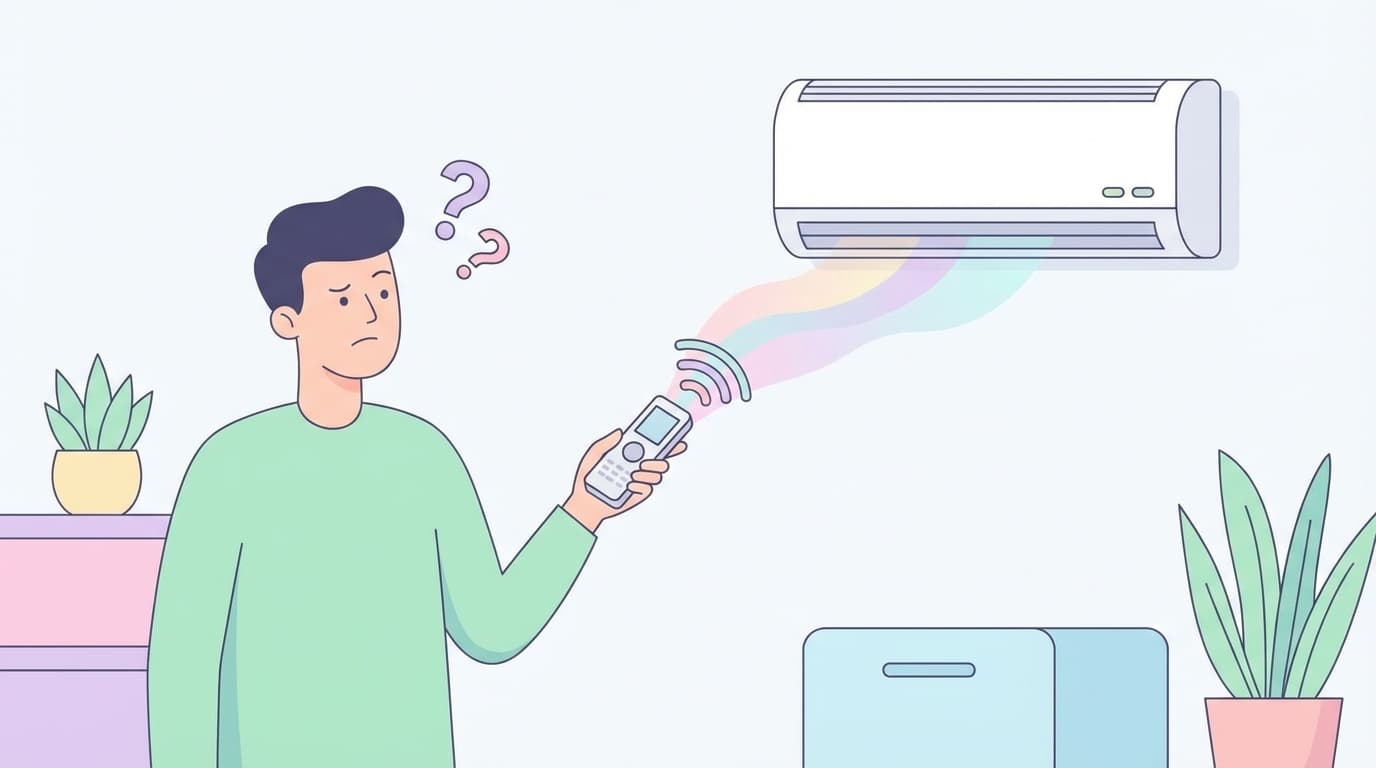
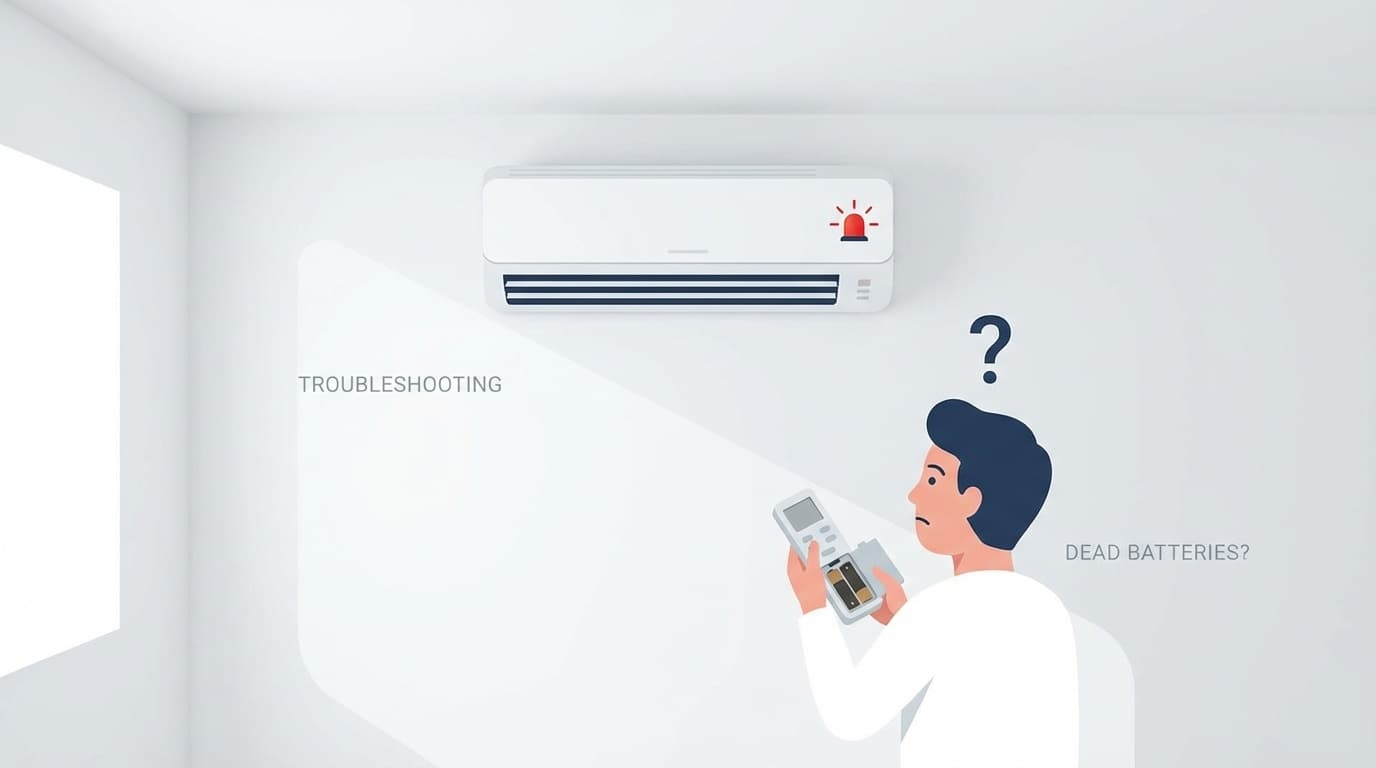
When the air conditioner does not turn on, the most common reason is the battery in the remote control running out. You may think, "Oh, that's what it is?", but it's surprisingly easy to overlook.
The first thing you should check is whether the LCD screen is displayed when you press the button on the remote control. If the screen is dim or nothing is displayed, the battery is most likely dead.
Workaround:
- Replace both batteries with new alkaline batteries (replace only one battery)
- Check if the battery orientation (+ and -) is correct
- After replacing the batteries, press the Reset (ACL) button on the remote control with a thin rod
- If the battery terminals are dirty, wipe them with a dry cloth
According to Panasonic official FAQ, it may not work properly if you do not press the reset button after replacing the battery. Don't forget to do it.
Cause 2: The power plug of the air conditioner is disconnected/the breaker is tripped
If the remote control does not respond even after replacing the batteries, the next thing to check is the power supply.
Air conditioner power plugs are often located high up on the wall, making them difficult to see. They may be accidentally removed when moving or redecorating, or may become loose due to earthquakes.
Workaround:
- Make sure the plug is firmly inserted into the air conditioner outlet
- Open the distribution board (breaker box) and check if the air conditioner breaker is turned off
- If the breaker has tripped, turn it back on. If it frequently crashes, there is a possibility of electrical leakage or over-capacity, so consult an electrical contractor
By the way, the basic rule is to use a dedicated circuit (breaker for the air conditioner only) for air conditioners. If it is connected to the same circuit as other home appliances, the power consumption will increase and the breaker will trip more easily.
Cause 3: Maybe the problem is with the air conditioner itself, not the remote control? How to tell
The air conditioner doesn't work even though the remote control's battery and power supply are fine. In such a case, it is important to determine whether the problem is with the remote control or the main unit.
Most air conditioners have an "Emergency operation button" on the main unit. When you open the cover of the indoor unit, there should be a small button or switch.
How to check the emergency operation button:
- Open the front panel of the indoor air conditioner unit (many types open by pulling it toward you)
- Look for the buttons labeled "Emergency operation" and "Autonomous operation"
- Press the button and check if the air conditioner works
If activated by emergency operation → There is a malfunction on the remote control side. You can replace it with a new remote control or use an infrared remote control app on your smartphone.
If the unit does not work even after emergency operation → There is a high possibility that the air conditioner itself is malfunctioning. Consult with manufacturer support or a repair shop.
Hitachi's official support page also recommends that if there is a problem with the remote control, first use the emergency operation button.
Cause 4: Pause due to protection function (3 minute rule)
Have you ever stopped the air conditioner and then tried to restart it immediately, but it doesn't respond? This is not a malfunction, but a protective function of the air conditioner.
If you restart the air conditioner compressor immediately after it has stopped, there is a risk that it will be overloaded and break down. Therefore, many manufacturers have built-in protection circuits that preventrestarting for 3 to 5 minutes after stopping.
Workaround:
- Turn off the air conditioner and wait at least 3 minutes, preferably at least 5 minutes before operating it again using the remote control
- The same applies immediately after a power outage or instantaneous power outage. Don't rush, wait a few minutes
In other words, this protection function is the cause of some of the cases where the device suddenly stops working even though it was working a while ago. The problem often goes away if you wait a little while, so first calm down and wait 3 minutes.
Cause 5: Blinking light is a sign of an error code
If the lights on the air conditioner (operating lamp, timer lamp, etc.) are blinking, the air conditioner has detected some kind of error.
Lamp flashing patterns (color, number of times, speed) vary depending on the manufacturer and model, but can be roughly divided into the following three types.
- Blinking during normal operation (during defrosting operation, timer standby, etc.) → Not a malfunction
- Maintenance notification (Notice for filter cleaning, etc.) → Cleaning will fix it
- Abnormality notification (internal error, sensor failure, etc.) → Need to contact manufacturer
How to check the error code (by manufacturer):
- Daikin: Long press the "Cancel/Confirm" button on the remote control to display the error code
- Panasonic: Press the diagnostic button on the remote control with a thin stick and display with the "temperature/temperature" button
- Hitachi: Errors are determined by the number of times the timer lamp blinks. Some models have a "Voice Tell" function on the remote control
- Mitsubishi Electric: Check the error code by the number of blinks of the operation lamp
Once you know the error code, search on the manufacturer's official website to find the solution. Daikin FAQ page and Panasonic's error display page may be helpful.
Cause 6: Outdoor unit trouble
Even if there is no problem with the indoor unit of the air conditioner, it may stop working due to a problem with the outdoor unit. Since outdoor units are installed outdoors, they are easily affected by the environment.
Common outdoor unit troubles:
- Air outlet is blocked: If something is placed on it or the cover is left on, heat exchange will not be possible and it will stop. Leave at least 30cm space in front of the air outlet
- Covered with snow or ice: If the outdoor unit freezes in winter, it will no longer work. Remove snow within a safe range and pour hot water (no boiling water) to melt it
- High temperature due to direct sunlight: If the outdoor unit becomes hot in midsummer, the protection function may shut down. Installation of a sunshade is effective
- Foreign objects are caught in the fan: Dead leaves or plastic bags may get caught in the fan and prevent it from moving
Yamada Denki's explanatory article introduces a case where the effectiveness of the air conditioner can be significantly improved simply by improving the environment around the outdoor unit. First, let's visually check the condition of the outdoor unit.
Cause 7: Failure/lifespan of the air conditioner
If the air conditioner still does not work even after checking all the causes listed above, the air conditioner may be malfunctioning or at the end of its service life.
The lifespan of a household air conditioner is generally about 10 to 13 years. According to Panasonic's official website, the period for which manufacturers retain repair parts (minimum retention period for repair performance parts) is 10 years from discontinuation of production.
Which is better, repair or replacement?
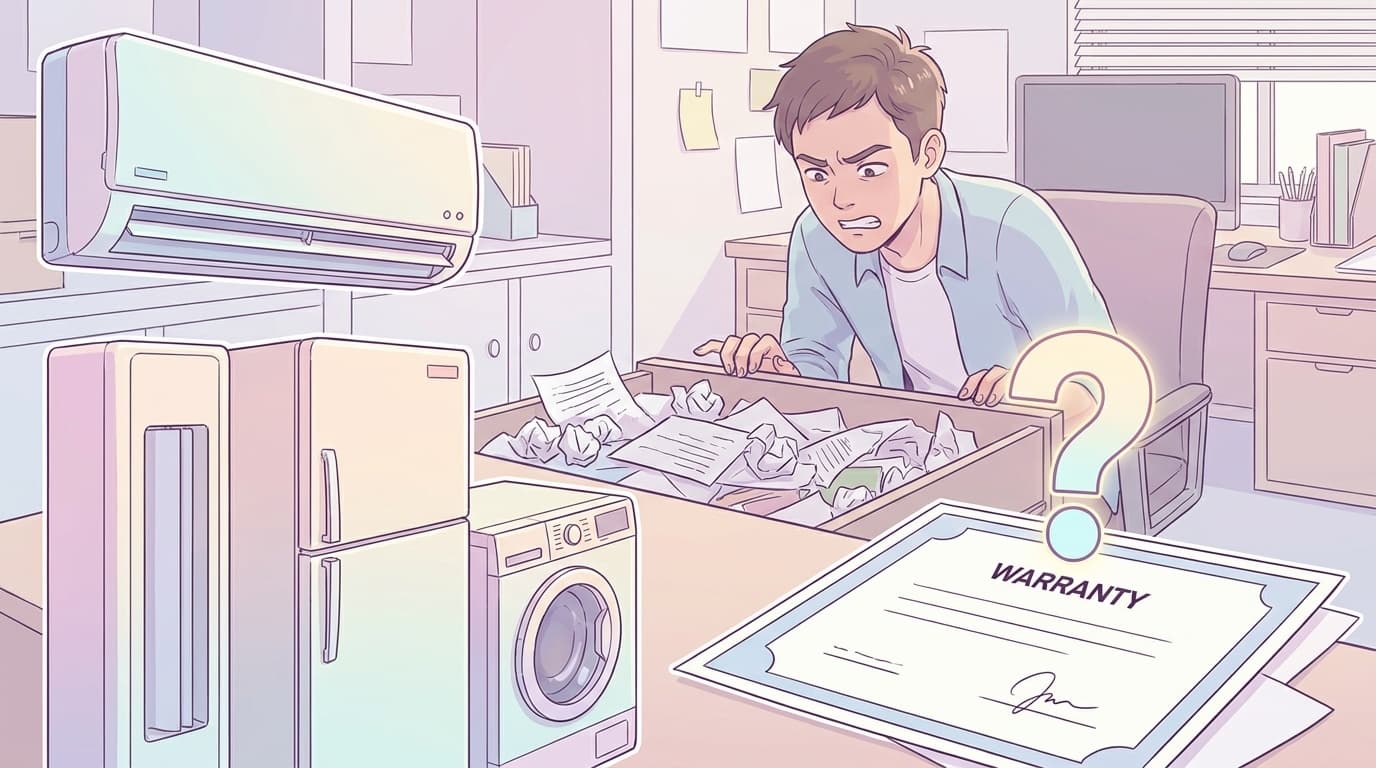
- Within 5 years of purchase: Manufacturer's warranty and extended warranty are likely to be available. First, check the warranty and request a repair
- 5 to 10 years after purchase: Compare repair costs and replacement costs. If the repair cost exceeds 30,000 yen, consider replacing it
- More than 10 years after purchase: Replacement recommended. In addition to the possibility of missing parts, the latest models have significantly improved energy-saving performance, resulting in significant savings on electricity bills
As of March 2026, the energy saving standards of each manufacturer are becoming stricter year by year, and in some cases, the annual electricity bill is several thousand yen to more than 10,000 yen cheaper than an air conditioner from 10 years ago. In the long run, it is often cheaper to replace your old air conditioner than to keep repairing it.
Things to do before hiring a contractor
If you find yourself thinking, "I don't think I can fix it myself...", it will be a good idea to write down the following information before contacting a repair company or manufacturer support.
- Manufacturer name and model number (sticker affixed to the side or bottom of the indoor unit)
- Purchase date (required to confirm warranty period)
- Details of symptoms (When did it start? What is the flashing pattern of the lamp? What is the error code?)
- Things you tried (replaced the battery, checked the breaker, tried emergency operation, etc.)
Requests for repairs should basically be made at the store where you purchased the product or the manufacturer's repair reception desk. If you decide to hire a repair company you found online, make sure that their pricing structure is clear and that they will provide you with an estimate in advance.
FAQ
If the air conditioner remote control doesn't work, can I use my smartphone instead?
Yes, if you have an infrared compatible Android smartphone, you can operate it using the manufacturer's original app or a general-purpose remote control app. iPhone does not have infrared capability, so a separate infrared transmission adapter (such as SwitchBot) is required.
Is it possible to fix the problem by unplugging the air conditioner and leaving it alone?
Yes, the so-called "unplugged reset" may be effective. If you unplug the power plug, leave it for 10 to 15 minutes, and then plug it back in, the internal control board may be reset and restored.
Is it a malfunction if the air conditioner stops producing hot air in winter?
If the heating stops temporarily during heating, it is most likely due to "defrosting operation" and is not a malfunction. The heating will stop for about 10 to 15 minutes to melt the frost on the outdoor unit, but it will restart automatically. If it does not return for more than 30 minutes, there may be a problem.
If the rented air conditioner breaks, who will pay for the repairs?
In the case of an air conditioner that was originally installed in the rental property (treated as equipment), as a general rule, the landlord (management company) will bear the repair costs. First, contact the management company. The key is to consult with a professional before calling one yourself.
What are the signs that the air conditioner is nearing the end of its lifespan?
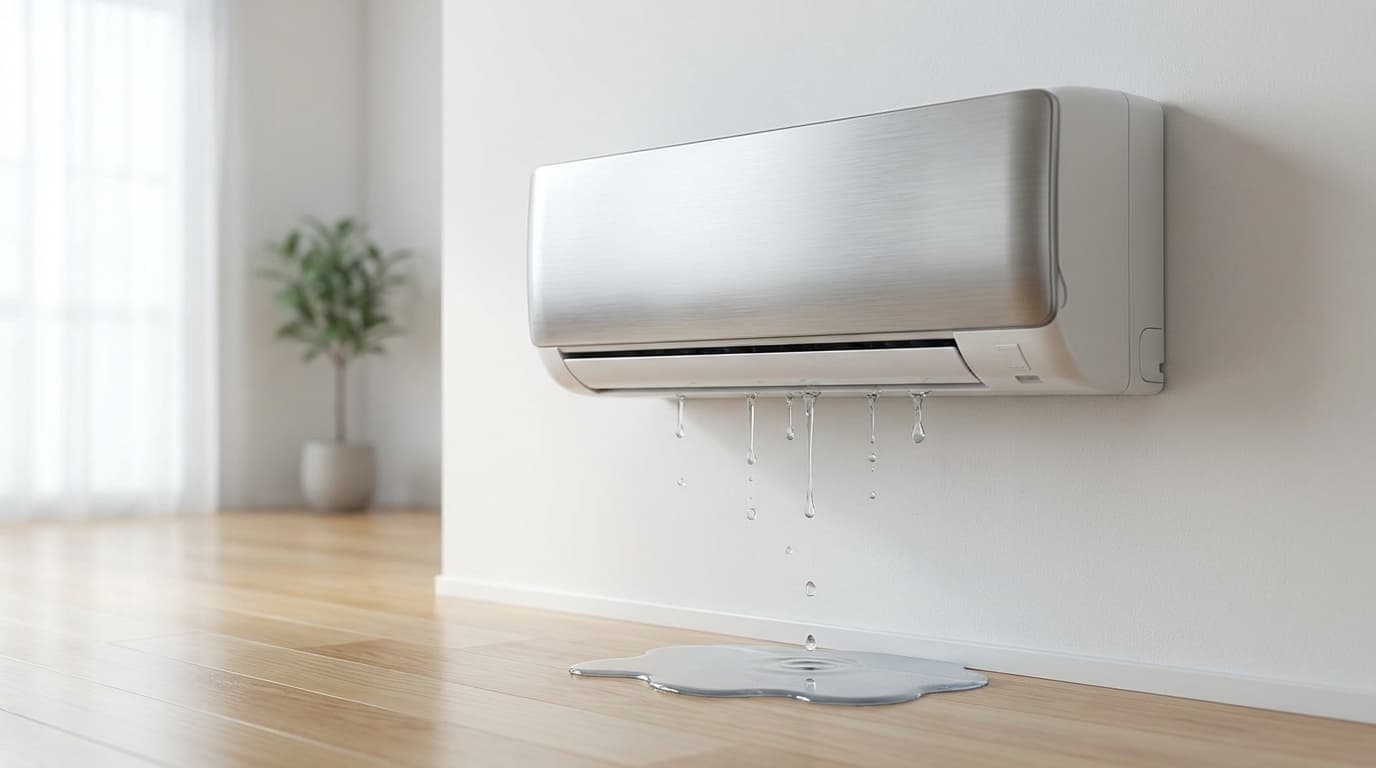
There are strange noises, strange odors, the effectiveness of the heating and cooling system has become noticeably worse, water leaks, and the electricity bill has suddenly increased - these are signs that the product has reached the end of its lifespan. Especially if it's been more than 10 years since you bought it, it's time to consider replacing it.
References
- If the air conditioner does not respond to the remote control or the power does not turn on — Panasonic official FAQ
- No warm air, no warm air (room air conditioner) — Daikin Frequently Asked Questions
- Points to know whether it is better to replace or repair your air conditioner — Panasonic UP LIFE
- The outdoor unit of the air conditioner does not work! Detailed explanation of causes and solutions! — Yamada home appliance information site
- The air conditioner is not working! What to do when the power does not turn on? 4 things to try first — Kojikaji