If you’ve been denied for a credit card or couldn’t get approved for a loan, it’s natural to wonder, “Am I on some kind of blacklist?”
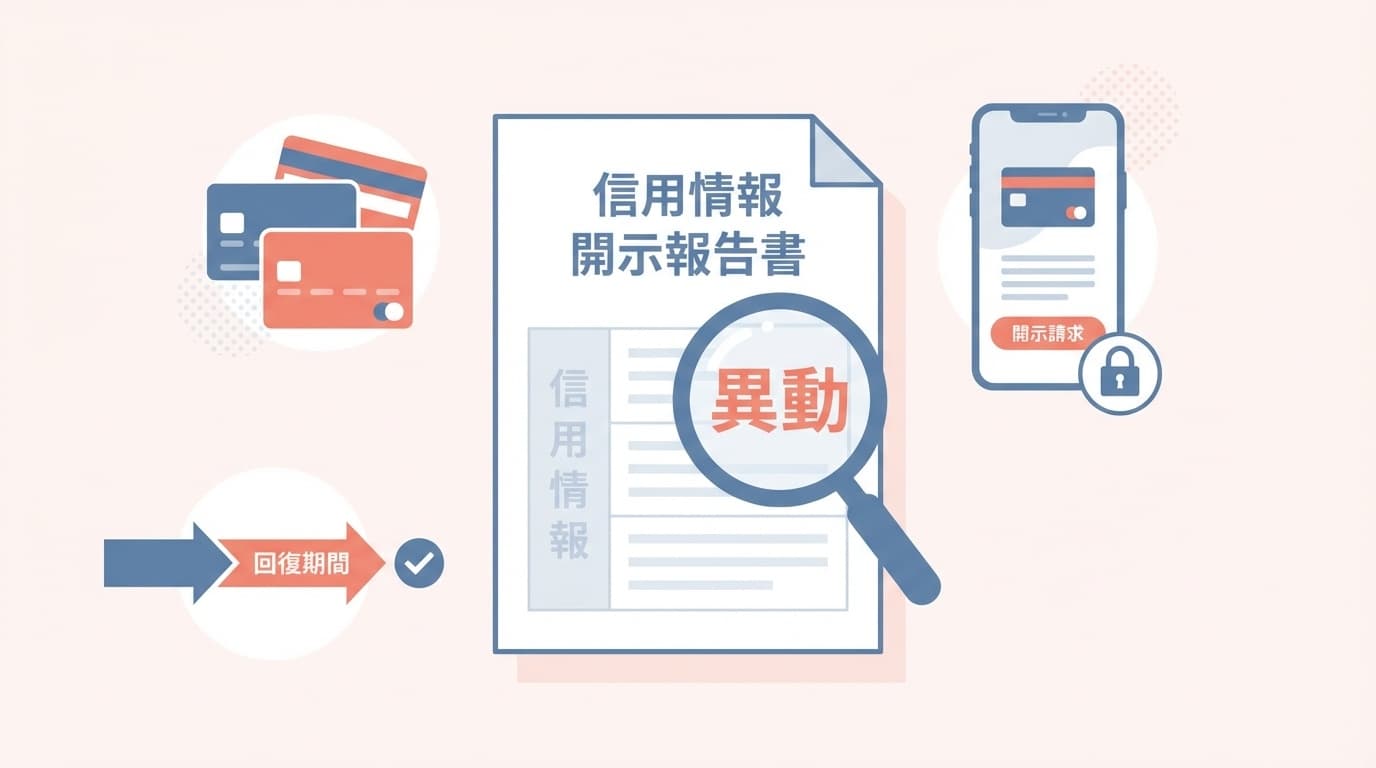
What people often call a “blacklist” usually means your record at a credit information agency shows an “ido” adverse entry. The good news is that you can check your own credit information pretty easily from your phone, usually for around 500 to 1,000 yen.
In this article, based on the latest information as of March 2026, we’ll explain what “ido” means in Japanese credit information, how to request disclosure from the three credit information agencies, CIC, JICC, and KSC, and how long it usually takes for adverse information to disappear.
What Does “Ido” Mean on a Credit Report?
Credit information agencies keep records of how you’ve used credit cards and loans. If you make your payments properly every month, you’ll generally see marks like “$” for normal payment. But if you fall seriously behind or go through debt restructuring, the word “ido” can be recorded as adverse information.
That’s what people usually mean when they say someone has been “blacklisted.” Technically, there’s no official list called a blacklist, but once an ido entry appears, it becomes very hard to pass screening for a new credit card or loan.
The main situations that can trigger an ido entry are these three:
- Late payment: A payment delay of 61 days or more, or 3 months or more, in CIC’s case
- Debt restructuring: Procedures such as voluntary debt negotiation, civil rehabilitation, or bankruptcy
- Forced cancellation: When the card company terminates your contract
In other words, accidentally forgetting a payment for a few days usually won’t immediately create an ido entry. That said, even a short delay may still be recorded as an “A” mark for non-payment, so it’s not something to ignore.
Japan Has Three Credit Information Agencies: CIC, JICC, and KSC
Japan has three credit information agencies, and different financial institutions belong to different ones. If you want the most accurate picture of your credit information, it’s safest to request disclosure from all three.
| Agency | Main Members | Key Feature |
|---|---|---|
| CIC | Credit card companies and installment credit companies | Most commonly checked for credit card screening |
| JICC (Japan Credit Information Reference Center Corp.) | Consumer finance companies and some credit card companies | Mainly covers consumer loan usage history |
| KSC (Japanese Bankers Association Personal Credit Information Center) | Banks, shinkin banks, and credit cooperatives | Checked for mortgages and bank-issued cards |
The three agencies share certain late-payment information through a network called CRIN. So, for example, if an adverse entry appears at CIC, a bank that belongs to KSC may also be able to become aware of it.
How to Request Your Credit Information From Your Phone
“Disclosure request” may sound complicated, but in many cases you can finish it from your phone in about 10 minutes. Here are the fees and steps as of March 2026.
How to Request Disclosure From CIC
- Go to the online disclosure page on the official CIC website
- Call the designated number from a phone number registered with CIC and get your reception number
- Enter the required information, such as your name, address, and phone number
- Pay the 500 yen fee. PayPay, Rakuten Pay, carrier billing, credit cards, and debit cards are supported
- Download your disclosure report once it’s ready
You can reopen the result for free within 96 hours. Even if you’re not sure how to read the whole report, you can start by checking whether the “repayment status” field says “ido”. If it doesn’t, that’s a good sign.
How to Request Disclosure From JICC
- Download the dedicated app from JICC’s smartphone disclosure page
- Take and submit photos of your identity documents, such as a driver’s license or My Number Card
- Pay the 1,000 yen fee by credit card, convenience store payment, Pay-easy, or another supported method
- Receive the result by email or in the app
For JICC, check the section for “reference information such as adverse entries” and look for items like late payment, debt collection, debt restructuring, or bankruptcy filing.
How to Request Disclosure From KSC
- Go to the disclosure request page for the Japanese Bankers Association Personal Credit Information Center
- Submit your identity documents and application form online
- Pay the fee, usually 1,124 to 1,200 yen, depending on the procedure
- Receive the result by mail or online
If you’re planning to apply for a mortgage, don’t forget to check KSC too. Bank-related screening places a lot of weight on KSC information.
When Does an Ido Entry Disappear? Recovery Periods by Agency and Reason
Adverse information doesn’t stay forever. It’s automatically deleted after a certain period. However, the length of time depends on the credit information agency and the type of financial incident.
| Reason | CIC | JICC | KSC |
|---|---|---|---|
| Late payment, after resolved | 5 years | 5 years | 5 years |
| Voluntary debt negotiation | 5 years from full repayment | 5 years from full repayment | 5 years from full repayment |
| Civil rehabilitation | 5 years | 5 years | 7 years |
| Bankruptcy | 5 years | 5 years | 7 years |
The important point is that the clock usually starts after the late payment has been resolved. If you leave a delinquent balance unpaid, the ido entry won’t simply disappear just because five years have passed. The first step toward recovery is resolving the delinquency, usually by paying it off.
Also, for KSC, records related to bankruptcy and civil rehabilitation remain for 7 years. This used to be 10 years, but it was shortened to 7 years after an operational change in November 2022.
Three Things to Do After the Ido Entry Is Removed
Even after adverse information is deleted, that doesn’t always mean you can immediately get any credit card you want. You may become what’s often called “super white”, meaning your credit history is basically blank. That can make lenders wonder whether something happened in the past.
1. First, Confirm Through Disclosure That the Ido Entry Is Gone
Even if you think, “It should have been five years by now,” your own calculation might be off. Before applying for a card, request disclosure from CIC and JICC and make sure the adverse entry has actually disappeared.
2. Apply for a Card That’s Easier to Get Approved For
Right after an ido entry disappears, your credit history may effectively be at zero. Instead of applying for a premium card like a gold card right away, it’s usually better to start with a standard card or a retail-affiliated card, such as one connected to a supermarket or shopping mall.
3. Use It Monthly, Even for Small Amounts, to Build Credit History
Once you get a card, use it for small fixed expenses you can reliably pay every month, such as your mobile phone bill or subscriptions. If you build six months to a year of clean payment history, it should become easier to pass screening for other cards or loans.
FAQ
Will requesting my own credit information hurt future screening?
No. A disclosure request made by you doesn’t affect screening. CIC, JICC, and KSC are structured so financial institutions can’t see your personal disclosure request history. You can check your report without worrying about that.
Can unpaid mobile phone bills put me on a blacklist?
Yes, it can happen. If you’re paying for your phone device in installments, that’s treated similarly to a credit contract. If you fall behind by 61 days or more, an ido entry may be recorded at CIC.
Can I remove adverse information myself?
As a rule, no. Adverse information is automatically deleted after the required period, usually 5 to 7 years. However, if the information was registered by mistake, you can submit an investigation request to the credit information agency and ask for it to be corrected or deleted.
Will a family member’s adverse credit information affect my own screening?
In most cases, no. Credit information is managed individually, so a family member’s adverse record generally won’t affect your own screening. The exceptions are situations like a family card where the primary cardholder has adverse information, or cases where you’re a joint guarantor.
References
- Online Disclosure|CIC, Designated Credit Information Agency — Official CIC website
- Credit Information Retention Periods|FAQ — Japan Credit Information Reference Center Corp. (JICC)
- Personal Disclosure Procedures|Japanese Bankers Association Personal Credit Information Center — Japanese Bankers Association
- Fees and Payment|FAQ — Official CIC website