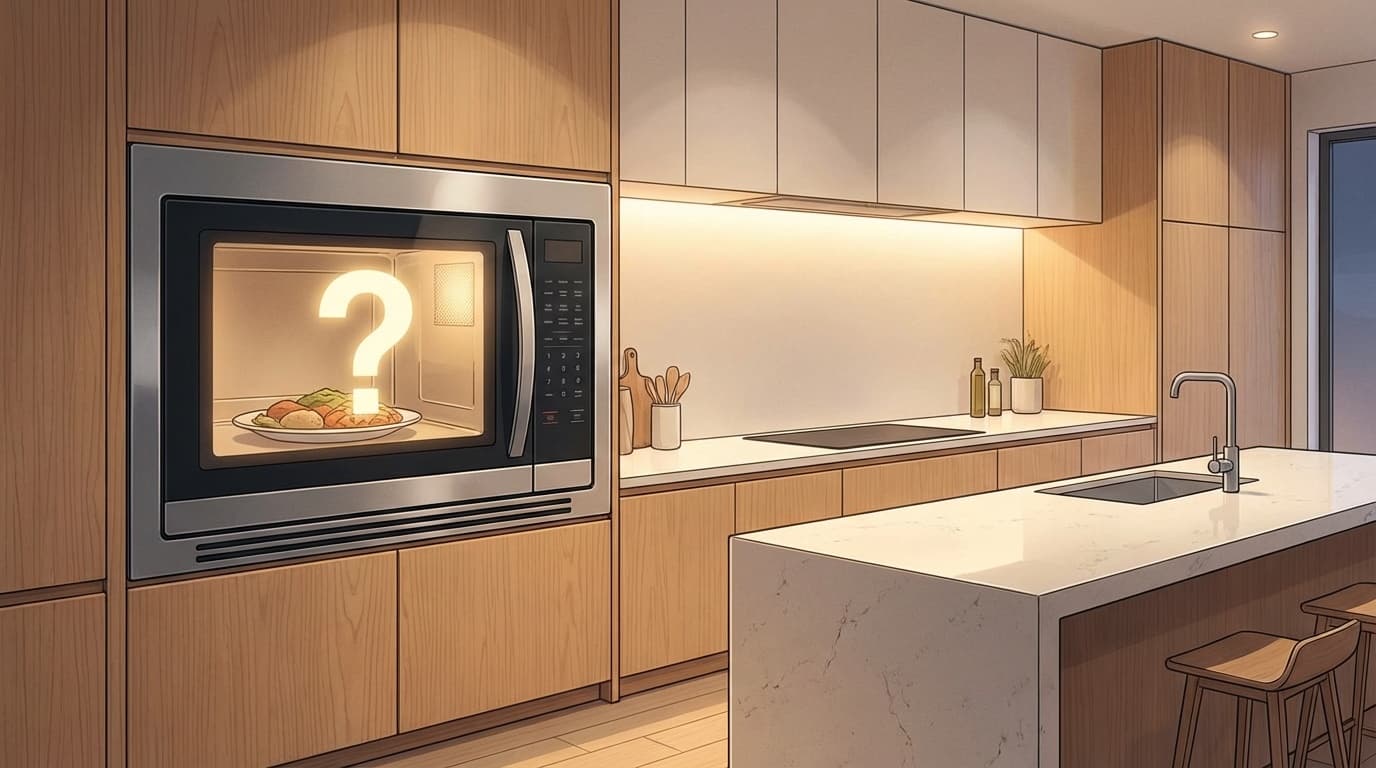
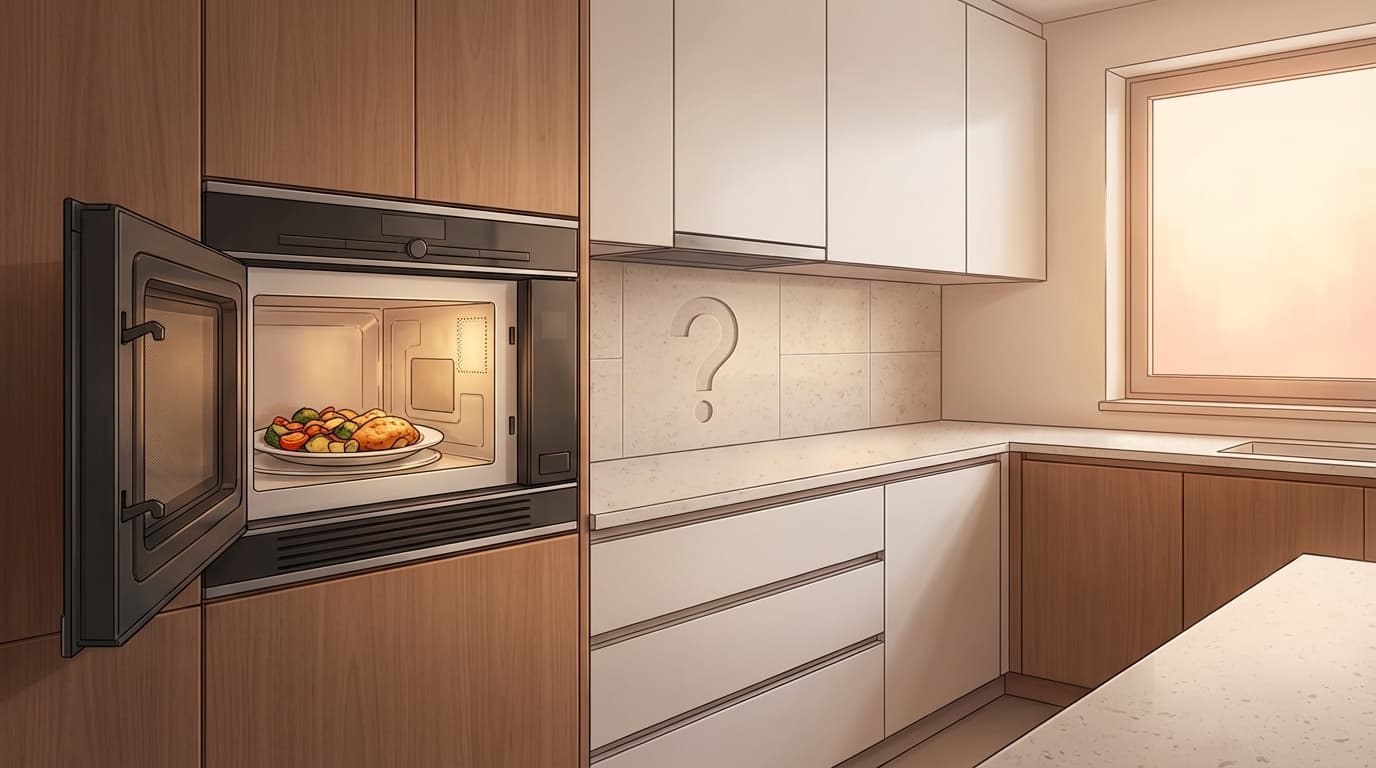
You press the start button on your microwave, the turntable spins, and the timer counts down like normal. But when you take the food out, it's still cold... Before you panic and assume it's dead, know this: sometimes the fix is surprisingly simple.
Based on information available as of March 2026, this guide breaks down why a microwave can run without heating, separating the causes into things you can fix yourself and problems that call for repair or replacement.
How Does a Microwave Heat Food in the First Place?
Before we get into fixes, it helps to know the basic mechanism. That makes it much easier to narrow down the cause.
Inside a microwave is a part called the magnetron. It produces microwaves, a type of electromagnetic wave. Those microwaves make water molecules in food vibrate, and the friction from that movement creates heat.
So when a microwave runs but doesn't heat, one of two things is usually happening: the microwaves aren't being generated, or they aren't reaching the food. Keep that in mind, and the causes below will make a lot more sense.
3 Causes You Can Fix Yourself
Before calling for service, check these simple things first.
Cause 1: You're Using a Container That Isn't Microwave-Safe
Microwaves can't pass through metal. If you're using aluminum foil, a stainless-steel bowl, or dishes with metallic trim, the microwaves may not reach the food, so it won't heat properly. In the worst case, metal can cause sparks inside the microwave.
Containers that are usually OK: heat-resistant glass, ceramic or porcelain without gold or silver decoration, plastic containers rated for at least 140°C, and silicone containers
Containers you shouldn't use: aluminum foil, stainless-steel containers, enamelware, metal cake pans, and wooden or bamboo items, which can burn
According to this official column from Toyo Aluminium Ekco Products, aluminum foil is not OK with the microwave function, but it can be OK with the oven function. That's easy to mix up, so be careful.
Cause 2: Food Grime Inside the Microwave Is Absorbing the Energy
Grease and stuck-on food debris inside the microwave can absorb microwaves instead of your food. Grease splattered on the ceiling or side walls is especially easy to miss.
What to do: Put a cup of water inside and heat it for 2 to 3 minutes. The steam will loosen the grime, so you can wipe it away with a soft cloth. For tougher buildup, use baking soda water, about 1 tablespoon of baking soda mixed into 200 ml of water.
Cause 3: The Food Is in the Wrong Spot, or There's Too Much of It
Did you know food can heat less evenly when it's placed right in the center of the turntable? Microwaves bounce off the interior walls, so food often heats more efficiently when it's placed slightly toward the outer edge.
If there's too much food, heat also may not make it all the way to the center. Try dividing large portions, cutting big pieces smaller, or stirring halfway through.
3 Causes That Mean Repair or Replacement
If the three checks above don't help, the problem is probably inside the microwave.
Cause 4: The Magnetron Is Worn Out or Broken
The magnetron is the heart of a microwave, and its typical lifespan is about 2,000 hours. If you use the microwave 30 minutes a day, that works out to about 10 years, according to Haier's official site. As it wears out, output drops, and you may get a microwave that runs but only warms food weakly.
You shouldn't replace a magnetron yourself. The inside of a microwave carries high voltage, and there's a real risk of electric shock. Never take it apart.
Cause 5: The High-Voltage Fuse or Diode Has Failed
The high-voltage fuse and high-voltage diode help supply power to the magnetron. If one fails, the microwave won't generate microwaves. If the turntable spins and the interior light comes on, but the food doesn't heat at all, this is a common possibility.
Cause 6: The Door Switch Isn't Working Properly
Microwave doors have a safety interlock switch. The microwave only generates microwaves after it detects that the door is fully closed. If that switch wears out, the microwave may mistakenly think the door is open even when it's closed, so it won't heat.
Repair or Replace? How to Decide
Use these points to decide whether it's worth repairing your microwave or whether buying a new one makes more sense.
Go by the Age of the Microwave
If it's less than 5 years old, repair is often worth considering. If it's 8 years or older, start thinking about replacement. Manufacturers generally keep repair parts for about 8 years, so after that, repair may not even be possible.
Typical Repair Cost Estimates
Based on official manufacturer information available as of March 2026, rough repair costs are usually around the following:
- Magnetron replacement: about ¥10,000 to ¥20,000, not including service call fees
- Fuse or diode replacement: about ¥6,000 to ¥12,000
- Door switch replacement: about ¥5,000 to ¥10,000
Once you include a service call fee of about ¥2,000 to ¥3,500, a magnetron replacement can end up costing ¥15,000 to ¥25,000 total. Since a basic microwave can cost around ¥10,000 new, a practical rule is this: if the repair costs more than half the price of a new unit, replacement usually makes more sense.
Signs It's Time to Replace It
If you notice any of these symptoms, replacement is usually the better call:
- Food clearly takes longer to heat than it used to, meaning output has dropped
- There's a burning smell or unusual noise, which can mean a fire risk
- The door feels loose or doesn't close properly
- Buttons don't respond, or the display goes out
- It's been more than 10 years since you bought it
5 Ways to Make Your Microwave Last Longer
A little everyday care can go a long way toward extending your microwave's life.
- Leave the door open after use so the inside can cool and dry: trapped moisture can lead to rust and part deterioration
- Wipe up messes right away: built-up grease doesn't just waste microwave energy; it can also cause smoke or fire
- Don't put things on top of the microwave: blocking the vents raises the internal temperature and can make the magnetron wear out faster. This Josei Seven Plus article also points out the risks of placing items on top of a microwave
- Don't run it empty: with no food inside, microwaves can bounce back toward the magnetron itself and cause damage
- Use the grounded outlet connection: grounding helps prevent electric shock and can also help stabilize electrical load
FAQ
What's the first thing I should do when my microwave won't heat?
Start by checking the container. Make sure you're not using metal or aluminum foil, and confirm that the container is microwave-safe. If that's not the issue, unplug the microwave and leave it for 10 minutes, then try again. Sometimes the internal protection circuit resets and the microwave starts working again.
Why does the turntable spin if the microwave isn't heating?
The turntable motor and the magnetron that generates microwaves are separate parts. Even if the magnetron has failed, the motor can still work normally, which is why the microwave can spin without heating.
How long does a microwave usually last?
A common guideline is about 10 years. In households that use the microwave heavily every day, or often use the oven function, problems can start showing up after 5 to 7 years. The manufacturer's repair-part period of about 8 years is another useful replacement marker.
Can I take apart a microwave and repair it myself?
Absolutely not. The capacitor inside a microwave can still hold a charge of several thousand volts even after it's unplugged, and a shock can be life-threatening. Repairs should be handled by the manufacturer or an authorized service provider.
Is it cheaper to repair a microwave or replace it?
If you bought it within the last 5 years and the repair costs under ¥10,000, repair may be the better deal. If it's 8 years old or older, or if the repair costs more than half the price of a new microwave, replacement is usually cheaper in the long run. Newer models may also be more energy-efficient.
References
- A Microwave's Lifespan Is About 10 Years: Replacement Signs, Risks of Continued Use, and Tips to Make It Last Longer — Haier LIFE STYLE
- Estimated On-Site Repair Fees for Ovens and Microwaves — Sharp Official Support
- I Want to Know Which Containers Can and Can't Be Used in a Microwave — Hitachi Home Appliances Official FAQ
- Microwave Heating Doesn't Work / Food Doesn't Get Warm: Troubleshooting Navigator — Sharp Official Support
- Aluminum Foil Q&A: Can You Use Aluminum Foil in a Microwave? — Toyo Aluminium Ekco Products