You’ve kept the windows closed, but you’re still sneezing at home. Your eyes itch. Your nose won’t stop tickling. Cedar and cypress pollen in spring 2026 is forecast to be higher than average, especially in eastern Japan according to the Japan Weather Association, and more people are saying, “It’s not just outside. I feel awful indoors, too.”
Here’s the surprising part: data suggests that about 20 million pollen particles can enter your home in a single day through normal daily life according to the Pollen Information Association. In other words, staying home doesn’t automatically mean you’re safe from pollen.
This article breaks down seven things you can start doing today, from keeping pollen from entering your home in the first place to using your air purifier and air conditioner properly, plus smarter cleaning habits.
Why Is There Pollen Indoors Even With the Windows Closed?
You might be wondering, “How is pollen getting in if I’m not opening the windows?” It turns out pollen slips in through more routes than you might expect.
According to Panasonic’s research, indoor pollen mainly enters in two ways.
- Through vents and windows: about 60%
- Carried in on clothing, hair, and bedding: about 40%
Even more surprising: one wool sweater can carry about 100,000 pollen particles. That’s more than six times the amount that enters through a window during one hour of ventilation, according to Lion Lidea. In other words, you might unknowingly be bringing pollen inside with you.
3 Pollen-Blocking Habits to Do When You Get Home
The most effective way to reduce indoor pollen is not bringing it in at all. A few small habits when you get home can sharply cut the amount of pollen that makes it indoors.
1. Brush off your clothes outside the front door
Before opening the door, give your jacket, bag, and hat a good shake or pat to knock pollen off. Pay special attention to your shoulders, back, and sleeves, where pollen tends to collect. Using an anti-static spray in the morning can also help keep pollen from sticking in the first place.
2. Keep outerwear by the entrance
If you carry your coat into the living room, pollen gets stirred up every time you walk around. Set up a coat rack or hooks near the entrance and make it a rule: pollen-covered outerwear doesn’t go into the living room.
3. Wash your hands and face, and gargle right away
Pollen also sticks to your hair and face. If you have time, taking a shower is best. At minimum, make handwashing, face washing, and gargling your standard after-home routine.
How to Ventilate Without Letting in Too Much Pollen
“I want fresh air, but I don’t want pollen inside.” If you have seasonal allergies, you know the struggle. According to Daikin’s official site, the steps below can greatly reduce how much pollen gets in.
- Open the window about 10 cm with the lace curtain closed → This can reduce pollen entry to about one quarter.
- Choose the right time of day → Aim for times when pollen levels are lower, such as early morning around 6 a.m. or after 9 p.m.
- Use pollen-rated filters for 24-hour ventilation systems → Especially helpful in apartments and condos with continuous ventilation.
In short, stick to this three-part approach: ventilate through a curtain, open the window only a little, and choose lower-pollen hours. That way, you can refresh the air without inviting in as much pollen.
Where to Put Your Air Purifier So It Works Better
If your air purifier is just sitting in a random corner of the living room, you may not be getting the most out of it.
Best places to put it
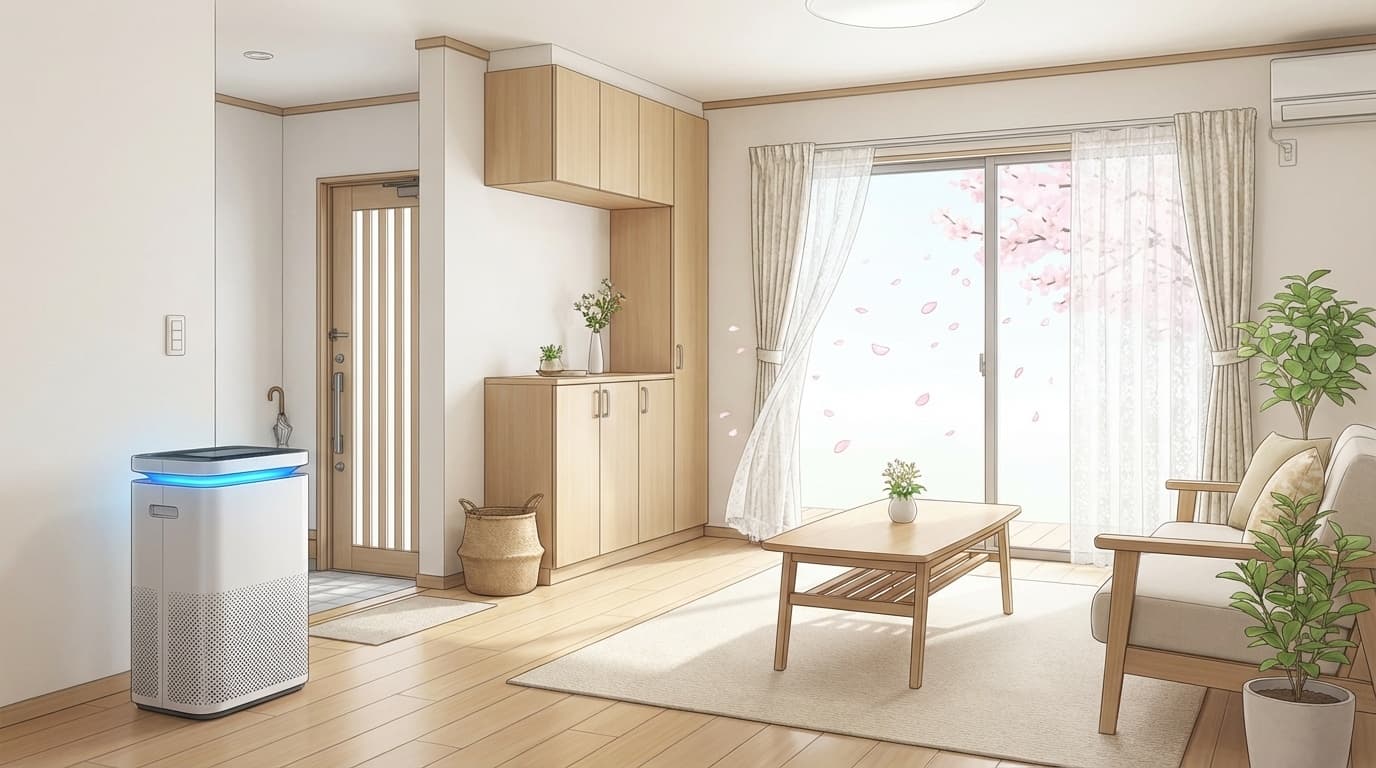
- One near the entryway: Catch pollen brought in from outside before it spreads into the living room, as recommended by IRIS OHYAMA.
- In the living room, place it in a corner facing the window: Aligning it with the direction air enters the room helps it work more efficiently.
- Keep it at least 30 cm away from walls: If the intake or outlet is blocked, performance drops.
How to run it
- During pollen season, keep it running 24/7. On low mode, electricity may cost only around 100 to 300 yen per month.
- Right after you get home, run it on high for 15 to 30 minutes → This helps quickly remove the pollen you just brought in.
- Use sleep mode at night → It stays quiet while continuing to filter pollen.
Use Your AC and Air Purifier Together to Remove More Pollen
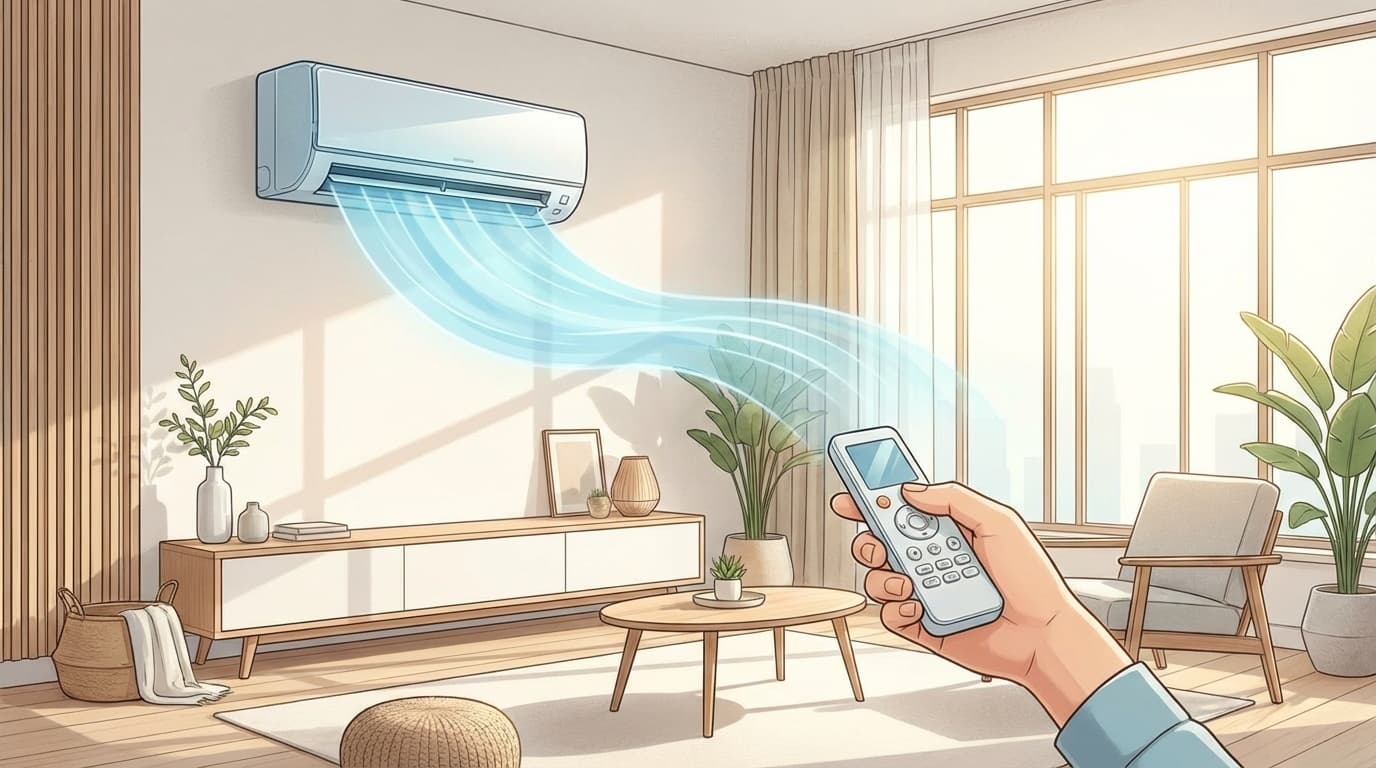
One trick many people don’t know is using your air conditioner and air purifier together.
According to Panasonic, the airflow created by the air conditioner helps the air purifier collect particles. The key is to place the air purifier diagonally across from the air conditioner. This helps air circulate through the whole room and can improve pollen removal.
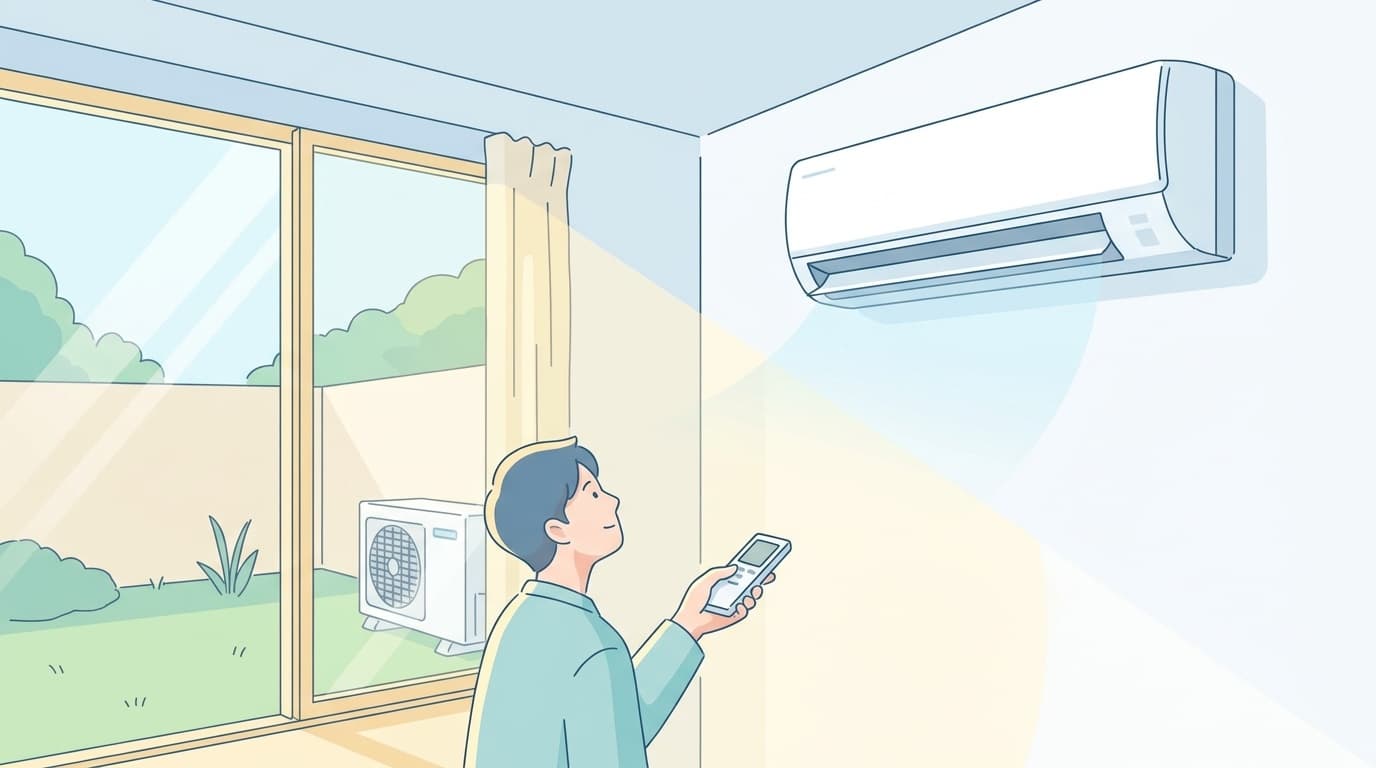
Some people worry that pollen comes in through the air conditioner, but most home air conditioners simply circulate indoor air and don’t pull in outside air, except for some models with ventilation features. So it’s fine to use your heating or cooling as usual.
Clean Floors First Thing in the Morning to Avoid Stirring Up Pollen
After floating in the air, pollen settles onto the floor overnight while people aren’t moving around. That’s why the best time to clean is first thing in the morning, before your family gets up and starts walking around.
Kao’s official site recommends the following order.
- Start by wiping hard floors with a wet floor sheet → Don’t vacuum first. It can send pollen back into the air.
- Then vacuum → This picks up pollen the floor wiper didn’t catch.
- Keep indoor humidity around 50% → Moisture helps prevent pollen from floating back up into the air.
Basically, just remember this order: clean first thing in the morning, wipe first, then vacuum. It can make a real difference.
Dry Laundry and Bedding Indoors or Use a Dryer
During pollen season, drying laundry or futons outside lets pollen cling all over them. Even if you shake them before bringing them in, you won’t remove it all.
- Use indoor drying, bathroom drying, or a clothes dryer for laundry.
- Use a futon dryer for bedding. It can also help with dust mite control.
- If you really need to dry things outside, do it early in the morning when pollen is lower, then shake everything thoroughly before bringing it indoors.
FAQ
Do air purifiers really work for pollen?
Yes. An air purifier with a HEPA filter can capture at least 99.97% of particles 0.3 microns and larger. Cedar pollen is about 30 microns, so it’s large enough to be captured well. Just remember that a dirty filter reduces performance, so check the manufacturer’s recommended replacement schedule as of March 2026.
Does cleaning the air conditioner filter help with pollen?
Yes. When dust and pollen build up on the AC filter, airflow becomes less efficient, and the combined effect with your air purifier also drops. During pollen season, it’s a good idea to clean the filter once every two weeks.
Can a humidifier help when pollen allergies are bad?
According to Dainichi’s official information, keeping indoor humidity around 50% to 60% helps pollen absorb moisture and become heavier, making it less likely to float back into the air. A humidifier can be useful for pollen control, too.
Should I turn off my apartment’s 24-hour ventilation system during pollen season?
It’s not recommended. A 24-hour ventilation system is required under Japan’s Building Standards Act and is needed to help prevent sick house syndrome. Instead, replace the vent filters with pollen-rated filters so you can keep ventilating while reducing pollen entry.
References
- How to Ventilate During Pollen Season — Daikin Industries, Ltd.
- How to Reduce Pollen Indoors: Effective Pollen Measures and a More Comfortable Home Environment — Panasonic UP LIFE
- How to Avoid Bringing Clothing-Borne Pollen Into Your Home — Lion Lidea
- Beat Pollen: Cleaning Techniques That Remove It Without Stirring It Up — Kao My Kao
- Smart Ways to Ventilate During Pollen Season — Panasonic Air Conditioner