You’re vacuuming, but somehow the dirt just isn’t getting picked up. Then you look closer and realize the brush roll in the vacuum head has stopped spinning. Sound familiar?
When the brush roll, also called a power brush, won’t spin, it can’t pull dust, hair, and debris out from deep inside carpet fibers, so cleaning performance drops fast. But in many cases, it’s not actually broken, and you can fix it yourself.
In this guide, we’ll cover six common reasons a vacuum brush roll won’t spin or the head won’t work, brand-specific checks, and simple fixes you can try at home. This article is based on official manufacturer information available as of March 2026.
What Is a Brush Roll, and What Happens When It Stops?
The vacuum head, or intake nozzle, has a built-in brush that spins at high speed. Depending on the manufacturer, it may be called a “power brush,” “motorized head,” or “power head,” but the job is basically the same.
As it spins, the brush lifts dust, hair, and pet fur from carpets, rugs, and tatami-style woven surfaces so the vacuum can suck them up. In other words, when the brush roll stops, you can end up with the frustrating situation where the vacuum has suction but still won’t pick up debris well.
For hardwood floors, you can usually clean fairly well without a spinning brush. On carpets and rugs, though, the brush makes a huge difference in the final result.
6 Reasons Your Vacuum Brush Roll Won’t Spin
Before you panic and assume it’s broken, check these six things. In many cases, one of the first three will solve it.
Cause 1: Hair or Thread Is Wrapped Around the Brush
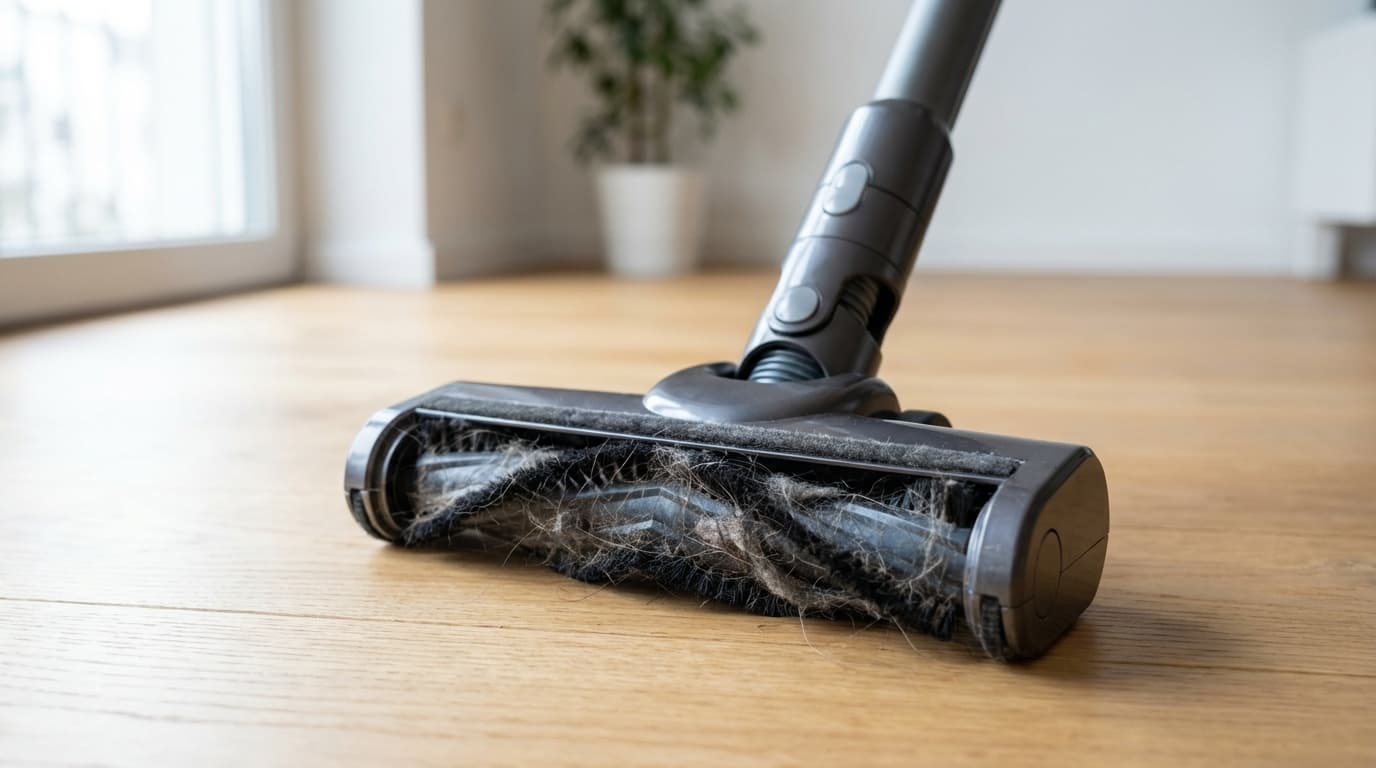
This is by far the most common cause. Long hair, thread, lint, and pet fur can wrap around the brush shaft and physically stop it from spinning.
Panasonic’s official FAQ also starts by advising users to check whether thread or hair is tangled around the brush.
How to fix it:
- Turn the vacuum head over and inspect the brush area
- Cut tangled hair with scissors and remove it carefully, without damaging the brush itself
- Use tweezers or a seam ripper for tight, hard-to-reach tangles
- If your model lets you remove the brush, take it out first to make cleaning easier
Cause 2: The Head Isn’t Touching the Floor Properly
Many vacuums have a safety feature that automatically stops the brush when you lift the head off the floor. If you’re vacuuming with the head slightly raised, or a thick rug is keeping part of the head from making contact, the brush may not spin.
According to Hitachi’s official support page, the brush roll stops automatically for safety when the intake head is lifted away from the floor. Try pressing the head firmly and evenly against the floor while using it.
Cause 3: The Brush ON/OFF Switch Is Turned Off
This one is easy to miss. Some models have a brush on/off switch on the head or wand. It can get bumped during cleaning and accidentally switched off.
Mitsubishi Electric’s official FAQ also tells users to check whether the brush/light on-off switch has been turned off.
Cause 4: The Safety Cutoff or Thermostat Has Tripped
If a large object, cloth, or heavy tangle jams the brush and the vacuum keeps running, a protective device or thermostat may stop the brush to prevent the motor from overheating.
How to fix it:
- Turn the vacuum off and unplug it. For cordless models, remove the battery if possible
- Remove anything stuck in the vacuum head
- Leave it alone for about 30 minutes to 1 hour so the motor can cool down
- Once it has cooled, turn the vacuum back on. In many cases, it’ll start working again
If the safety cutoff keeps tripping, there may be debris stuck deeper inside the head. Clean any parts you can safely access and remove.
Cause 5: The Head Terminals or Connection Points Are Dirty
If dust builds up around the connection points between the head, extension wand, and main unit, electricity may not pass through properly, and the brush won’t run. This is especially common with cordless vacuums.
How to fix it:
- Remove the head and wipe the electrical terminals with a dry cloth or cotton swab
- Check the wand connection port for trapped debris
- Reconnect everything firmly until you hear or feel it click into place
Cause 6: The Belt Is Worn Out or Broken
Some canister vacuums, especially models with a corded main body, use a rubber belt to transfer motor power to the brush. If that belt stretches or snaps, the motor may run while the brush itself doesn’t spin.
This doesn’t apply to stick vacuums or direct-drive models such as many Dyson vacuums, which don’t use this type of belt. Depending on the model, you may be able to replace the belt yourself, but manufacturer service is usually the more reliable option.
Brand-by-Brand Checks When the Brush Won’t Spin
Here are the main troubleshooting points listed by major manufacturers, based on official information available as of March 2026.
Dyson
- Choose your model in Dyson’s official troubleshooting guide and follow the steps shown
- Wipe the contact points, including the metal terminals where the clear bin meets the main body
- For soft roller cleaner heads, remove the end cap, take out the roller, and clear away tangles
- Dyson products usually include a 2-year manufacturer warranty. If you’re still within the warranty period, repair or replacement may be free
- Outside the warranty period, replacing the head often costs around 20,000 yen, depending on the model
Panasonic
- Check Panasonic’s official “brush roll won’t spin” FAQ
- Models with the からまないブラシ feature, found on many higher-end models from 2020 onward, use a V-shaped design that helps prevent hair from tangling. If hair still gets caught, remove the brush and clean it
- Many models let you open the cover on the underside of the head and pull the brush out
Hitachi
- Check Hitachi’s official support page for power head troubleshooting
- Models with the “ごみくるん” mechanism allow you to remove and clean the brush
- Check whether debris is stuck around the lift-stop safety switch
Sharp
- Use Sharp’s official troubleshooting navigator and follow the on-screen diagnosis steps
- The RACTIVE Air series is lightweight, but the basic brush-tangle mechanism is the same
When to Repair It and When to Replace It
If you’ve tried all the fixes above and the brush still won’t spin, the motor may have failed or an internal wire may be broken. Use the guidelines below to decide what to do next.
When Repair Makes Sense
- You bought it within the last 3 years, and it’s still under the manufacturer warranty or an extended warranty
- The main vacuum works fine, and only the head seems to be faulty, so replacing the head may solve it
- It’s a higher-end model, such as a Dyson or premium Panasonic vacuum, and you still want to keep using it
When Replacement May Make More Sense
- It has been more than 5 years since purchase. A typical vacuum cleaner lifespan is around 6 to 8 years
- Other problems are starting to appear, such as weaker suction or a worn-out battery
- The repair cost is more than half the price of a new vacuum
These days, more vacuums are designed to reduce hair tangles. When you’re shopping for a replacement, it’s worth checking for features like Panasonic’s からまないブラシ or Electrolux’s BrushRollClean feature, which uses a built-in cutter to automatically cut wrapped hair.
3 Habits That Help Your Brush Roll Last Longer
A little regular care can help you avoid repair costs and early replacement.
1. Check the Brush for Tangles Once a Month
Turn the head over and check whether hair or thread has wrapped around the brush. Removing small tangles early helps prevent the kind of buildup that can trigger the safety cutoff.
2. Pick Up Large Debris Before Vacuuming
Rubber bands, socks, bits of plastic bag, and similar items can easily wrap around the brush. Pick them up by hand before vacuuming. That alone can lower the risk of damage quite a bit.
3. Check the Intake Opening After You Clean
Getting into the habit of quickly checking the underside of the head after each cleaning session can help you catch problems early. This is especially important in homes with pets, where fur builds up quickly.
FAQ
Does a brush roll that won’t spin mean the vacuum is broken?
Not necessarily. In many cases, it’s not broken. Hair tangles, safety sensors, and accidentally turned-off switches are common issues you can fix yourself. If you try all the steps in this article and it still won’t work, then it’s time to consider manufacturer repair.
How much does it cost to repair a Dyson head that won’t spin?
Dyson products usually include a 2-year manufacturer warranty, so repair may be free if you’re still covered. Outside the warranty period, head replacement often costs around 20,000 yen, depending on the model, as of March 2026. Start by contacting Dyson’s official support.
What’s the easiest way to remove hair tangled around a vacuum brush roll?
The basic method is to cut along the brush with scissors, then pull the hair out by hand or with tweezers. A sewing seam ripper can also help remove tight tangles without damaging the brush. Cleaning it once a month helps keep buildup from getting out of hand.
Can a vacuum without a spinning brush still clean properly?
On hard floors like hardwood and tile, yes, a vacuum can clean well without a brush roll. But for dust deep inside carpets and rugs, a spinning brush is more effective. Some brands, including Makita, intentionally use brushless head designs, which are popular with people who value easy maintenance.
References
- Brush roll won’t spin - Vacuum cleaner -- Panasonic official FAQ
- The power head brush roll won’t rotate. -- Hitachi official support
- The brush roll won’t spin or is hard to spin. -- Mitsubishi Electric official FAQ
- Intake head brush roll won’t spin - Troubleshooting Navigator -- Sharp official site
- Troubleshooting -- Dyson official site
- A hair-resistant brush makes vacuum maintenance easier -- Panasonic official site