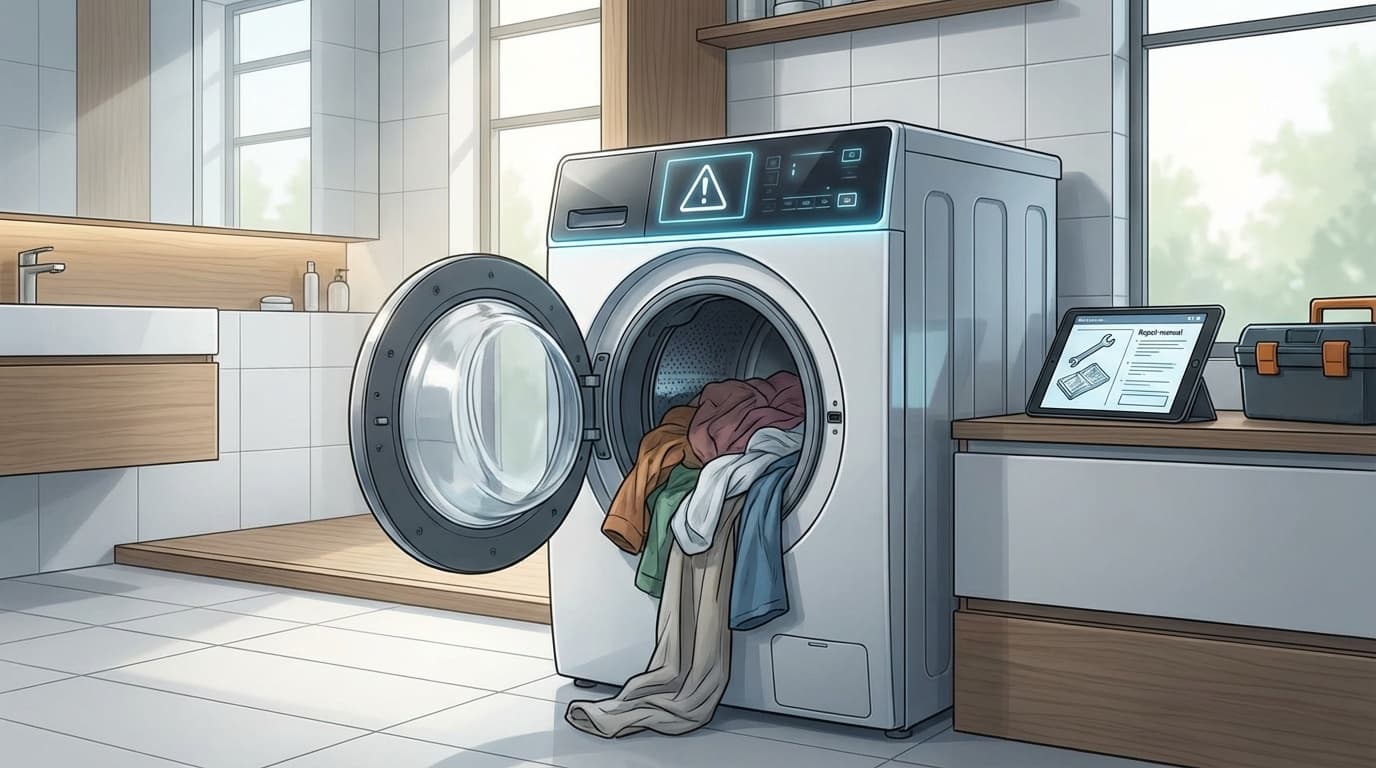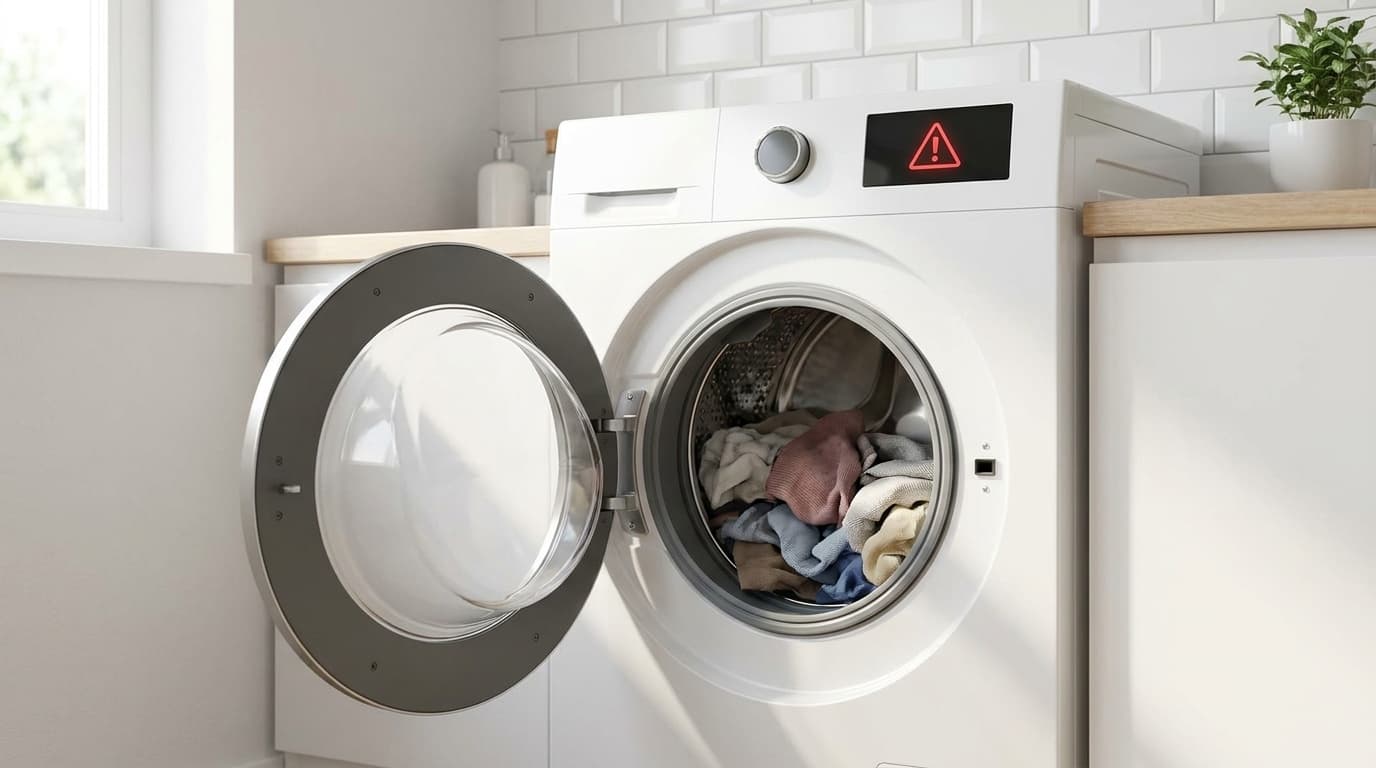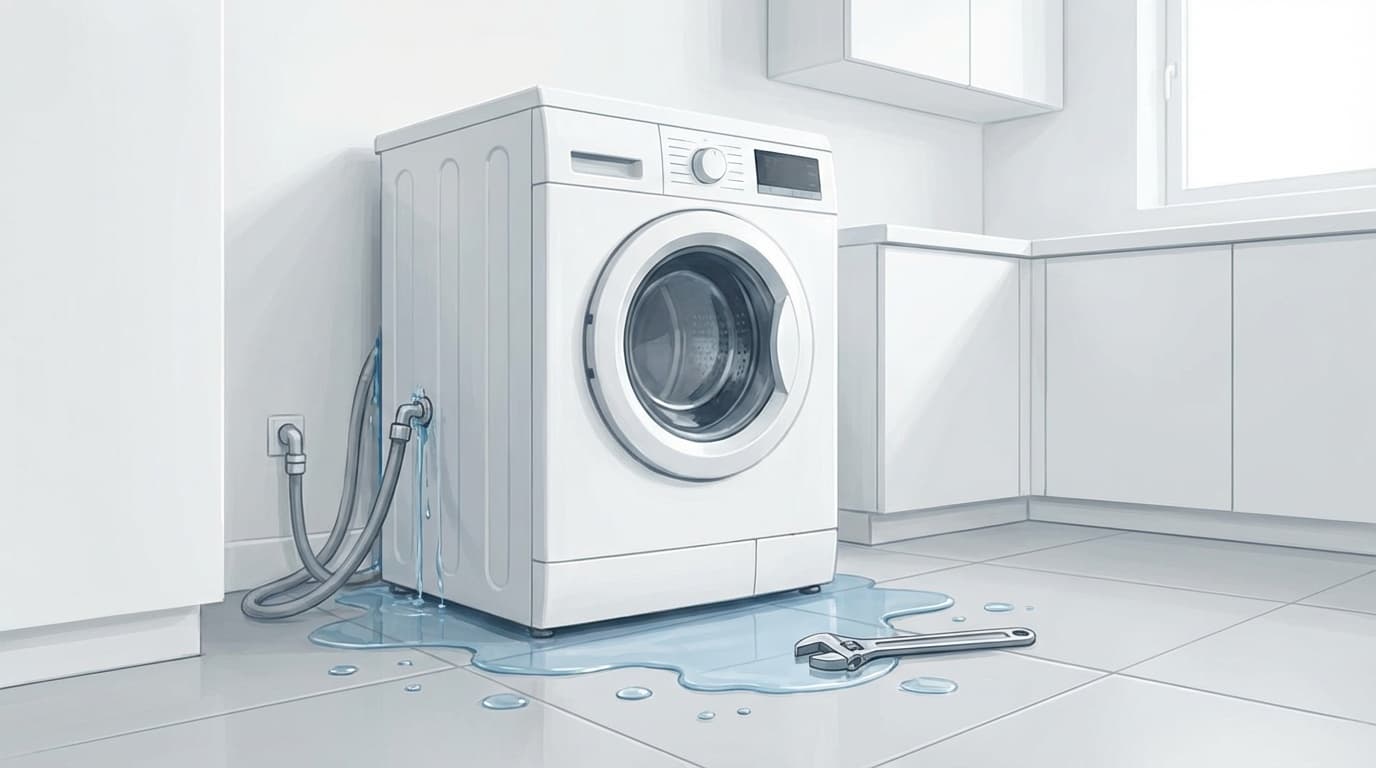
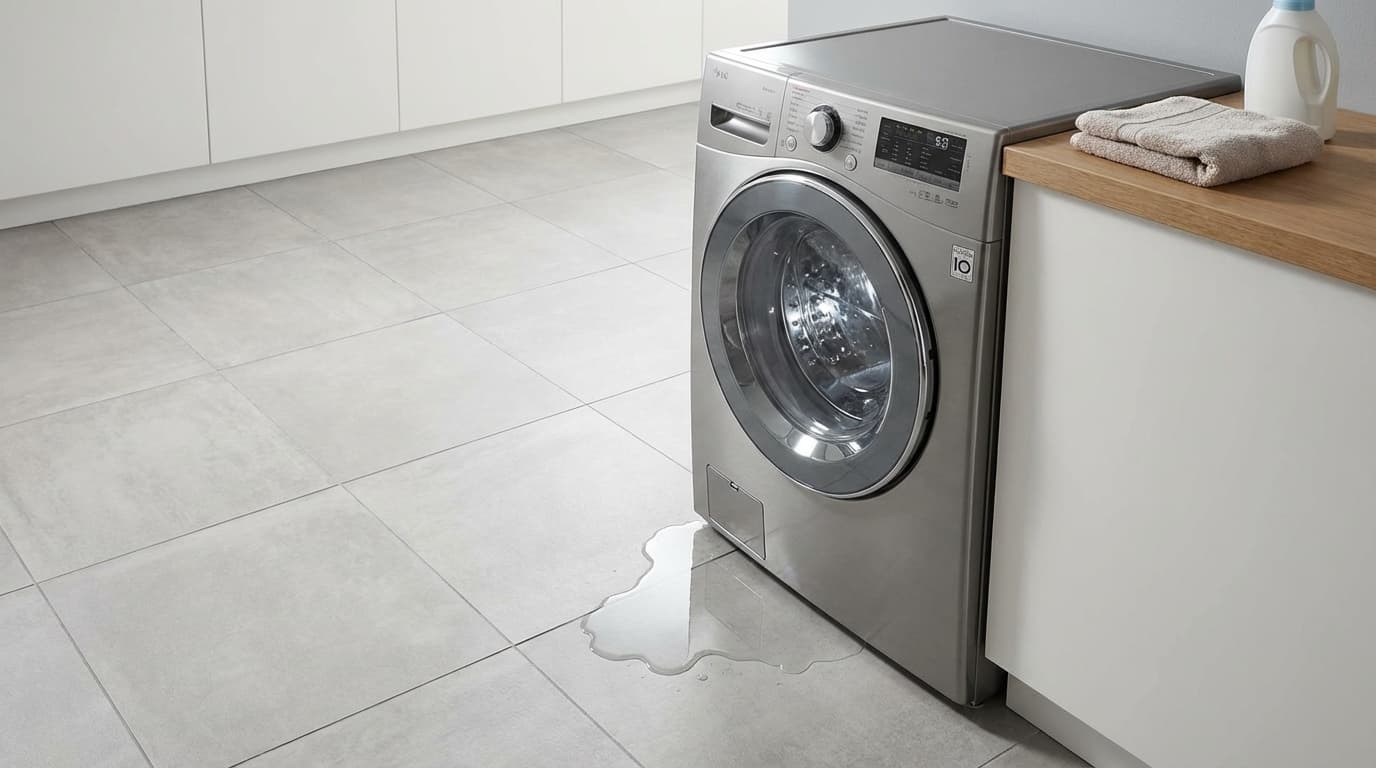
“The floor under my washing machine is soaked!” “Water keeps dripping while it’s running...” Washing machine leaks are actually a pretty common household problem. As of March 2026, people on X have been posting plenty of frustrated comments like, “Did my washer break? It started leaking,” and “Guess I’m living at the laundromat now...”
But don’t panic. If you can figure out where the water is coming from, there’s a good chance you can fix the leak yourself. This guide breaks down six common leak locations and causes, the emergency steps you should take right away, and how to decide whether it’s worth repairing the washer or replacing it.
First: 4 Emergency Steps to Take Right Away
When you spot a leak, do these four things in order before you start hunting for the cause.
1. Turn off the washing machine
Water and electricity are a dangerous combination because of the risk of electric shock or a short circuit. Turn the power button off first, then unplug the machine.
2. Turn off the faucet
Turn the washer’s water supply faucet clockwise to shut off the water. If the water doesn’t stop even after closing the faucet, shut off your home’s main water valve, usually located near the water meter.
3. Wipe up the water on the floor
Use towels or rags to soak up the water thoroughly. If you live in an apartment or condo, don’t leave it sitting there. Water can leak into the unit below, so speed matters.
4. Check where the leak is coming from
Once the immediate damage is under control, look for the source of the leak. In the next section, we’ll go through the causes and fixes by leak location, so check the one that matches what you’re seeing.
By Leak Location: 6 Causes and What to Do
With washing machine leaks, the cause and solution can be totally different depending on where the water is coming from. Pinpointing the leak location is the most important step.
1. Water Leaking Around the Faucet
Cause: The packing, or rubber sealing part, inside the faucet has worn out over time and left a gap. The faucet nut may also be loose.
What you can do yourself:
- Loose nut → Gently retighten it with an adjustable wrench. Be careful not to overtighten it, or you could damage the faucet.
- Worn packing → Buy the same-size packing at a hardware store, usually for about 100 to 300 yen, and replace it. If you have the tools, it’s usually as simple as removing the faucet nut and swapping the packing, and it can take around 10 minutes.
According to Qracian’s official website, most leaks around a faucet can be solved by replacing the packing.
2. Water Leaking From the Supply Hose Between the Faucet and Washer
Cause: The nut at the hose connection is loose, the nipple or connector between the faucet and hose has deteriorated, or the hose itself is cracked.
What you can do yourself:
- Loose connection → Retighten the nut with a wrench. If it’s a four-screw nipple, use a screwdriver to tighten all four screws evenly.
- Cracked hose → Buy a replacement water supply hose at a hardware store or appliance store, usually around 1,000 to 2,000 yen, and replace the whole hose. It doesn’t always have to be an official manufacturer part; most one-touch connection hoses work with most washing machines.
As a temporary fix, you can wrap the cracked area with waterproof self-fusing tape, but that’s only a stopgap. Replace the hose as soon as you can.
3. Water Leaking From the Detergent Drawer or Rim of the Tub
Cause: Detergent or fabric softener residue has hardened in the dispenser, blocking normal water flow and causing overflow. Another possibility is that the washer is overloaded and the water level is rising too high.
What you can do yourself:
- Remove the detergent drawer, which on many models comes out by simply pulling it, and rinse away stuck-on detergent residue with warm water.
- Keep each load to about 70% to 80% of the washer’s capacity. Packing it full can cause water to overflow.
4. Water Leaking From the Drain Hose Between the Washer and Drain
Cause: The drain hose connection is loose, the hose has a hole or crack, or the drain is clogged and water is backing up.
What you can do yourself:
- Loose connection → Retighten the hose clamp, which is the metal fastener holding the hose in place.
- Damaged hose → Just like with the supply hose, buy a replacement drain hose at a hardware store, usually around 800 to 1,500 yen, and swap it out.
- Clogged drain → Remove the drain cover and trap, the internal part inside the drain, and clear out hair, lint, and debris. Pouring in a pipe cleaner can also help.
Panasonic’s official FAQ lists poor drain hose connections and clogged drains as major causes of washing machine leaks.
5. Water Leaking From the Bottom of the Washing Machine
Cause: The seal around the internal shaft, the rotating axis inside the tub, is worn out; the wash tub itself is cracked; or the internal drain path is clogged.
What you can do yourself: To be honest, a leak from the bottom of the washer is hard to repair on your own. It usually requires disassembling the machine, so contact the manufacturer’s support team or a repair technician.
That said, even if there’s a puddle under the washer, it may just be water from the drain hose connection running underneath the machine. Check the drain hose area in section 4 first.
6. Water Leaking From the Door or Gasket on a Front-Load Washer
Cause: Something like a coin, hairpin, or lint is caught in the rubber door gasket, or the gasket has deteriorated, warped, or hardened and can’t seal properly anymore.
What you can do yourself:
- Visually check the gasket for anything caught in it, and remove it if you find something.
- Wipe away grime or mold on the gasket. Built-up dirt can weaken the seal.
- If the gasket itself is warped or hardened, ask the manufacturer to replace it. A gasket replacement typically costs around 8,000 to 15,000 yen.
Repair vs. Replace: Which Makes More Sense? 3 Rules of Thumb
Once you know what’s causing the leak, the next question is usually, “Should I repair this, or is it time to buy a new washer?” These three guidelines can help you decide.
Rule 1: Has the washer been used for more than 7 years?
A washing machine’s typical lifespan is 7 to 10 years. Manufacturers generally keep repair parts for six years after a model is discontinued, so older machines may not be repairable if parts are no longer available. If yours is over seven years old, start considering replacement.
Rule 2: Does the repair cost more than half the washer’s price?
According to くらしのマーケット, typical washing machine leak repair costs are as follows, as of March 2026.
- Packing replacement or nut retightening: 3,000 to 5,000 yen
- Water supply hose or drain hose replacement: 5,000 to 10,000 yen
- Drain pump replacement: 10,000 to 20,000 yen
- Wash tub or shaft-area repair: 20,000 to 40,000 yen
For example, if you bought the washer for 50,000 yen and the repair will cost 30,000 yen, replacing it with a new one will usually be the better long-term value.
Rule 3: Are there other problems besides the leak?
If you’re also dealing with strange noises, weak spin cycles, poor drying performance, or other issues, the whole machine may be nearing the end of its life. Even if you fix one part, another may fail soon after, so replacement is worth considering.
How to Prevent Washing Machine Leaks: 4 Maintenance Habits
Here are a few routine maintenance habits that can help prevent leaks before they start.
1. Turn off the faucet when you’re not using the washer
Get into the habit of closing the faucet after each load. If you leave it open, constant water pressure stays on the supply hose and faucet connection, which can make packing and hoses wear out faster.
2. Clean the drain once a month
Hair, lint, and debris can build up in the drain, cause clogs, and make water back up and leak. Once a month, remove the drain trap, clean it, and run a pipe cleaner through the drain.
3. Check the supply hose and drain hose once a year
At least once a year, visually check the hoses for cracks or discoloration and make sure the connections aren’t loose. Rubber hoses harden with age and become more likely to crack.
4. Clean the detergent drawer regularly
Hardened detergent or fabric softener residue can block water flow and cause overflow. Just remove the drawer and rinse it with warm water.
What to Know if Your Washing Machine Leaks in a Rental
If you rent your home, contact your property management company or landlord first when a leak happens. There are two reasons.
The first is water damage to the unit below. If the downstairs resident is affected, you could be asked to pay for damages. In many cases, renters insurance or tenant liability coverage can help, but if you ignore the leak and the damage spreads, insurance may not cover everything. That’s why it’s important to report it quickly.
The second is who pays for the repair. If the leak is caused by building equipment, such as the faucet or drain, the landlord may be responsible for the repair cost. If your own washing machine caused the leak, you’ll usually be responsible. If you’re not sure, ask the property management company to confirm the cause and who pays.
FAQ
Should I turn off the washing machine faucet after every load?
Yes. AQUA’s official website also recommends closing the faucet when the washing machine isn’t in use. Leaving it open keeps constant water pressure on the supply hose and packing, which can lead to deterioration and leaks.
Is it okay to repair a washing machine leak myself?
External parts, such as faucet packing or hoses, can often be handled yourself. But repairs that require disassembling the washer, such as leaks from the bottom of the machine, should be left to the manufacturer or a professional technician.
Who pays if a washing machine leaks in a rental?
In general, the tenant pays if the washing machine itself caused the leak, while the landlord pays if the cause is a building fixture such as the faucet or drain. Contact the property management company first so they can confirm the cause and responsibility.
What can I do if there’s no washing machine drain pan?
You can buy and install an add-on drain pan or tray from a hardware store, usually for about 3,000 to 8,000 yen. It can help minimize floor damage if a leak happens, so it’s especially useful for renters.
References
- What to do when water leaks from the washing machine body — Panasonic Official FAQ
- What to do when your washing machine leaks: Leak locations and repair notes — AQUA Official Website
- I want to know the causes of leaks and how to fix them. (Top-load models) — Hitachi Home Appliances
- Water is leaking | Fully automatic washing machine | Troubleshooting Navi — Sharp Official Website
- How much does washing machine leak repair cost? — くらしのマーケット
- Can you handle leaks around a washing machine yourself? How to identify the location and cause — Qracian