What's the difference between genuine washing tank cleaners and commercial products?
I'm sure there are many people who have questions like, "Aren't the laundry tank cleaners sold at drugstores no good?" "Manufacturer's genuine products are expensive, but is there any point in buying them?"
In conclusion, The main ingredients and cleaning mechanism of genuine products and commercial products are completely different. As of February 2026, manufacturers such as Panasonic, Hitachi, Toshiba, and Sharp are selling genuine cleaners, but the way they remove dirt is different from commercially available oxygen-based cleaners.
In this article, we will compare the ingredients, effects, and costs of genuine products and commercial products, and answer the question, "Which one should I use?" in an easy-to-understand manner.
Chlorine and oxygen systems—the way they remove dirt is different in the first place
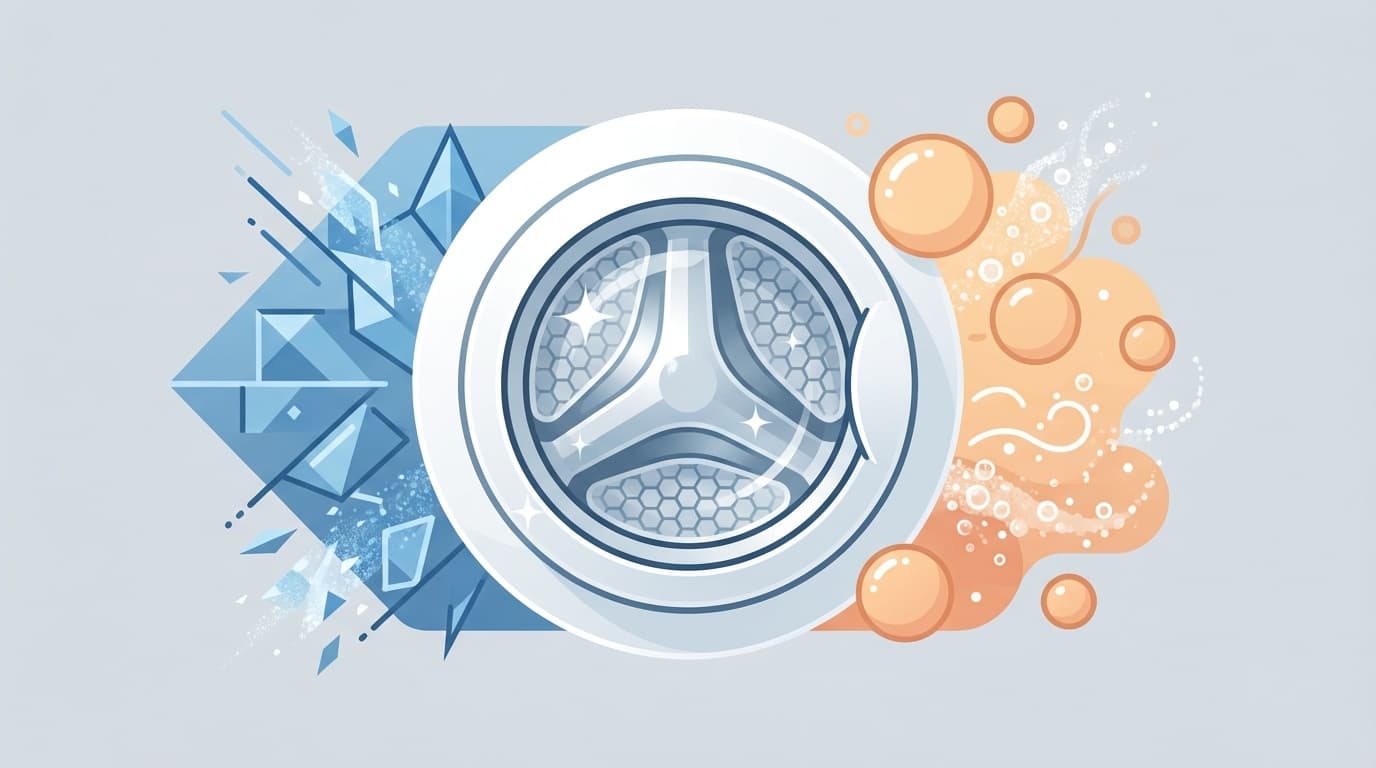
Washing tank cleaners are broadly divided into two types: ``chlorine-based'' and ``oxygen-based''. Almost all genuine products from manufacturers are chlorine-based, while commercial products available at drugstores are mostly oxygen-based.
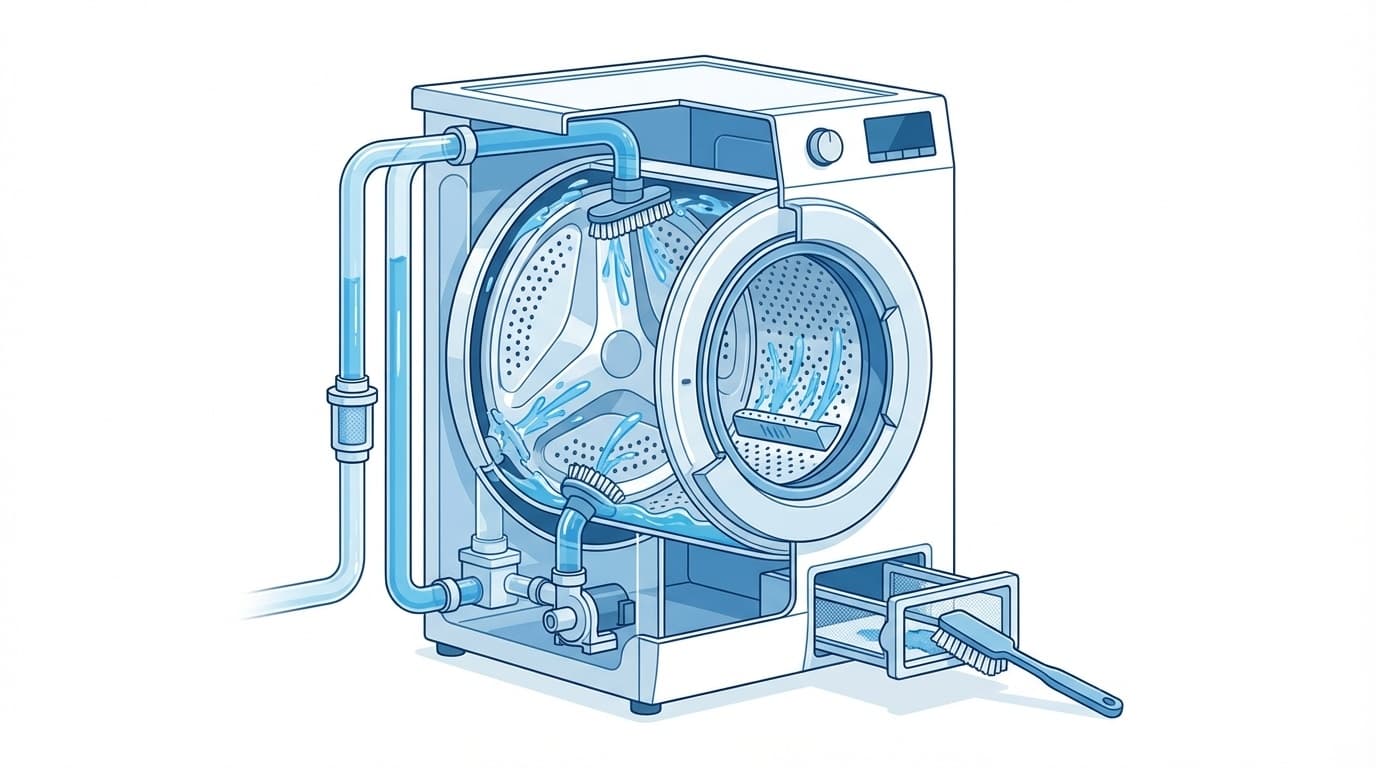
Chlorine-based products (common in genuine products) mainly consist of sodium hypochlorite. It is characterized by its ability to ``dissolve and decompose'' mold and bacteria. Almost no visible dirt is produced, so there is no need to scoop out seaweed-like dirt after cleaning.
Oxygen-based products (commonly found in commercially available products) mainly consist of sodium percarbonate. It is a type that uses the power of foam to "peel off and float away" dirt. It has a big visual impact as a lot of black piro piro (clumps of mold) floats up, but it takes time and effort to scoop up the floating dirt with a net yourself.
| Comparison items | Chlorine-based (common in genuine products) | Oxygen-based (common in commercial products) |
|---|---|---|
| Main ingredient | Sodium hypochlorite | Sodium percarbonate |
| How to remove dirt | Dissolve and decompose | Peel off and float |
| Bactericidal power | ◎ Very strong | ○ Slightly modest |
| Efforts to use | Just put it in and turn it around | Put it in and scoop out dirt |
| Time required | About 3 to 11 hours (tank cleaning course) | Leave for several hours to overnight |
| Odor | Chlorine odor | Almost none |
| Water temperature | Can be used at room temperature | Hot water between 40 and 50 degrees Celsius is recommended |
Roughly speaking, If you want to sterilize thoroughly without any hassle, use a genuine chlorine-based product, and if you want to see visible dirt and don't want a pungent odor, use a commercially available oxygen-based product.
The true nature of the manufacturer's genuine products -- are they actually the same?
This is an interesting point. In fact, the genuine cleaners of the three companies Panasonic "N-W1A", Hitachi "SK-1", and Toshiba "T-W1" are OEM products from the same manufacturer. In other words, the content is the same, just the label is different. Can be used with any manufacturer's washing machine.
As of February 2026, the model numbers and reference prices of genuine products from each manufacturer are as follows.
| Manufacturer | Model number | Capacity | Reference price (tax included) |
|---|---|---|---|
| Panasonic | N-W1A | 1,500mL | Approx. 1,600 to 2,300 yen |
| Hitachi | SK-1 | 1,500mL | Approx. 1,500 to 2,200 yen |
| Toshiba | T-W1 | 1,500mL | Approx. 1,500-2,000 yen |
| Sharp | ES-CD (for drum type) | 1,500mL | Approx. 1,500 to 2,000 yen |
On the other hand, commercially available laundry tank cleaners (such as "Washing Tank Mold Killer" and "Detergent Washing Tank Cleaner") that can be purchased at drugstores cost about 300 to 600 yen. The price is about 1/3 to 1/5 of the genuine product.
You might think, ``Well, I can just use a cheap commercially available product,'' but the big difference is that the genuine product contains Anti-corrosion aid (rust prevention ingredient). AQUA official website also explains that washing machine manufacturers design cleaners to match the materials of their washing machines. If you plan to continue using your washing machine for a long period of time, you cannot overlook this advantage of not damaging your washing machine.
Which one should I use? Recommended usage
The best way to use it is not to use only one or the other, but to combine both. Here are the recommended uses for Lifestyle Market Magazine.
Routine cleaning once a month → Commercially available chlorine-based cleaner
A commercially available chlorine-based cleaner such as "Washing Tank Mold Killer" is sufficient. The price is around 300 yen, so it's easy. This is OK for preventing mold and removing light stains.
Thorough cleaning once every 2 to 3 months → Manufacturer genuine product
The genuine product contains a high concentration of chlorine + anti-corrosion additive, so it removes accumulated dirt and protects the washing machine itself. In particular, drum-type washing machines have a complicated structure, so they are compatible with genuine products.
Reset cleaning once or twice a year → Oxygen-based cleaner
If you have not cleaned your home for a long time and it is very dirty, we recommend using an oxygen-based cleaner to remove the accumulated dirt, and then switch to regular maintenance using a chlorine-based cleaner.
In other words, Usually use cheap commercially available products for frequent care, and once in a while, use genuine products for thorough care is the most cost-effective method of operation.
Five points to note when using laundry tub cleaner
No matter which cleaner you use, be sure to follow the points below.
1. Do not mix chlorine and oxygen systems
When chlorine-based cleaners and acid-based detergents mix, toxic chlorine gas is generated. Be sure to check the display that says "Do not mix!" If you use it continuously, be sure to do a rinse operation in between.
2. Do not use boiling water
For oxygen systems, hot water of 40 to 50℃ is effective, but Hot water (above 60℃) is not recommended. Doing so may cause deformation or deterioration of the washing machine's plastic parts and rubber gaskets.
3. Do not use with clothes inside.
If you inadvertently start washing the tank with laundry still in it, the fabric may fade or become damaged and become unwearable. Be sure to use it empty.
4. Use tank cleaning course
Many washing machines have special courses called "Tank Wash" and "Tank Clean." By choosing a special course instead of a regular washing course, you can wash with the appropriate amount of water and time. Please check the instruction manual.
5. The drum type may not be oxygen-based.
Many drum-type washing machines do not allow you to open the door mid-way, so you cannot scoop out the floating dirt. The manufacturer's instruction manual may state that ``do not use oxygen-based cleaners'', so be sure to check this beforehand.
FAQ
Where can I buy genuine washing tank cleaner?
In addition to electronics stores (Yodobashi Camera, Bic Camera, etc.), you can purchase from each manufacturer's official online store, Amazon, and Rakuten Market. If you can't find it in stores, you can definitely buy it online.
Is it okay to use Hitachi genuine cleaner in Panasonic washing machines?
Panasonic "N-W1A", Hitachi "SK-1", and Toshiba "T-W1" are OEM products from the same manufacturer, so they can be used with any manufacturer's washing machine without any problems. Just choose the cheapest one you can get.
How often should I use the washing tub cleaner?
Once a month is ideal. We recommend cleaning once a month with a commercially available cleaner, and thoroughly cleaning with the manufacturer's genuine product once every 2 to 3 months.
Is the reason black scum doesn't come out with oxygen-based cleaners because it's not dirty?
Not necessarily. If the water temperature is low (below 30℃), the soaking time is short, or the amount of water is insufficient, dirt may not be removed sufficiently. Please use hot water between 40 and 50 degrees Celsius, let it soak for at least 6 hours, and then try again.
What should I do if I can't get rid of the odor even after using the laundry tank cleaner?
If the cleaner does not solve the problem, dirt may have accumulated in the drain or drying filter (if it is a drum type). If the problem still does not improve, consider professional washing machine cleaning (disassembly cleaning).
References
- Correct usage of washing tank cleaners | Frequency and differences between chlorine and oxygen types — Living Market Magazine
- Explaining how to use the washing tub cleaner and precautions! How to choose and how often to use — AQUA official website
- Washing tank cleaner (chlorine-based) N-W1A — Panasonic official website
- Frequently Asked Questions | Washing tank mold killer (chlorine-based) — Johnson Co., Ltd.
- [2026] 8 recommended laundry tank cleaner rankings — LDK