Are you worried about white crunchy lumps stuck to the humidifier tank or tray? In fact, quite a lot of people say, ``I soaked it in citric acid, but it didn't come off at all!''
The true identity of those white lumps is that minerals such as calcium and magnesium contained in tap water have hardened together (so-called limescale stains and limescale). Every time water evaporates, it accumulates little by little, and if left untreated, it becomes stiff like stone.
In this article, based on information as of February 2026, we will explain everything from How to remove stubborn limescale stains that cannot be removed with citric acid, how to clean humidifiers by type, and even how to deal with pink stains (red mold). Before you put your humidifier away at the end of the season, be sure to check it out.
What exactly is the white mass? Mechanism of limescale stain
The white lumps on your humidifier are officially mineral components such as calcium carbonate and silicic acid. Tap water contains not only sterilizing chlorine (chlorine) but also trace amounts of minerals such as calcium and magnesium.
When a humidifier evaporates water, only the water is removed and minerals remain. By repeating this process, it grows into white powder → white lump → hard layer like stone.
In particular, steam-type (heating) humidifiers boil water, so scale tends to accumulate in the evaporating dish. Panasonic's official website also recommends periodic citric acid cleaning for steam types.
By the way, in addition to the white lumps, Pink slime may also appear, but this is not limescale but a yeast called "Rhodotorula." Although it is different from mold, if left untreated, it becomes a breeding ground for mold, so if you find it, deal with it as soon as possible (more on this later).
It won't come off with citric acid! 3 ways to remove stubborn limescale stains
Since citric acid is acidic, it is effective in dissolving alkaline limescale stains. However, when it comes to stains that have been left for a long time and become petrified, regular soaking may not be enough. In such a case, try the following method.
Method 1: Increase the concentration of citric acid and leave it for a long time
The standard standard for soaking in citric acid is 1 tablespoon of citric acid (approximately 15 g) in 1 liter of water, but for stubborn stains, double the concentration (30 g of citric acid in 1 liter of water) and extend the soaking time to 2 to 3 hours.
According to Nojima's official support site, using lukewarm water around 40℃ will help dissolve citric acid and improve cleaning power. Do not use boiling water as it will damage the parts.
Method 2: "Paste and wash" with citric acid paste
For evaporating dishes and the inside of the main unit that cannot be left soaked, it is effective to make a paste of citric acid and apply it directly.
It's easy to do. Mix citric acid powder with a little water to make a paste and apply it on the white mass. Cover with plastic wrap and leave for 1 to 2 hours. The acid will gradually penetrate, making even stiff lumps easier to crumble.
Method 3: Repeat "melting → scraping" alternately
Petrified limestone often does not fall off at once. In such a case, the trick is to repeat the process of soaking in citric acid → scraping with a soft brush → soaking again two or three times.
When scraping, it is useful to use a melamine sponge or an old toothbrush. Avoid using metal scrubbers or spatulas as they will damage the main unit. Cain's official media also recommends that you remove it in several parts without forcing it.
By type of humidifier | Correct cleaning method and maintenance frequency
Humidifiers are broadly divided into four types. The areas that tend to get dirty and the cleaning methods differ depending on the type, so be sure to check which one applies to your humidifier.
Steam type (heating type)
Since the water is boiled, the risk of bacteria and mold is low. However, the drawback is that limescale tends to accumulate in the evaporating dish, creating white lumps.
Cleaning frequency: Clean the evaporating dish with citric acid once every 1 to 2 months. Change the water in the tank every day.
Ultrasonic type
A type that uses vibration to turn water into a mist. The biggest disadvantage is that it is easy for bacteria and mold to grow because it is not heated. Be careful of slime and pink stains inside the tank.
Cleaning frequency: Clean the tank and nozzle once a week. Soak it in citric acid once a month. Elecom's official column also states that frequent cleaning of the ultrasonic type is essential.
Vaporization method
A type that humidifies by blowing air through a filter containing water. Calcium and bacteria tend to accumulate in the filter, which can cause bad odors if left unattended.
Cleaning frequency: Press and wash the filter with water or citric acid water once every two weeks to a month. Wash the tray with water once a month.
Hybrid type
A type that combines vaporization + heating or ultrasonic + heating. Heating reduces the risk of bacteria, but cleaning of the filter and tank should be done according to each base type.
Cleaning frequency: If the base is a vaporizing type, the filter should be cleaned once a month, and if the base is an ultrasonic type, the tank should be cleaned once a week.
What to do when pink stains (red mold) appear
If you see a pink or orange slimy substance in the tank or tray, it is a yeast called "Rhodotorula." Although it is not technically a mold, it grows quickly and can reach visible levels in2 to 3 days.
If you leave it alone, it will become a breeding ground for real black mold, so if you find it, deal with it immediately.
How to remove pink stains
Baking soda is effective. Dissolve 1 tablespoon of baking soda in 1 liter of lukewarm water at around 40°C, leave the parts soaked for 30 minutes to 1 hour, and then rub gently with a sponge.
If the problem persists, Sodium percarbonate (oxygen bleach) is also recommended. If you dissolve 1 tablespoon in 2 liters of lukewarm water and leave it on, you can expect a disinfecting effect. Watashito (Your Meister) also recommends the use of baking soda to prevent mold.
However, do not use chlorine bleach (such as Hyter). There is a risk of damaging the humidifier's plastic parts or allowing residual ingredients to mix with the steam.
The correct way to put things away at the end of the season | Tips for comfortable use next season
As spring approaches, the timing to put away the humidifier is actually the most important. If you leave it dirty, it will be full of mold next season and you won't be able to use it.
3 steps to do before putting away
Step 1: Citric acid cleaning
Soak all parts, including the tank, tray, and evaporating dish, in citric acid water (15g per 1 liter of water) for at least 1 hour. If white lumps remain, use the paste method described above.
Step 2: Thoroughly dry
After cleaning, dry all parts completely in a well-ventilated area. If water droplets remain, it may cause mold. Tokyo Gas official column also states that ``complete drying before storing'' is the most important thing.
Step 3: Dust prevention
Once dry, store in the original box or plastic bag. If dust gets in, dirty steam will come out when you use it for the first time next season.
Filter replacement guide
Evaporative type and hybrid type filters are consumable items. The manufacturer's recommended replacement guide is generally 1 to 2 seasons. If the odor cannot be removed even after cleaning with citric acid, consider that the filter has reached the end of its lifespan and should be replaced.
FAQ
Which should I use, citric acid or baking soda?
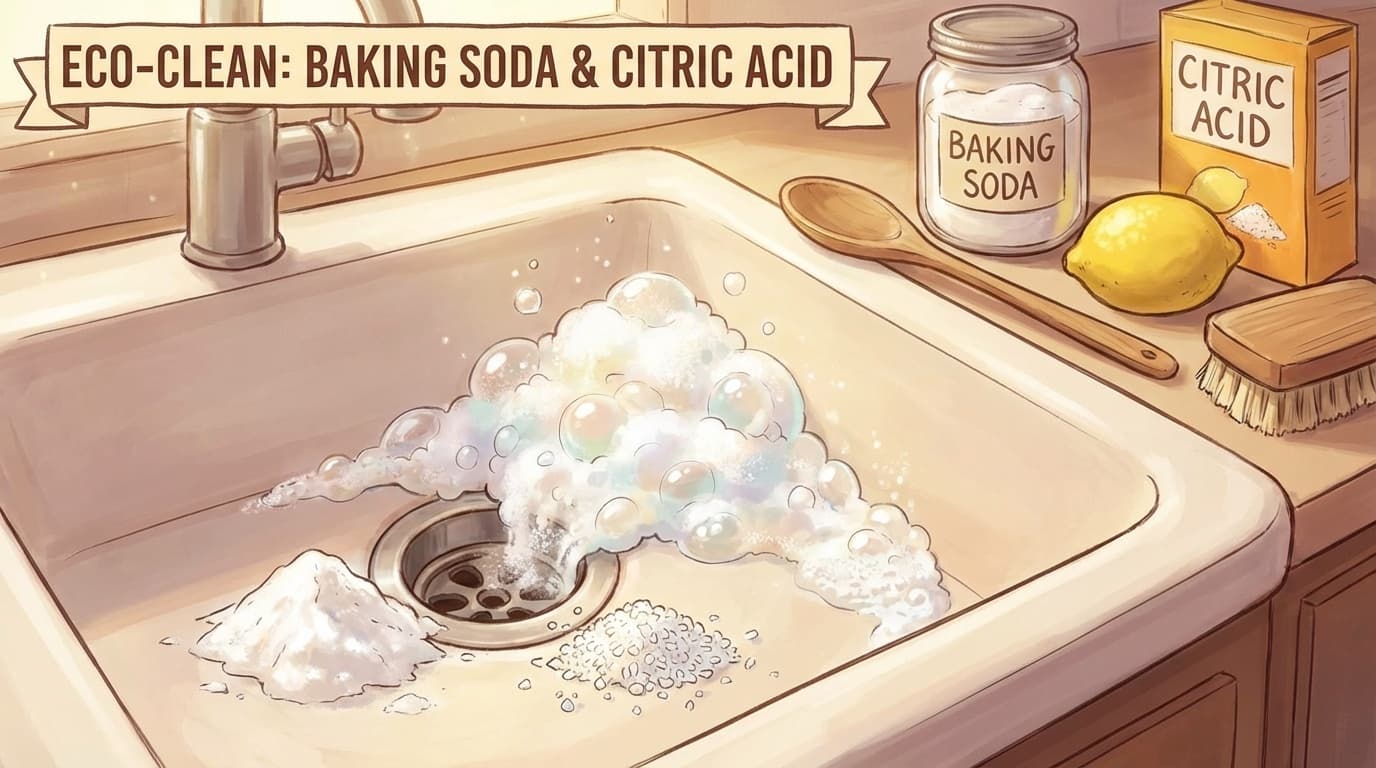
Use citric acid for white lumps (scaly and limescale), and for pink stains (rhodotorula) and moldy odors. Citric acid is acidic and dissolves alkaline limescale, and baking soda is alkaline and effective against acidic bacterial stains. Mixing both will neutralize them and make them ineffective, so use them separately.
How often should I clean my humidifier?
It is ideal to change the water in the tank every day. For full-scale cleaning with citric acid, it is recommended to do it once every 1 to 2 months if using the steam method, once a month if using the ultrasonic method, and once every 2 weeks to once a month if using the vaporizing method. This will vary depending on the frequency of use and the hardness of the tap water, so if you see white dirt or slime, clean it immediately.
What will happen if we continue to use the white lump?
This may cause a deterioration in the performance of the humidifier (it becomes difficult to produce steam) or a malfunction of the dry heating prevention sensor, causing an error stop. In addition, in the case of an ultrasonic type, limescale scatters around the room as a white powder and may adhere to furniture and electronic devices. If you find it, drop it as soon as possible.
Is it better to use water from a water purifier or mineral water?
No, I don't recommend it. The chlorine contained in tap water has a bactericidal effect and suppresses the growth of bacteria. Since chlorine has been removed from purified water and mineral water, bacteria can grow more easily. Although limescale stains can be removed by cleaning, cleaning alone cannot prevent health damage caused by bacteria.
References
- For stubborn stains! How to remove limescale and limescale from a humidifier with citric acid — Panasonic UP LIFE
- [Super easy] How to clean a humidifier! Get sparkling clean with citric acid and baking soda! — Nojima Home Appliances Notebook
- [Before putting it away] Soak a dirty humidifier in citric acid and clean it — Mr. Cainz next door
- Complete explanation of how to care for humidifiers by type — Tokyo Gas
- How to clean the humidifier? Check out how to care for each type! — ELECOM
- Baking soda is the key to preventing mold from humidifiers! Also explains 4 easy ways to deal with it — I (Your Meister)