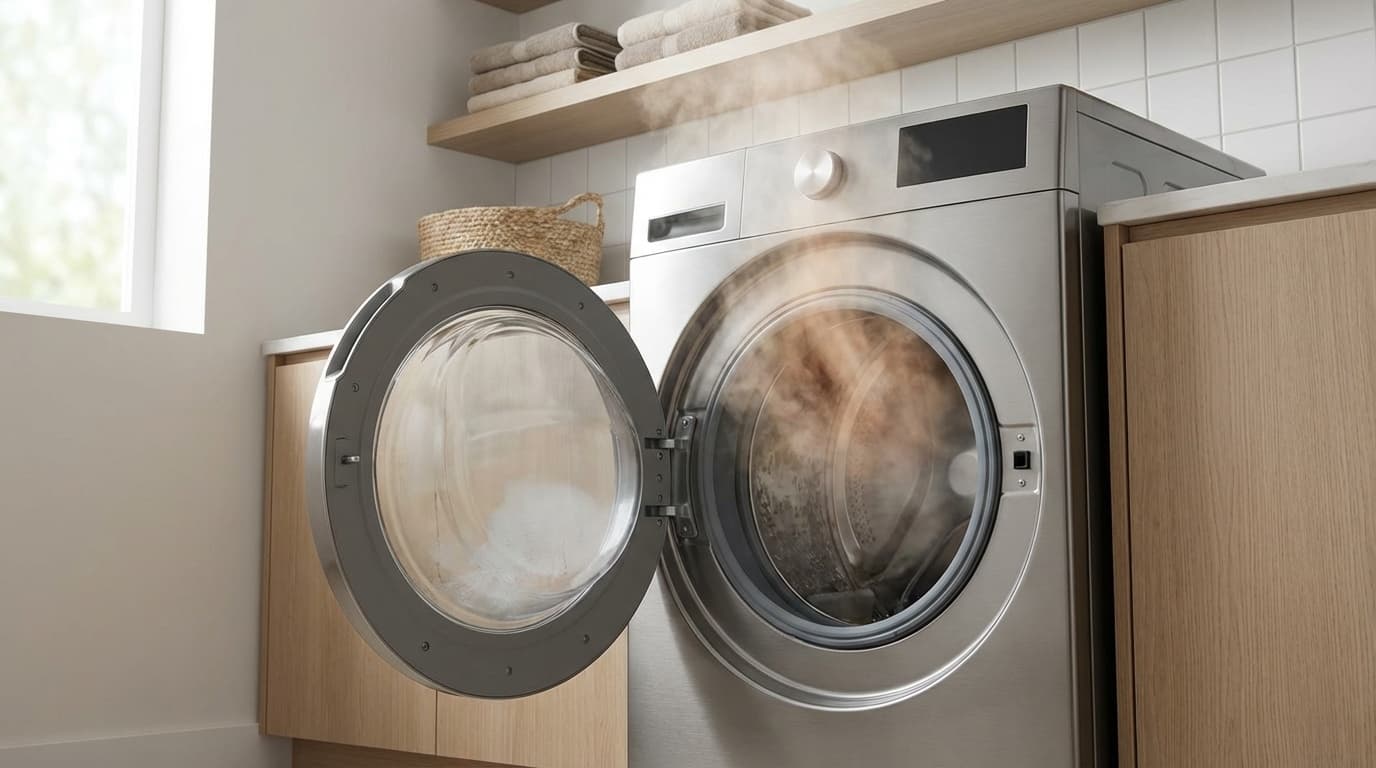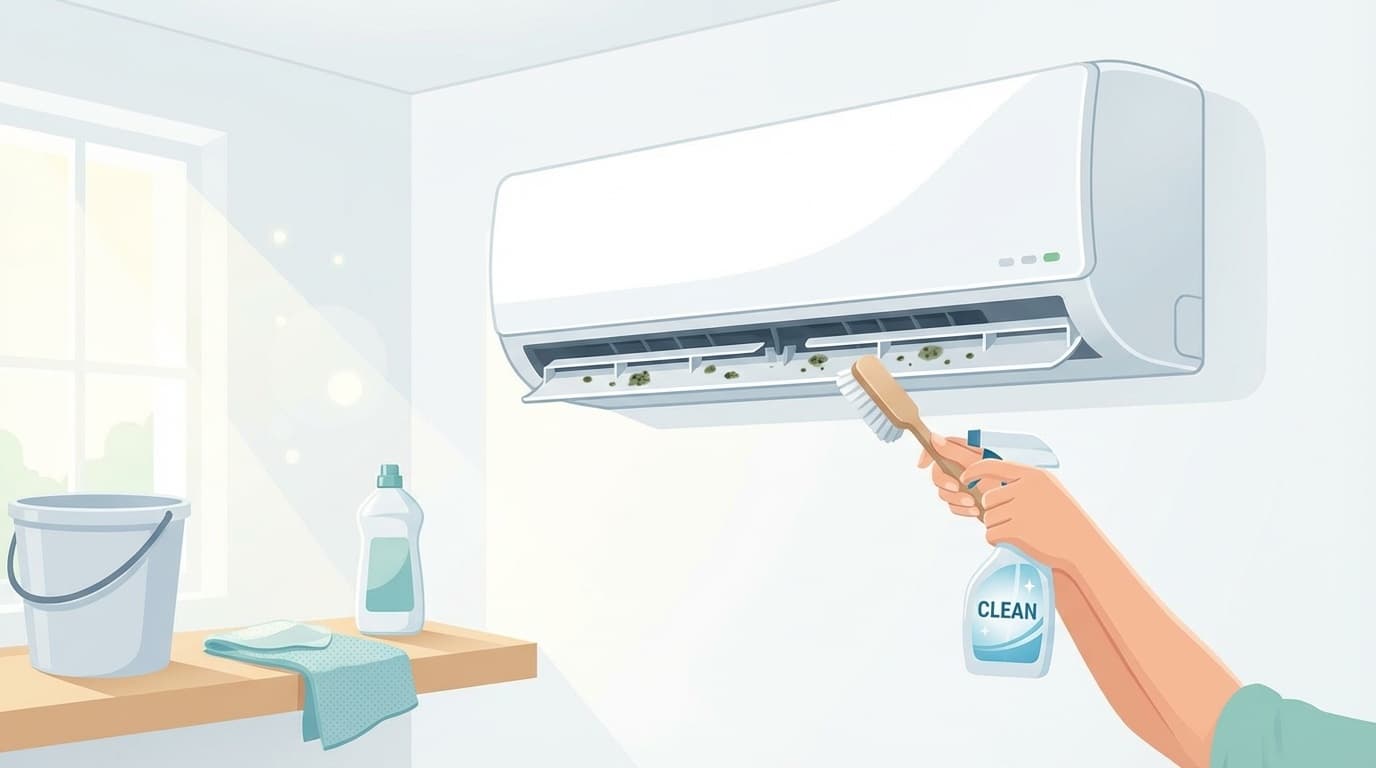
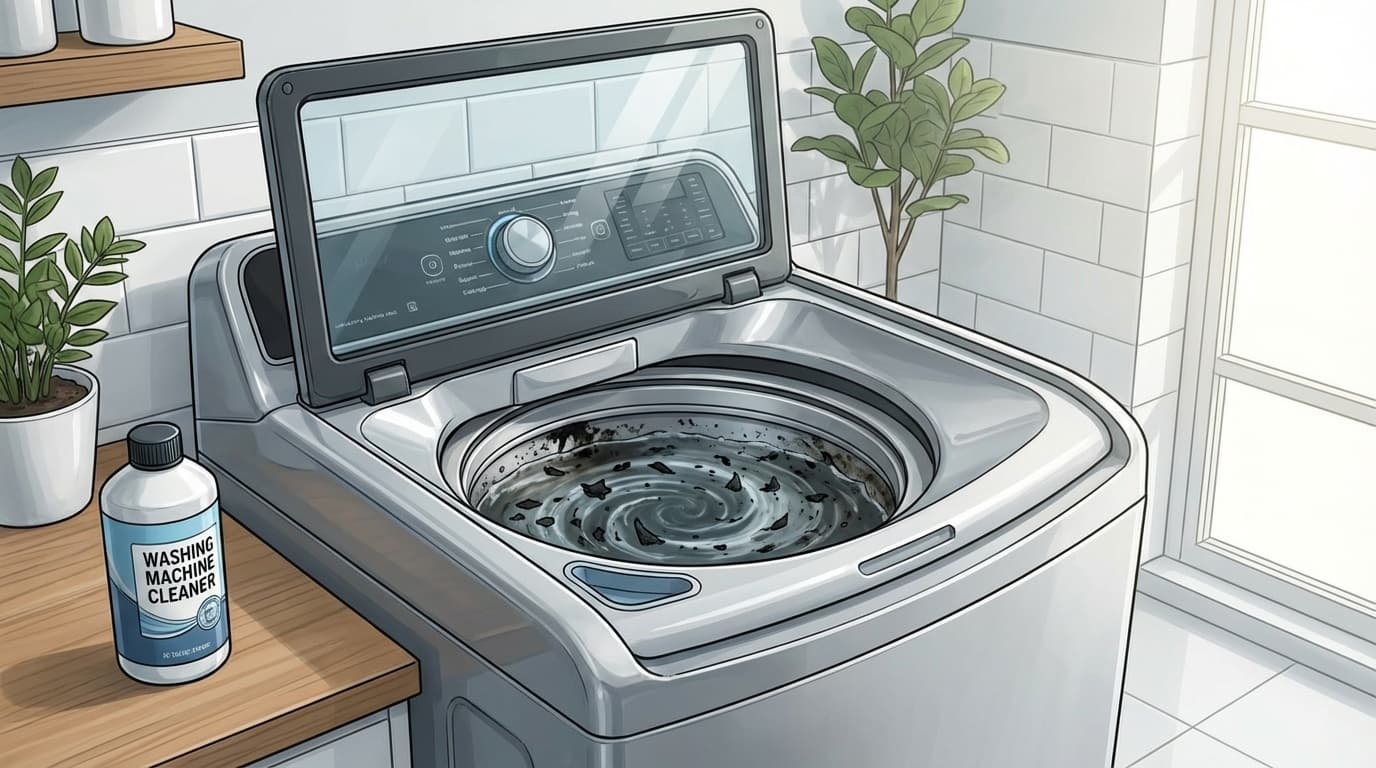
You finish a load of laundry, pull out your clothes, and notice weird black, papery bits stuck to them. Those “black flakes” or “seaweed-like gunk” are actually black mold clinging to the back side of the washing tub.
You probably know you should use a washing machine cleaner, but a lot of people get stuck on the same question: “Should I buy an oxygen-based cleaner or a chlorine-based one?” Based on the latest information as of March 2026, this guide walks you through what causes black mold in the washer, how oxygen and chlorine cleaners differ, and the right way to run a tub-cleaning cycle.
What Are the “Black Flakes” on Laundry, and Why Do They Show Up?
That black, seaweed-like grime sticking to your laundry is black mold that has grown on the hidden back side of the washing tub. Washing machines usually have a double-wall structure, and water can collect in the parts you can't see.
Mold tends to grow for three main reasons.
- Moisture: If you keep the lid closed after washing, humidity builds up inside the tub and creates an ideal mold environment
- Leftover detergent and fabric softener: Using more than the recommended amount can leave residue behind the tub, which becomes food for mold
- Organic grime like body oils and sweat: Sebum, sweat, and food residue from clothing can build up behind the tub
In short, when “moisture” and “food” such as detergent residue and body oils come together, black mold can multiply fast. Panasonic's official site also warns that mold in the washing tub gets harder to remove the longer you leave it alone.
Oxygen vs. Chlorine Cleaners: What's the Difference?
Washing machine cleaners generally fall into two types: oxygen-based and chlorine-based. They each do different jobs well, so it helps to understand the basics first.
How Oxygen-Based Cleaners Work
- Main ingredient: Sodium percarbonate, which breaks down into washing soda and hydrogen peroxide
- Best at: Using foaming power to lift and peel away stuck-on grime
- Smell: Almost odorless, which is good if you dislike sharp chlorine smells
- Watch out for: You need warm water, about 104–122°F. You'll also need to scoop out the loosened grime with a net
How Chlorine-Based Cleaners Work
- Main ingredient: Sodium hypochlorite
- Best at: Strong disinfecting power that breaks down and dissolves mold
- Smell: The sharp, familiar chlorine odor
- Watch out for: It “dissolves” grime instead of “lifting” it, so you may not see much visible gunk come out
Put simply, oxygen cleaners “lift and remove,” while chlorine cleaners “dissolve and disinfect”.
So Which One Should You Use? A Simple Guide by Situation
If you're wondering, “Okay, which one should I actually buy?” here's the straightforward answer.
If This Is Your First Cleaning or You Haven't Cleaned It in Over Six Months
The best option is a two-step method: use an oxygen-based cleaner first, then finish with a chlorine-based cleaner. The oxygen cleaner loosens and strips away built-up grime, then the chlorine cleaner disinfects any mold that's left behind.
If You Clean It Regularly, About Once or Twice a Month
A chlorine-based cleaner alone is fine. If the buildup isn't severe, chlorine's disinfecting power can keep mold under control. It's also easy because you don't need to worry much about water temperature.
If You Have Small Children or Pets at Home
If chlorine smell bothers you, using oxygen-based cleaners as your main option is reasonable. That said, it's still a good idea to use a chlorine-based cleaner every second or third cleaning for disinfection.
If You Have a Front-Load Washer
Because of how front-load washers are built, water can overflow during soaking, so many models don't allow oxygen-based cleaners. Hitachi's official support page also says not to use oxygen-based bleach in front-load washers. Always check your owner's manual and use a manufacturer-approved chlorine-based cleaner.
How to Clean a Washer Tub With an Oxygen-Based Cleaner, for Top-Load Washers
Here's the basic process for cleaning with an oxygen-based cleaner. Plan on about 6 to 12 hours, including soaking time.
- Remove and clean the lint filter: If the filter is clogged, it won't catch loosened debris well
- Fill the tub to the high-water level with 104–122°F water: Recently reheated bathwater is fine. Oxygen cleaners are much less effective if the water isn't warm
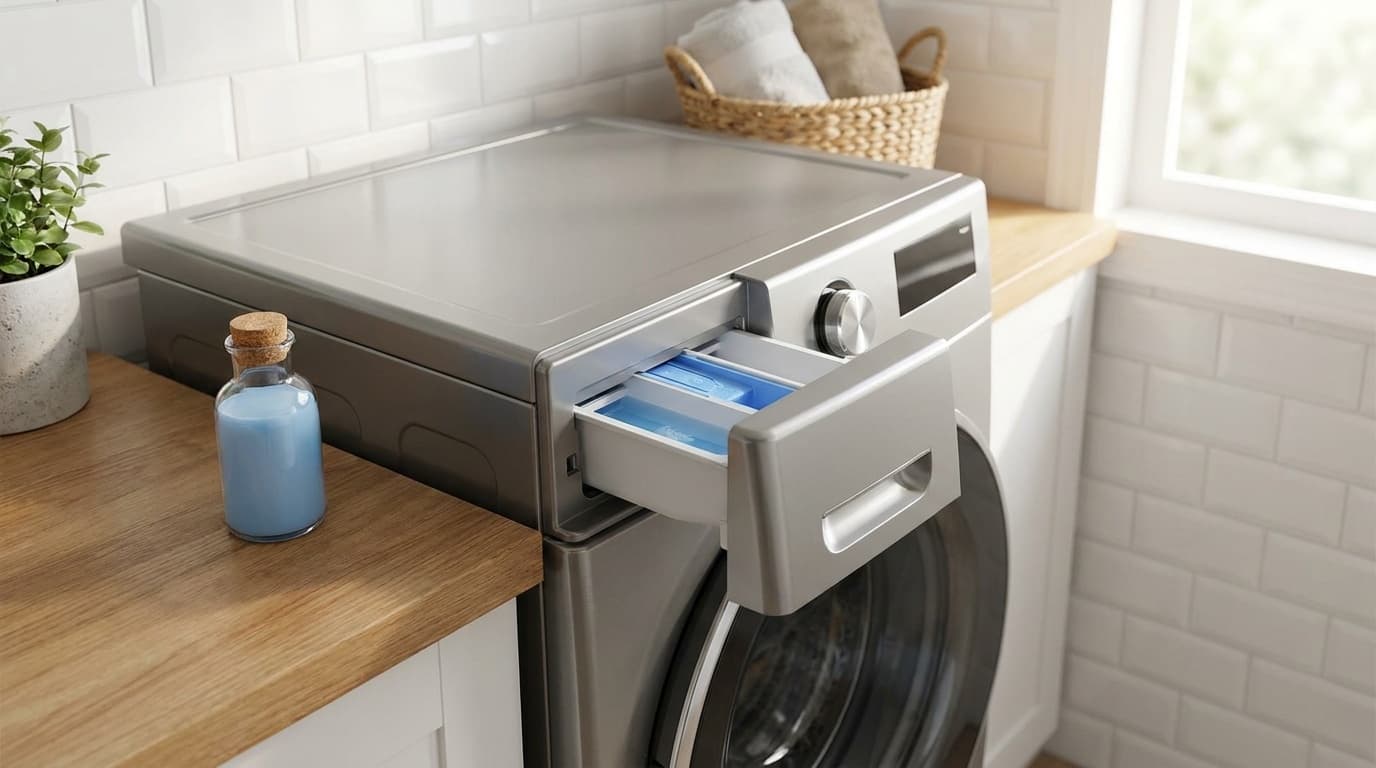
- Add the oxygen-based cleaner: Follow the amount listed on the product, often 500 ml or one full bottle
- Run “wash” only for 5 minutes: This spreads the cleaner through the tub. Don't rinse or spin yet
- Let it soak for 6 hours to overnight: Mold and grime will gradually float up
- Scoop out the floating debris with a net: A cheap debris-scooping net works well. If you drain without scooping, the drain may clog
- Repeat “wash” for 5 minutes, then scoop again: Do this 2 or 3 times, until debris stops appearing
- Run one empty normal cycle: Let it rinse and spin to flush out any remaining grime
How to Clean a Washer Tub With a Chlorine-Based Cleaner
Chlorine-based cleaning is much simpler than oxygen-based cleaning. It usually takes about 1 to 3 hours.
- Fill the washer tub to the high-water level: With chlorine cleaners, water temperature usually isn't a concern
- Add the chlorine-based cleaner: In most cases, you use the entire bottle
- Select the “tub clean” cycle and start: Depending on the model, this may take anywhere from 2 to 11 hours
- When it's done, open the lid and let the tub dry
Panasonic and Hitachi recommend their own chlorine-based cleaners. Manufacturer cleaners often contain rust inhibitors to help protect metal parts inside the washer, so they're the better choice when possible.
Five Habits That Help Prevent Black Mold
Even after you get the tub clean, mold can come back quickly if your everyday habits keep feeding it. These five habits can make a big difference.
- Leave the lid open after washing: Letting moisture escape is the most important prevention step
- Use the proper amount of detergent and fabric softener: Adding extra doesn't clean better. It just leaves more residue behind
- Don't leave laundry sitting in the washer: Using the washer as a laundry basket creates the perfect mix of moisture and grime for mold
- Make monthly tub cleaning a habit: Hitachi recommends cleaning every 3 to 4 months if you use the auto-clean function, or every 1 to 2 months if you don't
- Use the tub-dry function if your washer has one: Running tub dry for 30 minutes to 1 hour after laundry can greatly reduce mold growth
FAQ
Can I Mix Oxygen-Based and Chlorine-Based Cleaners?
Absolutely not. Mixing chlorine-based and oxygen-based cleaners can create toxic gas. If you're using the two-step method, make sure the first cleaning is completely finished, including draining and rinsing, before starting the second one.
How Often Should I Clean the Washer Tub?
In general, once a month is a good rule of thumb. For Hitachi machines, every 3 to 4 months is okay if the auto-clean function is on. During the rainy, humid season in June and July, mold grows more easily, so cleaning more often is a smart idea.
Should I Use a Manufacturer Cleaner or a Store-Bought One?
Both can work, but manufacturer cleaners often include rust-preventing ingredients that protect metal parts in the washer tub. If you want to keep your washer in good shape for longer, using a manufacturer cleaner every second or third cleaning is a sensible choice. As of March 2026, Panasonic's cleaner is around ¥2,000 and Hitachi's is around ¥1,500.
What If I Used an Oxygen-Based Cleaner and No Grime Came Out?
Oxygen-based cleaners don't work well when the water is too cool. Check that you're using 104–122°F warm water. Also, if you clean your washer regularly, there may simply not be much grime to remove. In that case, no visible debris is a good sign.
Can I Use an Oxygen-Based Cleaner in a Front-Load Washer?
For many front-load washers, oxygen-based cleaners are not allowed. They can create a lot of foam, which may cause leaks or malfunctions. Always check the owner's manual and use the chlorine-based cleaner recommended by the manufacturer.
References
- How to Deal With Black Flakes, or Black Mold, From a Washing Machine and Keep the Tub Clean — Panasonic UP LIFE
- For Disinfecting the Washer Tub and Removing Black Mold: What Makes This Chlorine-Based Washer Tub Cleaner Different — Panasonic
- How Often Should You Clean and Dry the Washer Tub? — Hitachi Home Appliances
- About Cleaning the Washer Tub, Tub Clean Course, for Top-Load Washers — Hitachi Home Appliances
- How to Use Washing Machine Cleaner, Safety Tips, Choosing a Cleaner, and How Often to Use It — AQUA