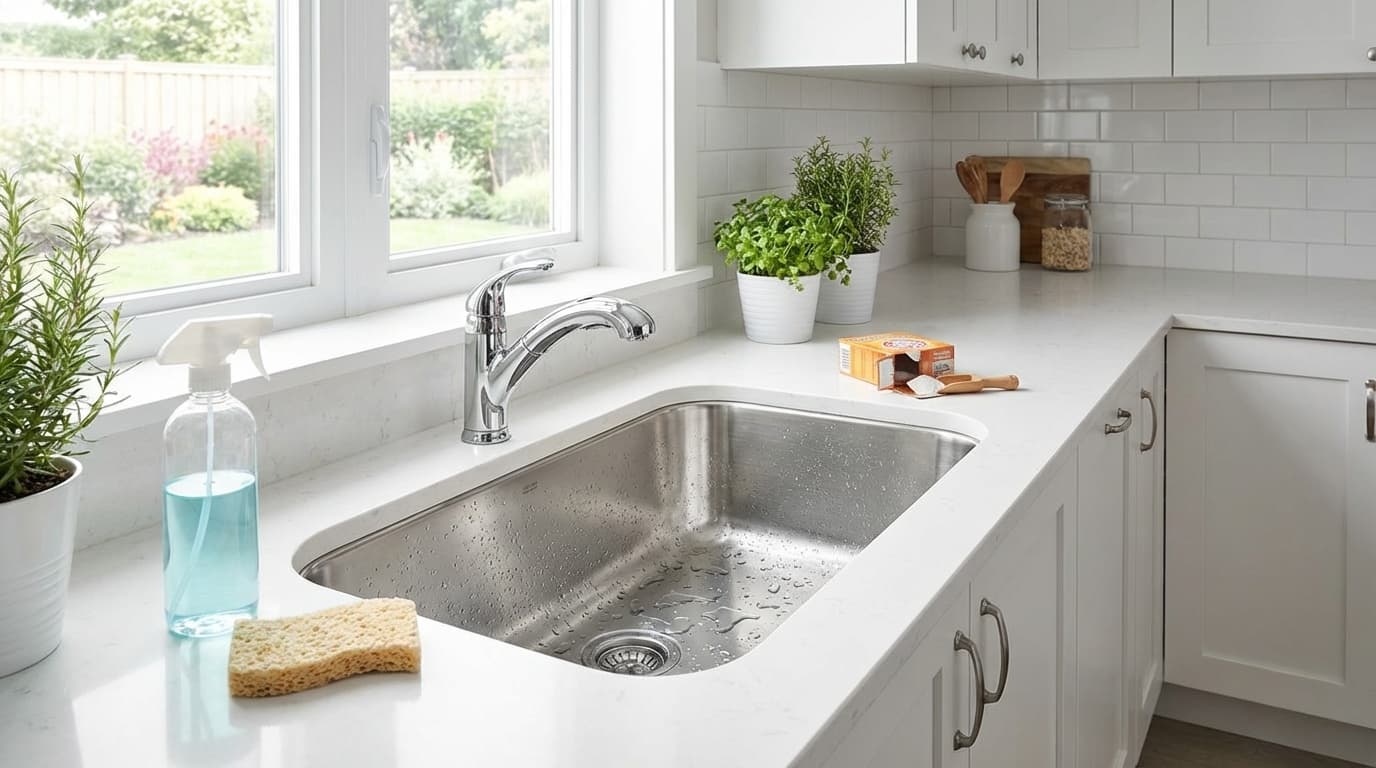
Have you ever looked at your kitchen sink and noticed slime around the drain or a dull white haze on the stainless steel? Because the sink gets used every day, grime builds up easily, and plenty of people feel stuck thinking, “I clean it regularly, so why does it still look like this?”
Based on information current as of March 2026, this article explains what causes slime, hard water stains, soap scum, and greasy buildup in kitchen sinks, plus how to clean each one. We'll also cover a simple 30-second daily routine that helps keep your sink clean, so if you're ready to say goodbye to slime for good, keep reading.
Kitchen Sink Grime Falls Into 4 Main Types
Most kitchen sink grime can be grouped into four types. Each one behaves differently, so the right cleaning method depends on what you're dealing with.
1. Slime, including pink stains
This is the slippery buildup that appears around the drain and strainer basket. It's caused by bacteria and mold, which can multiply quickly when food scraps and moisture are left behind. Since kitchens often get warm and humid from cooking and water use, they're a very comfortable place for bacteria to grow.
2. Hard water stains, or white scale
These are mineral deposits, such as calcium and magnesium, left behind after tap water evaporates. The longer they sit, the harder they become, and eventually a quick scrub with a sponge won't remove them. Hard water scale is alkaline.
3. Soap scum, or a white film
This forms when ingredients in dish soap or soap react with minerals in tap water. It often spreads across the sink as a cloudy white film. It can look a lot like hard water stains, but soap scum is acidic grime.
4. Grease, stickiness, and yellowing
This comes from oil splatter while cooking or residue left behind when you wash oily dishes. When grease clings to sink walls or caulked areas, it can cause yellow stains and sticky buildup.
How to Clean by Grime Type: The Key Is Knowing When to Use Citric Acid or Baking Soda
Scrubbing everything with dish soap isn't always enough. Some types of grime need a cleaner and tool that match their properties.
Slime → Baking Soda and Warm Water, or Oxygen Bleach
For slime around the drain or strainer basket, baking soda and warm water work well.
- Remove the drain strainer basket and sprinkle on 2 to 3 tablespoons of baking soda
- Slowly pour in warm water, about 104 to 122°F, and let it sit for 5 to 10 minutes
- Gently scrub with an old toothbrush, then rinse with warm water
If the slime is heavy, sprinkle oxygen bleach, such as OxiClean, onto the strainer basket, add 104°F water to activate the foam, and soak it for 20 to 30 minutes. This helps clean and disinfect at the same time. Chlorine bleach can also be used, but never mix it with acidic cleaners.
Hard Water Stains, or White Scale → Citric Acid Pack
Acidic citric acid works well on alkaline hard water stains. Official information from Toyo Kitchen Style also recommends citric acid for hard water stains.
- Dissolve 1 teaspoon of citric acid in 200 ml of water and pour it into a spray bottle
- Spray generously on the areas with hard water stains
- Cover with paper towels, then cover those with plastic wrap to prevent drying
- Let it sit for 1 to 2 hours, then scrub with the soft side of a sponge
- Rinse with water and wipe dry with a clean cloth
The final dry wipe matters. If water droplets remain, they'll turn back into hard water spots, so wiping dry is part of the process.
Soap Scum, or a White Film → Baking Soda Paste or Dish Soap
Soap scum is acidic, so alkaline baking soda helps neutralize and remove it.
- Mix baking soda and water at a 2:1 ratio to make a paste
- Spread it over the cloudy white areas, cover with plastic wrap, and let it sit for 30 minutes
- Gently scrub with a sponge and rinse clean
For light soap scum, regular dish soap on a sponge is often enough. If you tried citric acid and the white residue didn't budge, there's a good chance it's soap scum, so switch to baking soda.
Grease → Dish Soap or Baking Soda
Grease is also acidic, so alkaline baking soda is effective. For light grease, dish soap is fine. If the area feels very sticky, sprinkle baking soda directly onto the surface and scrub with a damp sponge. The mild abrasive action helps lift the buildup cleanly.
3 Tips to Avoid Scratching a Stainless Steel Sink
If you scrub too aggressively because you want better results, you may end up damaging the sink instead. Keep these three points in mind.
1. Scrub with the grain of the stainless steel
If you look closely, stainless steel sinks have fine lines, also called a hairline finish. According to Rinnai Style's guide, scrubbing against that grain can create tiny scratches, dull the shine, or even lead to rust. Check the direction of the grain and scrub in the same direction.
2. Don't overuse steel wool or melamine sponges
Steel wool, including stainless steel scrubbers, can be too abrasive and may strip the coating on the sink surface. Melamine sponges are abrasive too, so save them for small spots of stubborn grime and avoid scrubbing the entire sink with them.
3. Don't use citric acid and chlorine bleach at the same time
Mixing acidic citric acid with chlorine bleach, such as Kabi Killer or Kitchen Haiter, can release toxic gas. Even if you want to remove hard water stains and slime all at once, use them at separate times, rinse thoroughly, and only then move on to the next cleaner.
5 Habits That Keep Your Sink Sparkling in 30 Seconds a Day
A little daily care is easier than a major deep clean, and it helps the sink stay clean longer. Make these five habits part of your routine and you'll have far less slime and hard water buildup to deal with.
1. After washing dishes, rinse the whole sink with warm water: 10 seconds
A quick warm-water rinse washes away leftover soap and food bits, which greatly reduces the causes of soap scum and slime. Warm water is better than cold water because it also helps move grease along.
2. Finish by wiping the sink with a dry cloth: 15 seconds
The biggest trick to preventing hard water stains is not leaving water droplets behind. A worn towel or microfiber cloth is all you need for a quick wipe-down.
3. Empty the drain strainer every day: 5 seconds
Food scraps left in the strainer feed bacteria, causing slime and bad odors. Don't wait until it fills up; empty it at least once a day.
4. Place a small ball of aluminum foil in the drain strainer
This method is also introduced by Haseko Branchera Club. When aluminum foil touches water, it releases metal ions that can have an antibacterial effect. Roll two pieces into balls about 2 to 3 cm wide and place them in the strainer to help slow slime growth. Replace them every 2 to 3 weeks.
5. Once a week, do a baking soda and citric acid foaming clean
Sprinkle 2 to 3 tablespoons of baking soda into the drain, then pour citric acid water over it, using 1 teaspoon of citric acid in 100 ml of water. It'll fizz and foam, helping loosen grime. Let it sit for about 15 minutes, then rinse with warm water. Add this to your daily care once a week and your sink will stay much less slimy.
FAQ
Should I use citric acid or baking soda first?
Start with citric acid to remove hard water stains. If a cloudy white film still remains, it's probably soap scum, so switch to baking soda. In general, use them separately because using both at the same time neutralizes them and weakens their effect. The drain foaming method is the exception, since it relies on the physical action of the fizzing.
Can I use citric acid on an artificial marble sink?
Some artificial marble sinks can't be cleaned with acidic cleaners, depending on the manufacturer and material. Always check the care instructions from the maker, such as LIXIL or TOTO. If acidic cleaners aren't allowed, the safer choice is a mild neutral detergent and a soft sponge.
What should I do if my sink has rust?
Stainless steel is naturally resistant to rust, but leaving cans or iron items on it can cause transfer rust. For light rust, apply a baking soda paste, let it sit for 30 minutes, and scrub gently. If rust has spread over a wider area, consider using a commercial rust remover, such as 茂木和哉.
Do drain slime prevention products actually work?
Drop-in slime prevention products that contain chlorine-based agents can help. That said, if food scraps are left sitting in the strainer, the product may not be able to keep up, so use it along with daily emptying. Aluminum foil balls cost almost nothing, so they're a good first thing to try.
References
- How to Remove Hard Water Stains from a Stainless Steel Kitchen: Cleaning and Prevention by Cause — Toyo Kitchen Style
- Stubborn White Stains and Cloudiness on Stainless Steel Sinks: A Cleaning Pro Explains How to Make Them Shine — Rinnai Style
- How to Remove Drain Slime: Tips by Location, Including the Kitchen — Haseko Group Branchera Club
- How to Clean a Kitchen Sink — Duskin
- White Stains or Marks on a Kitchen Sink — LIXIL Q&A