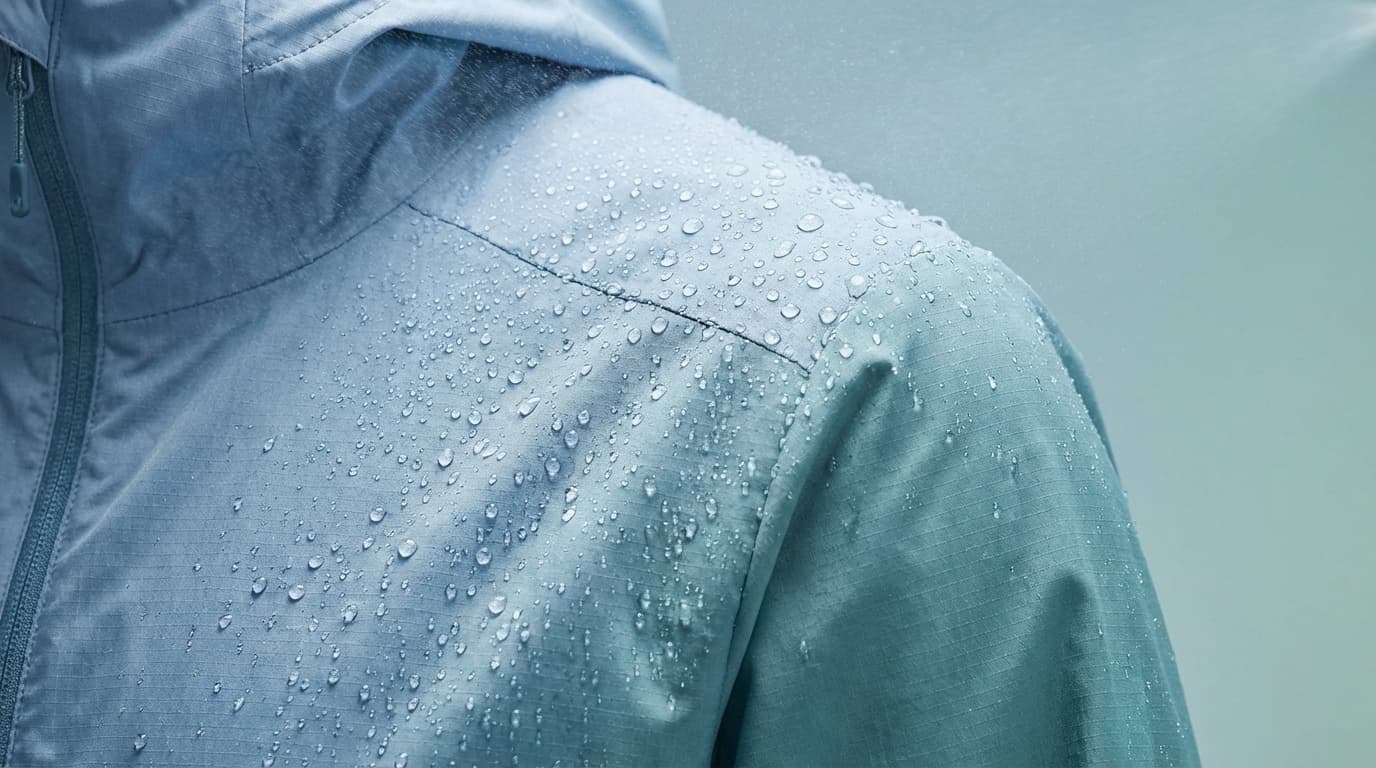
Have you ever found yourself drenched in the rain because the water repellency of your windbreaker or rainwear is no longer effective? You may be thinking, "I guess I'll just have to buy a new one..." but wait a minute. In fact,water repellency can be restored at home.
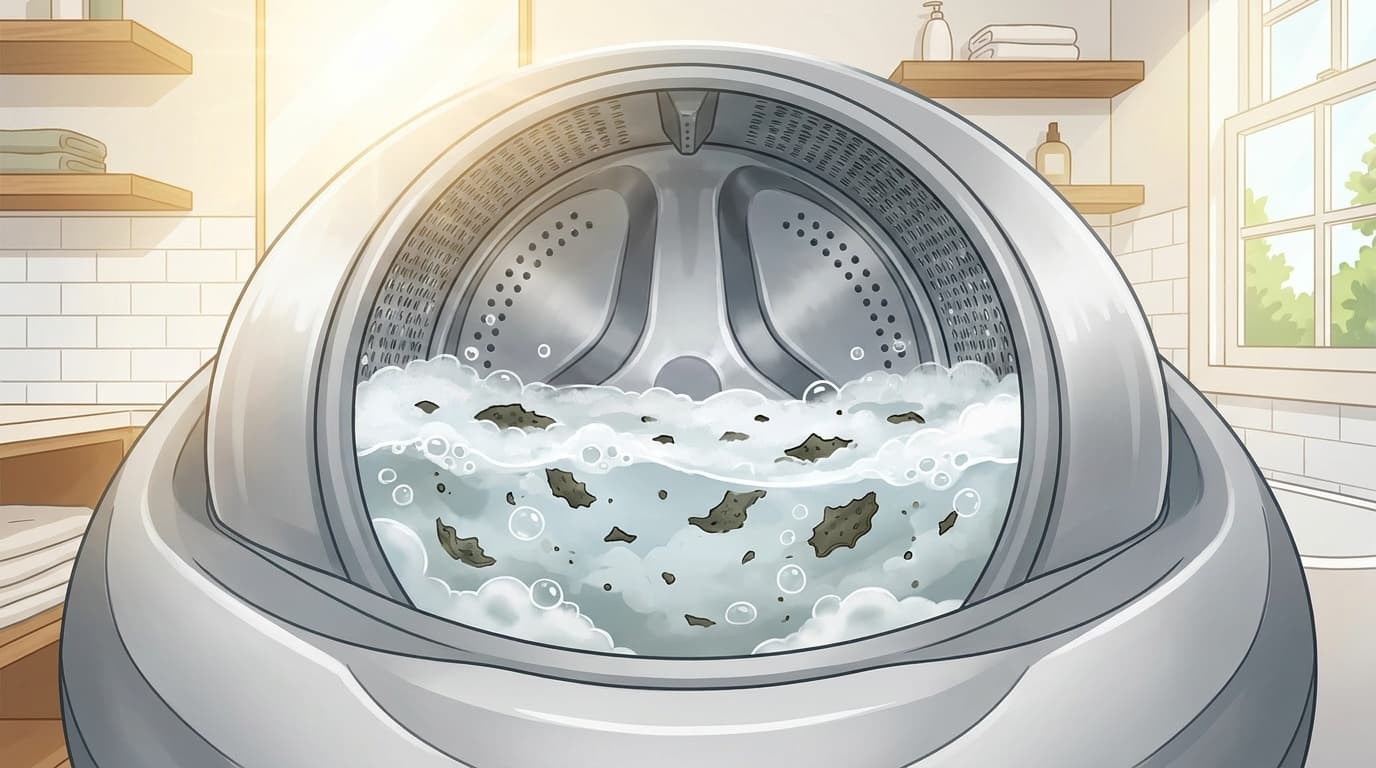
What's more, there is a useful item called Water repellent for washing machines that gives a more even finish than water repellent spray. As of March 2026, outdoor brands NIKWAX and GRANGERS, just put it in the washing machine and the water repellent ingredients will penetrate into each fiber.
In this article, we will explain the causes of water repellency loss, how to use water repellent for washing machines, and tricks to restore water repellency with an iron or hair dryer.
Why does water repellency deteriorate in the first place? Three reasons
The first thing you should know is that water repellent treatment is not permanent. The reason why new windbreakers repel water is because the surface of the fabric is coated with a ``water-repellent coating'' made of fluororesin or silicone resin.
There are three main reasons why this coating becomes weak.
Cause 1: Wear due to washing and wearing
The water-repellent coating will physically wear away due to friction during wear and repeated washing. Especially around the shoulders where the backpack touches and the cuffs where the arms are swung are areas where water repellency tends to fall off easily. According to YAMA HACK's explanation, even high-performance materials such as Gore-Tex lose their water repellency after 20 to 30 washes.
Cause 2: Accumulation of dirt and sebum
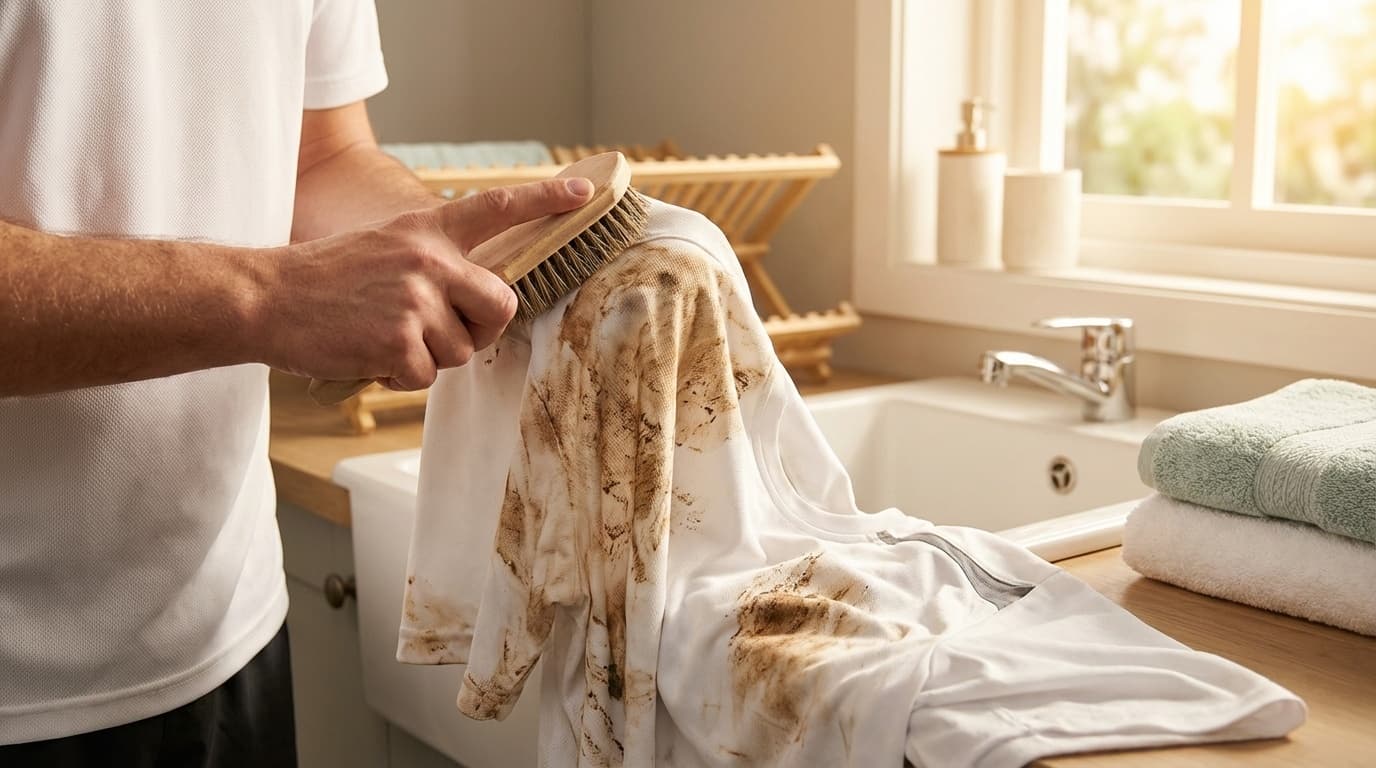
If dirt, sebum, or sweat components adhere to the water-repellent coating, its ability to repel water will be blocked. Even if it looks beautiful, invisible sebum dirt often interferes with water repellency. In other words, there are cases where the water repellent is simply hidden by dirt, rather than the water repellent being removed.
Cause 3: Use of fabric softener
A lot of people don't know this, but fabric softener is the natural enemy of water repellent finishing. Fabric softener coats the surface of fibers to make them softer to the touch, so if a fabric softener coating is placed over a water-repellent coating, it will no longer shed water. When washing water-repellent clothing, the golden rule is to never add fabric softener.
Water repellent spray or washing machine water repellent, which is better?
The first thing that comes to mind for many people as a way to restore water repellency is a "water repellent spray." It's easy to buy as you can buy it at drugstores and 100 yen stores. Butsprays also have disadvantages.
| Comparison items | Water repellent spray | Water repellent for washing machines |
|---|---|---|
| Easy to use | Just swish it on | No need to run it in the washing machine |
| Unevenness | Easy to occur | Almost none |
| Duration of effect | Short (falls off after a few wears) | Long (some products last up to around 10 washes) |
| Effect on breathability | Yes for fluorine-based products, no for silicone-based products | Depends on the product (moisture-permeable products are available) |
| Price | Around 500 to 1,500 yen | Around 1,000 to 2,500 yen |
| Suitable for applications | Partial repairs/emergency treatment | When you want to completely water repellent the entire area |
Roughly speaking, Sprays are a "first aid measure," while washing machine water repellents are "full-scale maintenance." As mentioned in Jubei Diary Commentary, spray tends to be uneven, and water may seep into the uneven areas.
Washing machine water repellent is recommended for people who wear windbreakers on a daily basis or rainwear for mountain climbing or camping.
How to use water repellent for washing machines [5 steps]
We will introduce the procedure using the representative product NIKWAX TX.Direct WASH-IN as an example.
Step 1: Close all zippers and Velcro
First, close all zippers, Velcro, and snap buttons on the garment. Leaving it open may cause damage to the fabric during washing.
Step 2: Wash with neutral detergent (or outdoor detergent)
Before water repellent treatment, it is extremely important to remove dirt. Wash it with a neutral detergent from Fashionables or an outdoor detergent like NIKWAX Tech Wash. Do not add fabric softener. The key is to wash your clothes gently in the "dry cycle" or "stylish cycle" of your washing machine.
Step 3: Rinse thoroughly
This is the most important point. Insufficient rinsing can cause detergent residue and water repellent to mix, causing unevenness and stains. Rinavis explanatory article also points out that ``many failures are due to insufficient rinsing.'' Rinse at least twice.
Step 4: Add water repellent and wash again
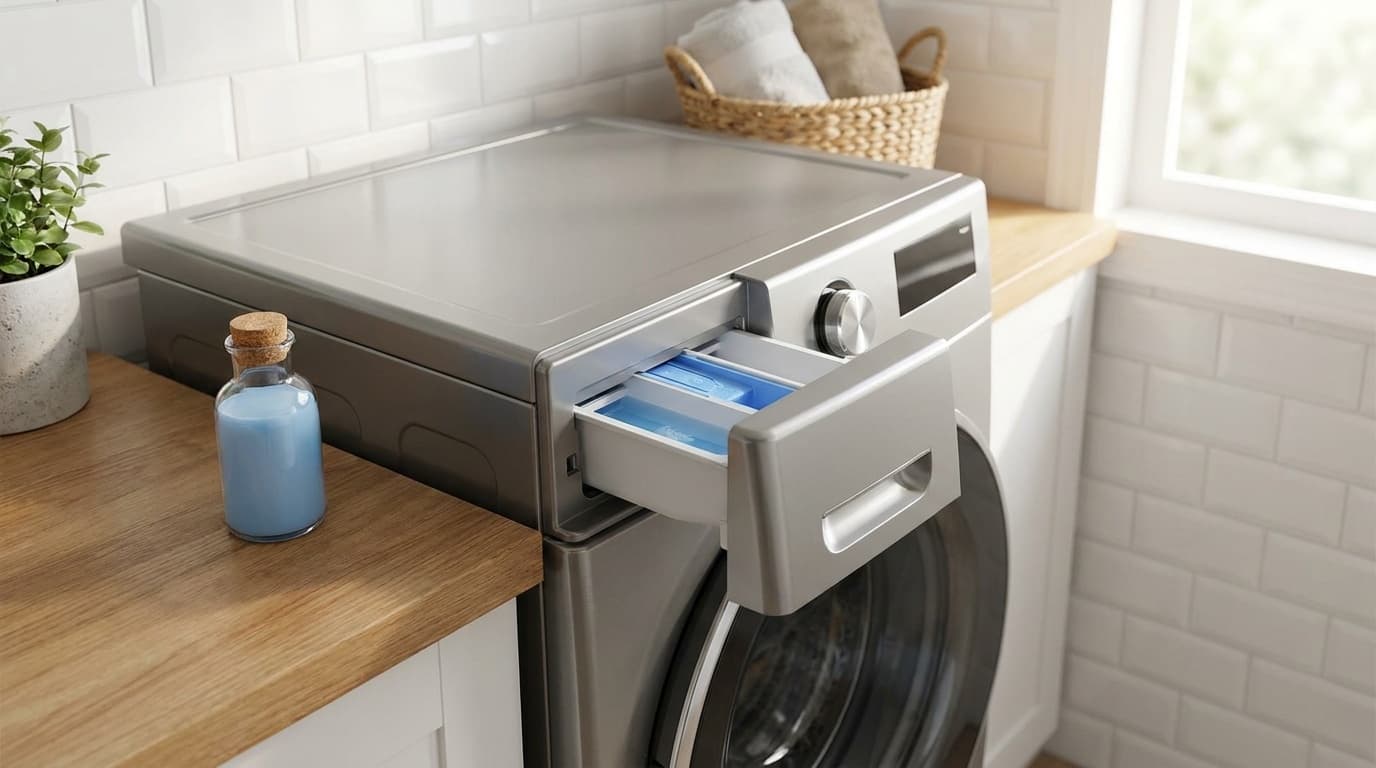
After rinsing, add water repellent without dehydrating. For TX. Direct WASH-IN, the recommended amount is 2 caps (approximately 100ml) per piece of clothing. The amount of water is based on 7.5L and is adjusted according to the amount of clothing. Wash and rinse using the standard cycle.
Step 5: Dry (this is where water repellency gets serious)
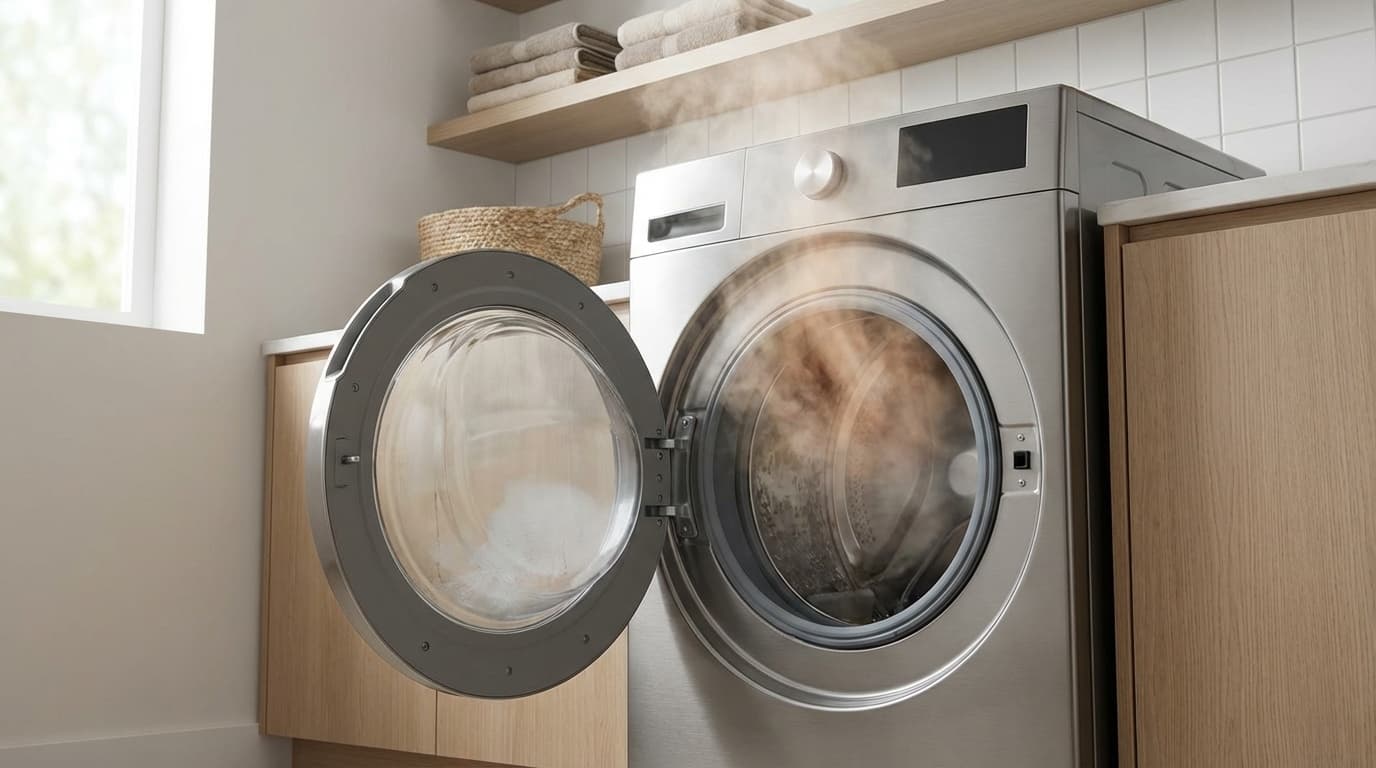
After washing, it is best to dry it in the dryer at a low temperature for about 15 to 20 minutes. By applying heat, the water-repellent ingredients firmly adhere to the fibers. If you don't have a dryer, you can iron it (low temperature, with a pressing cloth) after it air-dries.
Actually, when you use this method, the washing machine does most of the work, so it only takes about 5 minutes by hand. All that's left to do is wait.
You don't need a dryer! How to restore water repellency with an iron/dryer
For those who say, ``I don't want to buy a water repellent agent for washing machines, but I want to restore water repellency right away,'' there is a method that involves just applying heat.
Method 1: Use an iron
As confirmed in outdoor media Akimama's verification article, the heat from the iron rearranges the fluororesin in the water-repellent coating, restoring its water-repellent power.
- Temperature: Low to medium temperature (High temperatures are not allowed. They will damage the material)
- A pressing cloth is required (The fabric may melt if you iron it directly)
- Avoid logos, prints, and waterproof zippers
- Do not use steam, use dry mode
Method 2: Use a hair dryer
If you don't have an iron, you can use a hair dryer instead. Fashion Care NIC's explanation, fluororesin can be revived even with hot air from a hair dryer. However, please note the following points.
- Keep at least 10cm away from the fabric
- 30 seconds per spot (too much heat will damage the fabric)
- Warm the whole area evenly
However, ironing or hair drying will only restore the product if there is still some coating remaining. If the coating has worn off after years of use, you may need to recoat it with a washing machine water repellent.
5 tips for long-lasting water repellency
Once you have restored the water repellency, you want to make it last as long as possible. Daily care will greatly affect the duration of the effect.
1. Don't use fabric softener
As mentioned above, fabric softener is a no-no for water-repellent clothing. Wash only with neutral detergent.
2. Wash in a laundry net
Prevents the water-repellent coating from being scratched by friction with other clothing. It is best to turn it inside out and put it in the net.
3. Wipe off dirt after wearing
If you leave it with dirt or dust on it, the coating will deteriorate easily. After use, wipe it gently with a wet towel.
4. Store away from direct sunlight
UV light degrades water repellent coatings. Please store it in a place out of sunlight, such as a closet.
5. Perform water repellent maintenance once a season
A guideline is to treat your clothes with a washing machine water repellent once a season. It is safe to do this before the rainy season (rainy season/autumn rain).
FAQ
What is the difference between water repellent and waterproof?
Water repellent is a treatment that repels water on the surface of the fabric, and it may soak in during heavy rain or prolonged rain. Waterproof is a structure in which the fabric itself does not allow water to pass through (such as Gore-Tex). Many windbreakers are water-repellent, and rainwear is both waterproof and water-repellent.
Is it true that using water repellent for washing machines will damage the washing machine?
According to All About's explanation, when you spin out water from waterproof clothing, the washing machine may not be able to drain the water and the washing machine may vibrate abnormally. However, the water repellent itself won't destroy your washing machine. It is safe to dehydrate for a short time (less than 1 minute) or to remove the water with a towel without dehydrating.
Should I ask a dry cleaner to do the water repellent treatment?
If you use expensive Gore-Tex products or don't want to make mistakes, we recommend a dry cleaning shop. The average price is around 500 to 1,500 yen per piece. On the other hand, if you have a windbreaker or a raincoat for commuting, it is more cost-effective to treat it at home with a washing machine water repellent.
Are there any fluorine-free water repellents?
As of March 2026, NIKWAX products use water-based polymers that do not use fluorine (PFAS). If you are concerned about the impact on the environment, choose fluorine-free products. Some Grangers products are also fluorine-free.
References
- Rainwear's water repellency is back! Easy maintenance method unveiled — YAMA HACK
- NIKWAX FAQ FAQ — Evernew Co., Ltd.
- Is it true that ironing can restore the water repellency of clothing? — Akimama
- Is it true that the water repellency of clothing will be restored? Directly to the person in charge of Panasonic's drum-type washing machine! — GO OUT WEB
- How to wash rainwear and restore its "water repellency"! Doing it incorrectly can cause your washing machine to break down... — All About
- What is water repellent treatment at a dry cleaning shop? A thorough explanation of the benefits and the difference from commercially available sprays~ — Jubei Diary