“I add fabric softener every time, so why don’t my clothes smell like anything after washing?” If that sounds familiar, the problem often isn’t the fabric softener itself. In many cases, the washer is what’s getting in the way.
A clogged dispenser, a problem with automatic dispensing, or the wrong rinse setting can all keep fabric softener from doing its job. Based on official manufacturer guidance as of April 2026, this article explains five common reasons fabric softener doesn’t work or leaves no scent, plus fixes you can try yourself for both front-load and top-load washers.
This actually started for us last year when my husband said, “Wait, does the laundry not smell like fabric softener anymore?” Long story short: I cleaned the dispenser, and the problem disappeared immediately. I wish I’d done it sooner.
5 reasons your fabric softener has no scent or isn’t working
There are five main reasons fabric softener fragrance doesn’t stay on your clothes. Let’s go through them one by one.
Cause 1: The fabric softener dispenser is clogged
This is the most common cause. Fabric softener residue and mineral buildup can harden inside the dispenser or the internal channel, blocking the flow. Concentrated fabric softeners are especially likely to thicken and gum up, so even when you pour them in, they may sit in the drawer instead of reaching the wash tub.
According to Hitachi’s official support page, if detergent or fabric softener is left in the dispenser, the first thing to check is dirt or clogging around the dispenser.
Cause 2: The washer is overloaded
When the tub is packed full, fabric softener can’t spread evenly through the laundry. Panasonic’s official FAQ recommends keeping the load to about 70 to 80% of the washer’s capacity.
If you’re busy, I completely get the urge to run one huge load. But overloading doesn’t just weaken the scent. It also reduces cleaning performance, so splitting it into two loads often works better in the end.
Cause 3: Extra rinsing is washing the softener away
If laundry gets off-balance during the spin cycle, the washer may automatically run another rinse. That extra rinse can dilute or wash away the fabric softener.
The same can happen if you manually set the washer to three rinses. The standard manufacturer-recommended two-rinse setting is usually enough. Even a water-saving one-rinse cycle is generally fine for fabric softener performance.
Cause 4: You’re using leftover bathwater
Leftover bathwater can contain soap residue, body oils, and bacteria. These can react with fabric softener ingredients and cancel out the fragrance.
If you use leftover bathwater, use it only for the wash cycle, and make sure the rinse cycle uses clean tap water. Fabric softener works during the final rinse, so the cleanliness of that water matters a lot.
Cause 5: The automatic dispenser isn’t working properly
Many newer front-load washers and higher-end top-load models have an automatic fabric softener dispenser. It’s convenient, but if the softener turns gel-like inside the tank or the dispensing path gets dirty, the fabric softener may never reach the wash tub at all.
Hitachi’s official support lists clumps inside the tank, clogged dispensing paths, and incorrect settings as key things to check when automatic dispensing isn’t working.
How to clean a clogged fabric softener dispenser
The most common issue, a clogged dispenser, can usually be fixed with about 15 minutes of cleaning.
How to clean a manual dispenser on a top-load or front-load washer
These steps are based on guidance from Sharp’s official support and other washer manufacturers.
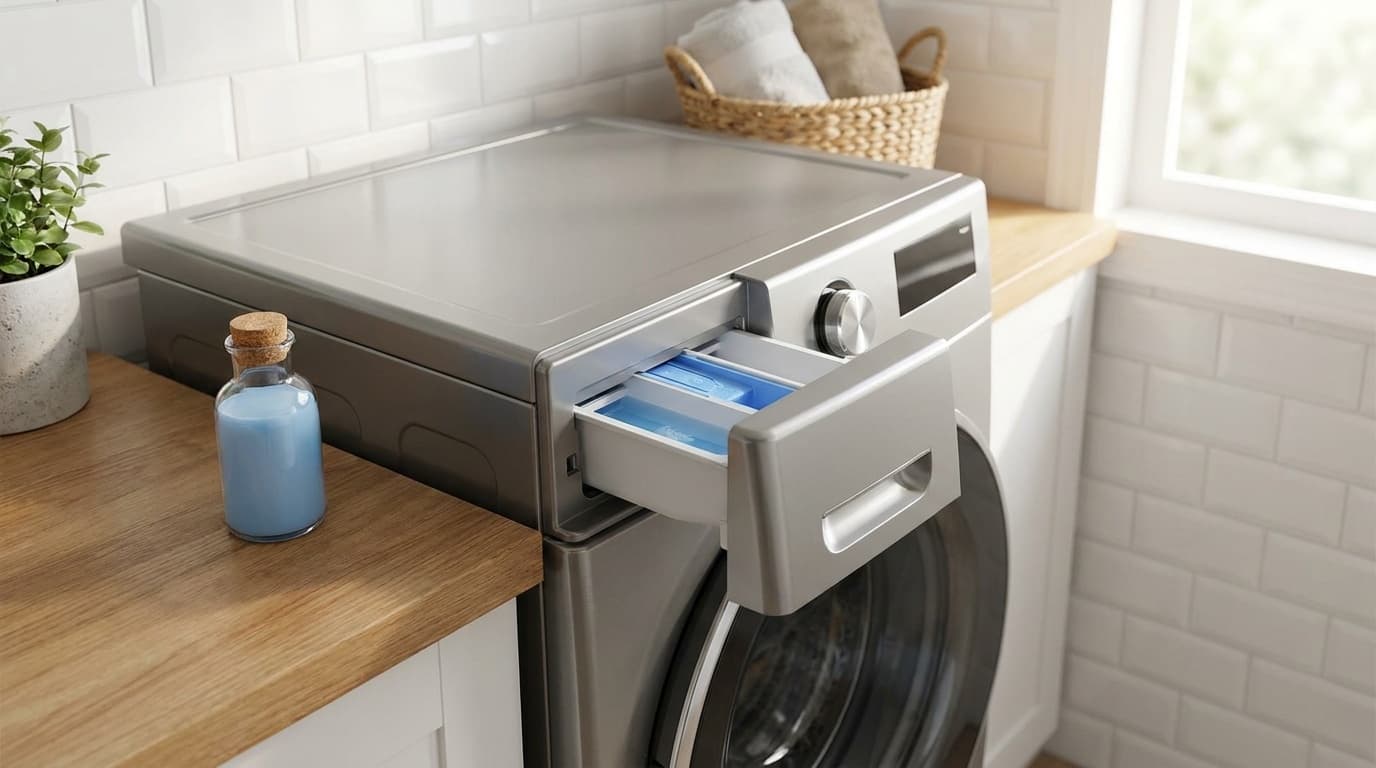
- Remove the dispenser drawer or cup: On many models, it slides or pulls out. Check your owner’s manual for the correct removal method.
- Soak it in warm water, 104 to 122°F, for 15 minutes: This loosens hardened fabric softener residue.
- Scrub it with a toothbrush: Focus on the inside of the dispenser, siphon holes, and the underside of the cap. Cotton swabs help with tight spots.
- Rinse well under running water and reinstall it
- Run the spin cycle twice: This helps flush residue out of the internal channel.
When I tried this during a deep clean last week, there was a slimy clump stuck to the back of the dispenser, and I actually said, “Oh no” out loud. No wonder the softener wasn’t flowing. Once I cleaned it, the scent came back right away.
How to clean an automatic dispensing tank
If your washer has automatic dispensing, the tank and internal path need cleaning too. Toshiba’s official page warns that skipping regular cleaning can cause problems or even lead to failure.
- Remove the tank and discard any remaining fabric softener
- Add warm water, about 104°F, to the tank and shake-rinse it
- Reinstall the tank, then add a mixture of 200 ml warm water and 1 teaspoon citric acid
- Run the “automatic dispenser cleaning” cycle (the exact name varies by manufacturer. If your washer doesn’t have one, run an empty regular cycle.)
A good rule of thumb is to clean it once every two to three months. In our house, what finally worked was writing “automatic dispenser cleaning day” on the whiteboard for the first Sunday of every even-numbered month.
5 ways to make fabric softener scent last longer
Even after fixing a clogged dispenser, the scent can fade depending on how you wash. Here are a few small changes that can make a real difference.
1. Dilute concentrated softener with water before adding it
Concentrated fabric softener is thicker, so it’s more likely to harden inside the dispenser. Diluting it with the same amount of water before adding it helps it flow more smoothly and can prevent clogs.
2. Don’t use overly hot dryer settings
High heat in a front-load washer’s dryer cycle can make fragrance ingredients evaporate more easily. Choosing a low-heat or delicate drying mode helps the scent last longer. Skipping the dryer and air-drying indoors or in the shade usually preserves fragrance even better.
3. Don’t leave wet laundry sitting for too long
If laundry sits in the washer after the cycle ends, bacteria can multiply and musty odors can overpower the fabric softener scent. Ideally, hang or dry the laundry within 30 minutes. Use the timer function so the cycle ends around the time you wake up or get home.
4. Don’t add fabric softener with detergent
This mistake is more common than you might think. Fabric softener only works when it coats clothes during the final rinse cycle. If you add it together with detergent, it gets washed away during the wash cycle and won’t do much at all. Always put it in the dedicated fabric softener dispenser.
5. Clean the washer tub once a month
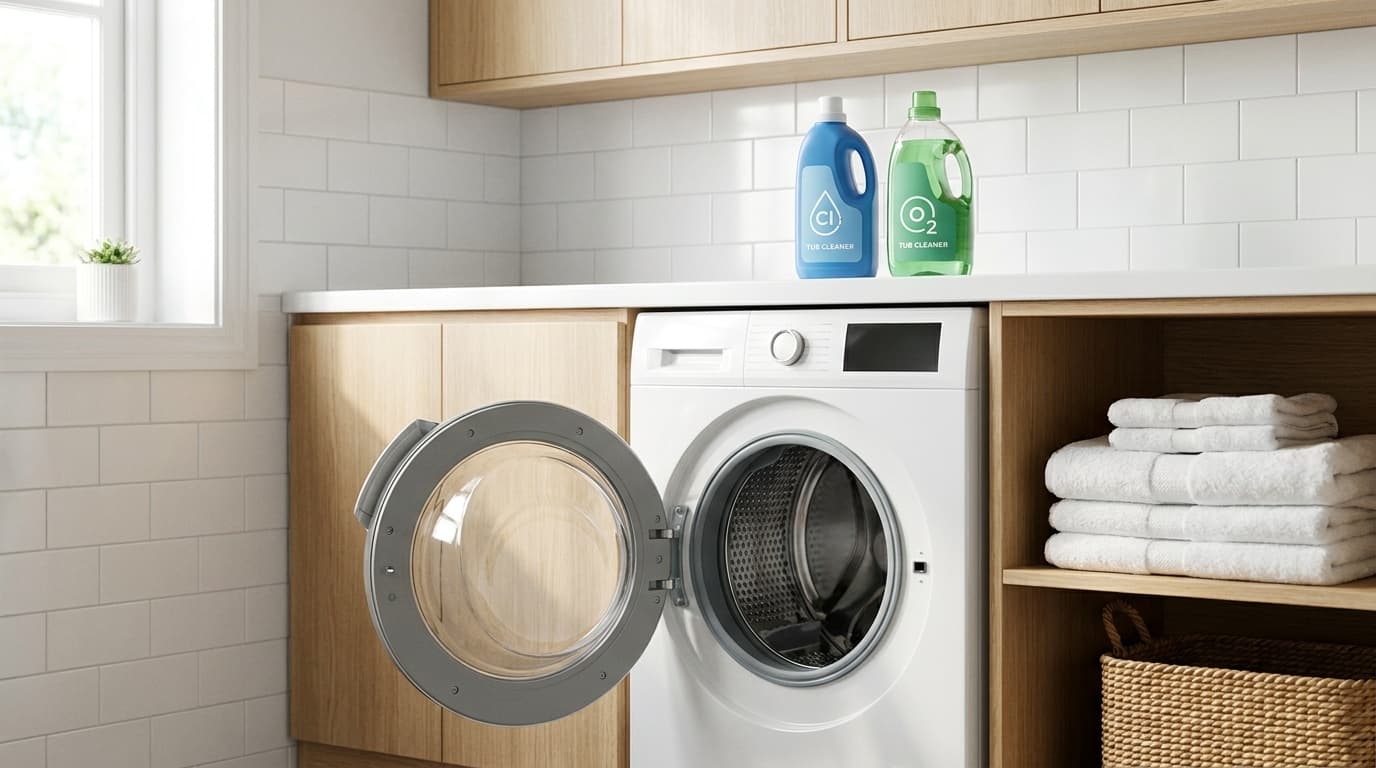
If mold or grime builds up inside the washer tub, bad odors can overpower the fabric softener fragrance. Run a tub-cleaning cycle once a month with a washer cleaner or oxygen bleach. Panasonic, Hitachi, and Toshiba all recommend tub cleaning every one to two months.
FAQ
Will using more fabric softener make the scent stronger?
It can actually backfire. According to Panasonic’s official FAQ, using more than the recommended amount can keep it from rinsing out properly, which may leave clothes stiff or cause darkening. Stick to the amount listed on the package.
How often should I clean the fabric softener dispenser?
For a manual dispenser, a quick wipe-down once a month is ideal. For an automatic dispensing tank, aim for a deeper cleaning once every two to three months. If you use concentrated fabric softener, it’s worth cleaning more often, about once a month.
Which clogs more easily, a manual dispenser or an automatic dispenser?
Automatic dispensers tend to clog more easily because their internal paths are narrower and longer. That said, manual dispensers can also stop flowing if the siphon holes get blocked, so both types need regular care.
Can switching fabric softener bring the scent back?
Yes, sometimes. If you use the same scent for a long time, your nose can get used to it, a phenomenon called olfactory fatigue. Switching to a different scent family, like floral to citrus, may make the fragrance easier to notice again. But if the real problem is a clogged dispenser, changing softener won’t fix it.
Why does my laundry smell bad when I use unscented fabric softener?
Mold or bacteria inside the washer tub is the most likely cause. The odor may have been hidden by scented softener before, then became more noticeable when you switched to unscented. Start by running a tub-cleaning cycle.
References
- Detergent or fabric softener won’t flow into the washer, isn’t dispensing, or remains in the dispenser — Hitachi Global Life Solutions
- What to do when fabric softener has no scent — Panasonic Official FAQ
- What to do when detergent or fabric softener won’t flow from the dispenser or leaves residue — Panasonic Official FAQ
- Detergent or fabric softener isn’t dispensing automatically — Hitachi Global Life Solutions
- How to clean the fabric softener dispenser — Sharp Official Support
- Can skipping automatic detergent tank cleaning cause washer problems? — Toshiba Lifestyle IoLIFE