“If you earn over ¥1.03 million, you’ll owe tax.” “If you earn over ¥1.3 million, you’ll be removed from dependent coverage.” If you work part-time or have a student job in Japan, you’ve probably heard about these “income walls” at least once. But in 2026, those walls are changing all at once.
One question that comes up constantly in FP consultations is, “So how much can I actually work?” Honestly, there are so many changes in 2026 that even people who know the system can get confused. Based on the latest information as of April 2026, this article breaks down how the income tax and social insurance “walls” are changing, with a quick reference table.
What Are “Income Walls”? Tax Walls and Social Insurance Walls Are Different
There are broadly two types of income walls. A lot of people mix them up, so let’s sort that out first.
The first is the “tax wall.” This is the line where income tax or resident tax starts to apply, or where a spouse deduction or dependent deduction may no longer be available. Examples include the ¥1.03 million, ¥1.5 million, and ¥2.01 million lines.
The second is the “social insurance wall.” This is the line where you may have to enroll in your employer’s health insurance and employees’ pension plan yourself. The ¥1.06 million and ¥1.3 million walls fall into this category.
If you cross a tax wall, the extra burden may only be a few thousand to a few tens of thousands of yen. But if you cross a social insurance wall, you can suddenly face around ¥150,000 to ¥250,000 a year in insurance premiums. In other words, the social insurance walls usually have the bigger impact on take-home pay. If you miss that point, you could mistakenly think, “The tax wall went up, so I’m safe,” and get caught off guard.
Quick Table: How Japan’s Income Walls Change in 2026
Here’s a summary of the main changes confirmed as of April 2026.
| Type of Wall | Before | After the 2026 Changes | Effective Date | Who It Affects |
|---|---|---|---|---|
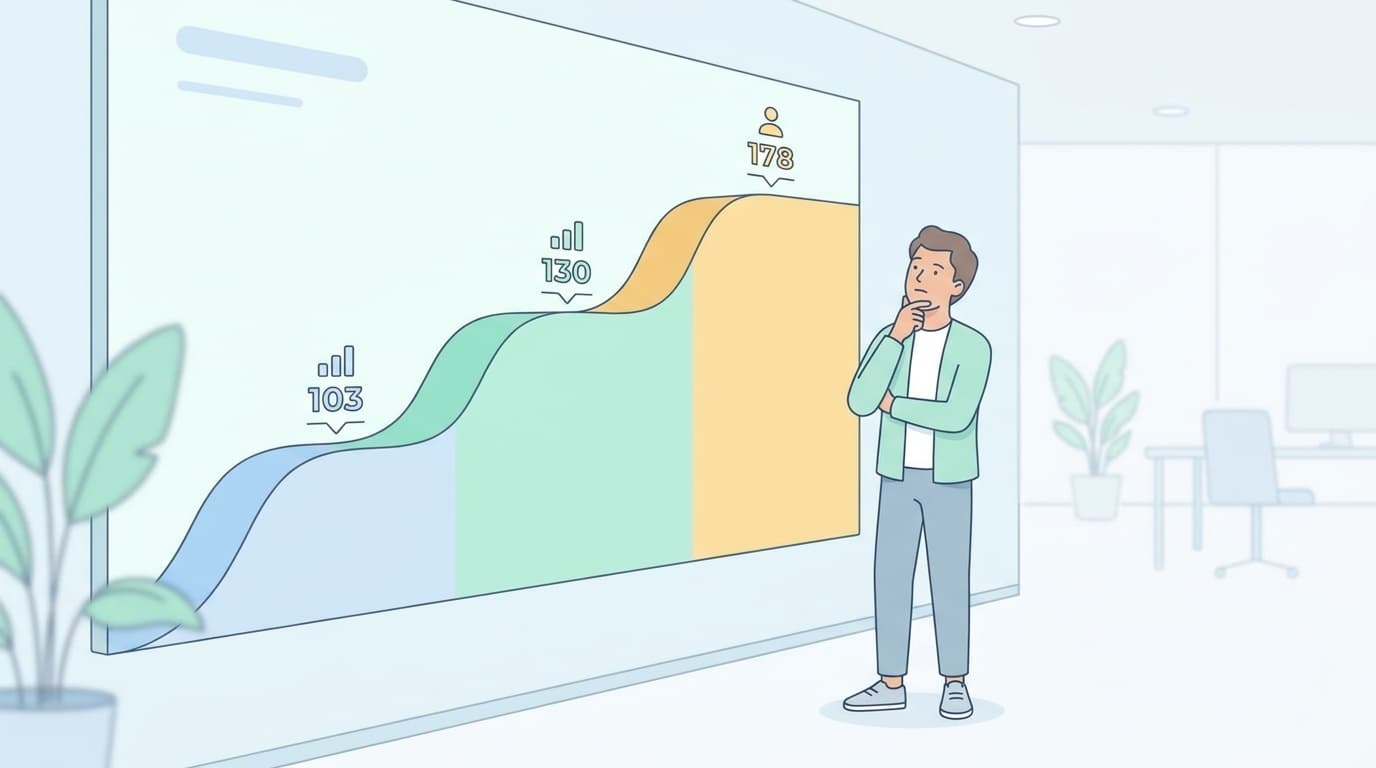
| Income tax-free line | ¥1.03 million | ¥1.78 million for people with annual salary income of ¥6.65 million or less | From 2026 income tax | Part-time and hourly workers in general |
| ¥1.06 million wall for social insurance | Enrollment required from monthly wages of ¥88,000 or more | Wage requirement abolished; the 20-hours-per-week rule remains | October 2026 | Part-time workers at companies with 51+ employees |
| ¥1.3 million wall for social insurance dependent coverage | Judged by actual annual income | Judged based on the employment contract, excluding overtime pay | April 2026 | Part-time workers staying within dependent coverage |
| Special dependent deduction for students | ¥1.03 million | Full deduction available up to ¥1.5 million | From 2025 income tax | Student workers ages 19 to 22 |
Bottom line: tax-wise, the walls have moved up a lot, while social insurance walls are moving toward being “removed” or redesigned. That’s the big picture for 2026.
Is the ¥1.03 Million Wall Becoming ¥1.78 Million? The Income Tax-Free Line Is Rising Sharply
The old rule of thumb was that “income tax starts once you earn over ¥1.03 million.” From 2026 income tax, that line has been raised to ¥1.78 million. This comes from the 2026 tax reform law enacted in March 2026.
Here’s how the calculation works.
- Basic deduction: standard ¥620,000 + special add-on of ¥420,000 = ¥1.04 million
- Employment income deduction: minimum guaranteed amount of ¥740,000
- Total: ¥1.04 million + ¥740,000 = ¥1.78 million
There’s one important catch. You can receive the full special add-on of ¥420,000 only if your salary income is ¥6.65 million or less. Once annual income reaches ¥8.5 million or more, the special add-on is zero. In other words, the “spouse deduction wall” as seen by a higher-earning spouse and the “income tax starts here” wall for the part-time worker are separate issues, so don’t mix them up.
Speaking from experience getting stuck on side-income tax filings, “the tax-free line went up” doesn’t mean you can stop thinking about taxes. Even if your income tax is zero, resident tax is calculated separately. The resident tax exemption line varies by municipality, but it’s generally around ¥1 million in annual income. Even if you earn up to ¥1.78 million, resident tax can still apply.
The ¥1.06 Million Wall Is Being Removed: Social Insurance Expansion Starts in October 2026
The social insurance enrollment requirement of “monthly wages of ¥88,000 or more,” roughly ¥1.06 million a year, will be abolished in October 2026. Under the 2025 pension system reform law, once that wage requirement is removed, you’ll need to enroll in social insurance if you meet the following conditions.
- You work for a company with 51 or more employees
- Your scheduled working hours are 20 hours or more per week
- Your employment is expected to last more than 2 months
- You’re not a student
Put simply, instead of the “¥1.06 million wall,” the remaining line is more like a “20 hours per week wall.” If you work 20 hours or more per week, you may have to enroll in social insurance regardless of how much you earn.
This directly affects take-home pay. For example, if a part-time worker earns ¥1.2 million a year, their employee share of social insurance premiums for health insurance and employees’ pension could be about ¥170,000 a year. That would bring take-home pay down to around ¥1.03 million.
That said, enrolling in the employees’ pension also increases your future pension benefits. It’s better to simulate both the short-term drop in take-home pay and the long-term increase in pension benefits before deciding what to do.
The ¥1.3 Million Wall Is Being Eased: From April 2026, It’s Based on Your Contract
The “¥1.3 million wall,” a major concern for part-time workers who want to stay within dependent coverage, also changed significantly in April 2026.
Until now, eligibility was judged by whether your actual annual income exceeded ¥1.3 million. After the change, the judgment is based on the expected annual income calculated from the wages listed in your employment contract or written working conditions notice.
What does that mean in practice? Even if overtime during a busy season or temporary allowances push your actual income over ¥1.3 million, you won’t be removed from dependent coverage as long as your expected contractual annual income is under ¥1.3 million.
A common FP consultation question is, “My overtime went up in December and I’m about to barely exceed ¥1.3 million. Should I cut my shifts?” From April 2026 onward, if your contract-based expected income is under ¥1.3 million, going over because of overtime pay should be okay. However, you’ll likely need to submit your working conditions notice or similar document for the review, so if you don’t have it, ask your employer to issue one.
The Student Job Wall Has Changed Too: The Special Dependent Deduction Rises to ¥1.5 Million
This is an important change for households with children ages 19 to 22. From 2025 income tax, the income threshold for the special dependent deduction was raised from ¥1.03 million to ¥1.5 million.
Previously, if a college-age child earned over ¥1.03 million from part-time work, the parent’s dependent deduction, ¥630,000 for income tax and ¥450,000 for resident tax, disappeared entirely, causing the parent’s tax bill to jump. Under the new rule, the full deduction is available as long as the student’s annual income is ¥1.5 million or less.
In addition, a new “special deduction for specified relatives” was created. If income exceeds ¥1.5 million, the deduction gradually decreases until ¥1.88 million, so the old cliff where going one yen over the line made the deduction vanish has been smoothed out.
Also, for health insurance dependent status, the income threshold for people ages 19 to 22 was raised from ¥1.3 million to ¥1.5 million, effective October 2025. In short, both tax and social insurance rules have become more flexible for student workers.
So How Much Should You Work? Think in These 3 Patterns
If you’re thinking, “Okay, the walls changed, but what should I actually do?” here are three common patterns.
Pattern 1: You want to maximize take-home pay while staying within dependent coverage
Even though the ¥1.3 million wall is now more contract-based, you’ll still leave dependent coverage if your contractual annual income exceeds ¥1.3 million. A practical target is to keep your contract-based annual income at ¥1.29 million or less, while not worrying too much about temporary overtime.
Pattern 2: You’re fine leaving dependent coverage and want to earn more seriously
Considering the cost of social insurance premiums, if you leave dependent coverage, you may need to aim for at least ¥1.7 million to ¥1.8 million a year to avoid ending up in a “working more but not taking home much more” situation. After the ¥1.06 million wall is removed in October 2026, working 20 hours or more per week will generally mean social insurance enrollment, so earning somewhere in the low ¥1.3 million range may be the least efficient zone.
Pattern 3: You’re a college student with a part-time job
Because the parent’s dependent deduction now applies fully up to ¥1.5 million, students can earn up to ¥1.5 million a year without increasing their parents’ tax burden. Also, if you use the working student deduction of ¥270,000, the student’s own income tax may also be reduced to zero, so don’t forget to claim it during year-end adjustment or on a tax return.
FAQ
Q. If the income tax-free line becomes ¥1.78 million from 2026, why hasn’t my monthly take-home pay changed?
The new ¥1.78 million line under the 2026 tax reform applies to 2026 income tax, but it’s expected to be reflected in monthly withholding amounts from January 2027 onward. During 2026, tax may still be withheld using the old tables, then settled through year-end adjustment or a tax return.
Q. If the ¥1.06 million wall is removed, will I have to enroll in social insurance even if I earn only ¥1 million?
The wage amount requirement is being abolished, but requirements such as “20 hours or more per week” and “working at a company with 51 or more employees” will remain. If you work shifts under 20 hours a week, you won’t need to enroll in social insurance even after October 2026.
Q. If the ¥1.3 million wall becomes contract-based, how is double work handled?
The contract-based test applies only when all income is salary income. If you have side-business or freelance income, the old actual-income test still applies, so be careful. During the review, you’ll be asked to declare that your income is salary income only.
Q. Does the ¥1.78 million wall apply to resident tax too?
No. The resident tax exemption line is separate from income tax and varies by municipality. A rough guide is around ¥1 million in annual income. Even if your income tax is zero, resident tax will apply in many cases, so don’t assume nothing will be deducted up to ¥1.78 million.
Q. If I work for a small company with 50 or fewer employees, does this not matter after October 2026?
As of October 2026, the rule applies to companies with 51 or more employees, so if you work for a company with 50 or fewer employees, there’s no direct impact at that point. However, discussions are moving toward gradually removing the company-size requirement from October 2027 onward, so part-time workers at smaller companies may be covered in the future.
References
- Measures for the “Income Wall” — Ministry of Health, Labour and Welfare
- Measures for the So-Called “Income Wall” — Prime Minister’s Office of Japan
- 2026 System Reforms Are Expected to Greatly Improve Work Adjustments Caused by the “Income Wall” — Nomura Research Institute, January 2026
- Income Wall to Rise to ¥1.78 Million; Basic Deduction Add-On for Incomes of ¥6.65 Million or Less — Nikkei, December 2025
- What Is the ¥1.6 Million Wall? When Does It Change from the ¥1.03 Million Wall? Benefits and Cautions Explained — MUFG Bank